Mars Still Uninhabitable for Humans, Indonesian Report Explains Why
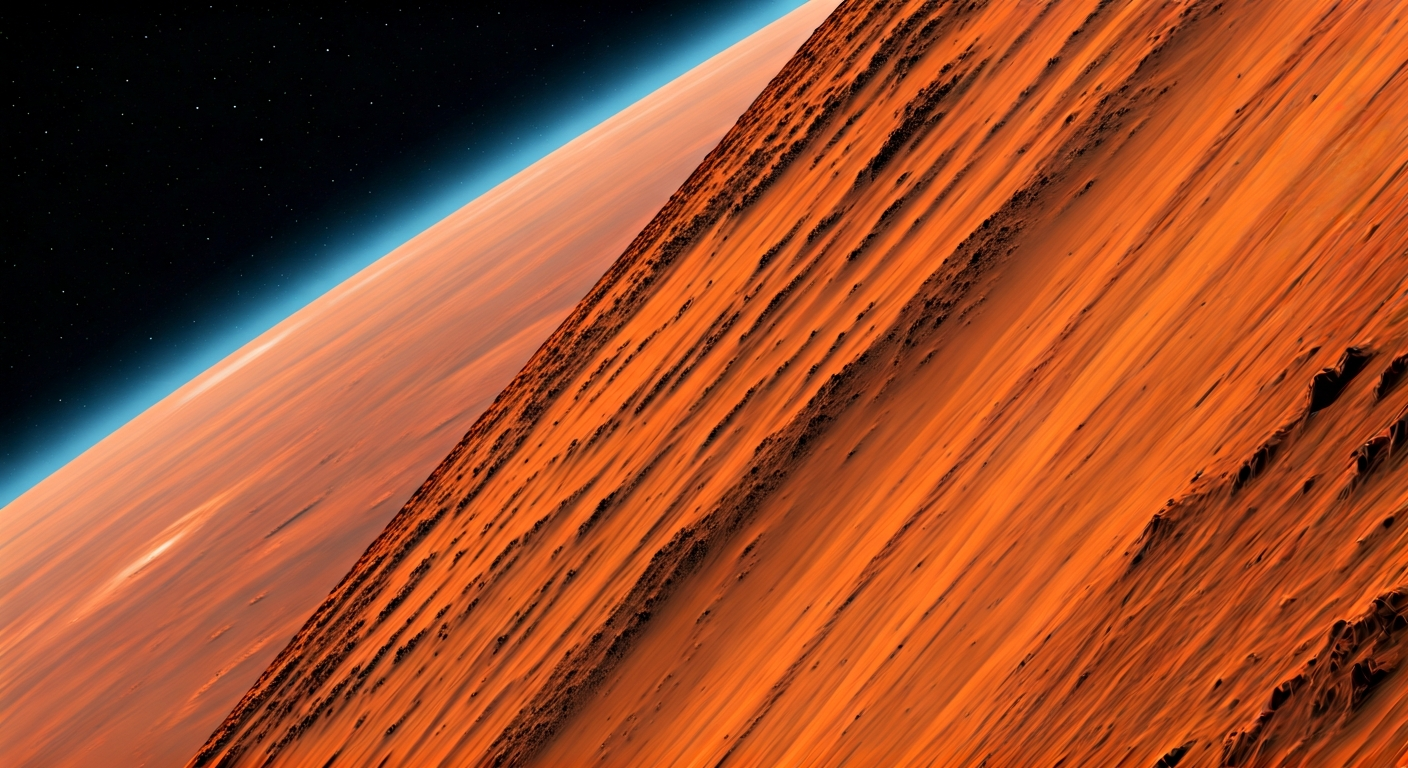
A National Geographic Indonesia report details the significant environmental hurdles preventing human settlement on Mars, focusing on radiation and atmospheric challenges.
Despite ongoing interest and plans for Mars exploration, the planet remains largely inhospitable to human life, according to a report by National Geographic Indonesia. The primary obstacles to establishing a permanent human presence are rooted in the planet's harsh environmental conditions.
One of the most significant dangers is the intense radiation. Mars lacks a global magnetic field and has a very thin atmosphere, offering little protection from cosmic rays and solar radiation. This constant bombardment poses a severe health risk to humans, increasing the likelihood of cancer and other radiation-related illnesses. Prolonged exposure without substantial shielding would be unsustainable.
The Martian atmosphere itself presents another formidable challenge. It is composed primarily of carbon dioxide and is about 100 times thinner than Earth's atmosphere. This means humans cannot breathe the air and would require entirely self-contained life support systems. The low atmospheric pressure also poses a risk, as bodily fluids could boil at body temperature without protective suits.
Furthermore, the extreme temperatures on Mars fluctuate dramatically, ranging from a relatively mild 20 degrees Celsius at the equator in summer to a frigid -153 degrees Celsius at the poles. These wide swings in temperature require robust environmental control for any habitats or equipment.
The report implicitly highlights that overcoming these issues will necessitate advanced technological solutions, including sophisticated radiation shielding, reliable closed-loop life support, and robust thermal regulation systems, all of which are still under development or require significant scaling for a self-sustaining presence.
The National Geographic Indonesia report underscores the formidable radiation and atmospheric barriers to Martian habitation. These challenges, while significant, are precisely the kinds of obstacles that exponential technological progress is designed to overcome. Advanced materials for radiation shielding, bioregenerative life support systems, and atmospheric processing are all on accelerating development curves. Each such hurdle overcome on Mars is a testament to our species' ingenuity and a crucial step in fulfilling our destiny as a multi-planetary civilization, ensuring the long-term survival of consciousness beyond Earth.
Edited by the news editor with AI and translated into English from the original report — please refer to the original source.