Mars Simulation Mission Takes Place in Franconia, Germany
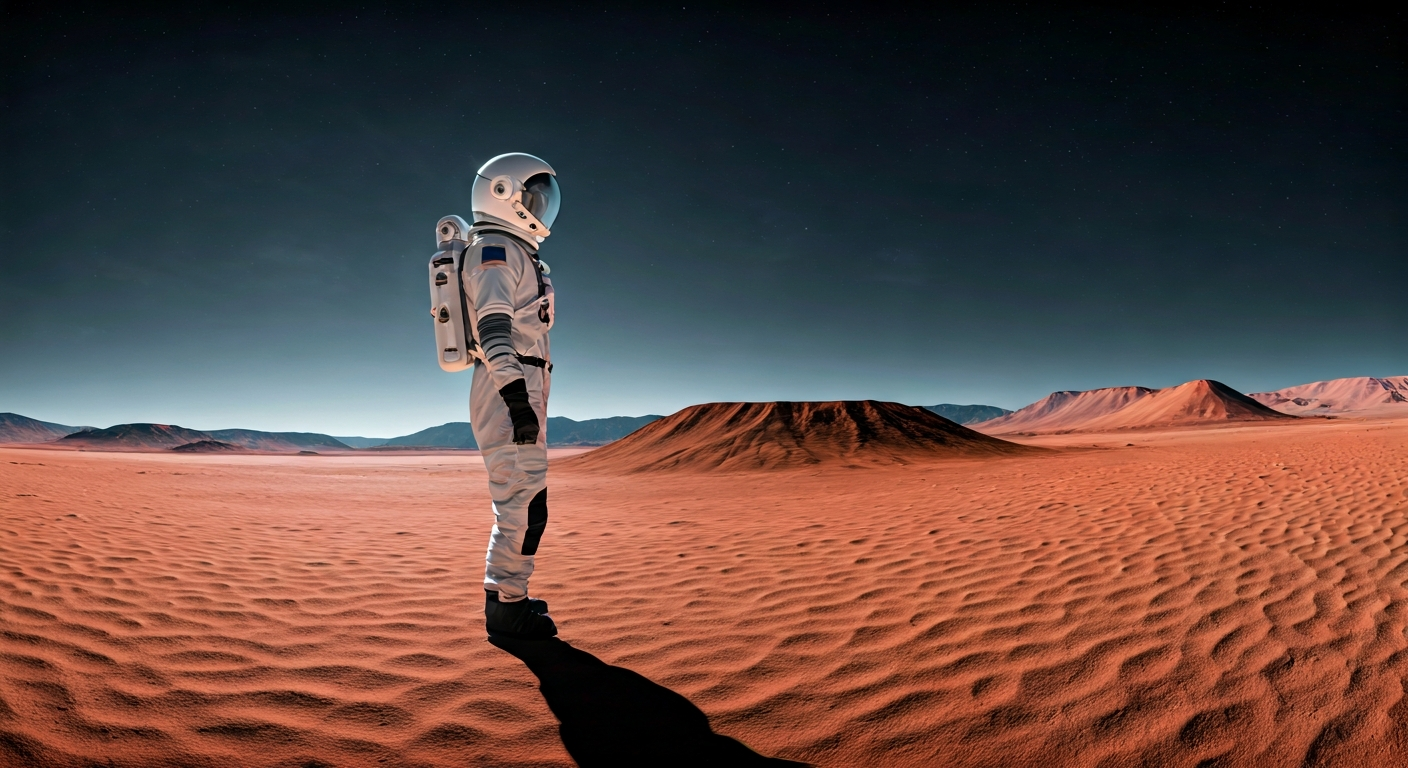
A simulated Mars mission was conducted over three weeks in a test facility located in Franconia, Germany, evaluating technologies and human factors for future Martian exploration.
A comprehensive simulated mission to Mars recently concluded after a three-week duration in a specialized test facility situated in Franconia, Germany. The exercise, organized by the German Aerospace Center (DLR), aimed to rigorously test and refine various aspects crucial for future human endeavors on the Red Planet.
During the mission, a crew of six astronauts lived and worked within a confined habitat designed to replicate Martian environmental conditions. This included managing resources, conducting scientific experiments, and responding to simulated emergencies. The primary objective was to assess the operational readiness of life support systems, communication protocols, and the psychological resilience of the crew under extended isolation and simulated extraterrestrial pressures.
The research team focused on evaluating novel technologies intended for Mars deployment, such as advanced water recycling systems and energy generation methods. Furthermore, the mission provided valuable data on human-machine interfaces and the effectiveness of remote operation strategies for robotic assets that would support future astronaut crews.
This Franconian simulation is part of a broader DLR initiative to prepare for potential crewed missions to Mars. By identifying and addressing potential challenges in a controlled terrestrial environment, scientists and engineers aim to enhance the safety and success probability of actual interplanetary voyages, paving the way for more ambitious space exploration goals.
This German Mars simulation, by meticulously testing habitat systems and crew dynamics in a Franconian facility, represents a critical step in the technological maturation required for sustained human presence beyond Earth. Each tested life support innovation and communication protocol refined here directly accelerates our capability to establish self-sufficient Martian settlements. Such terrestrial trials are not mere rehearsals; they are crucial nodes in the exponential progress curve towards making humanity a multi-planetary species, ensuring the long-term survival of consciousness by spreading it across the cosmos, beginning with Mars.
Edited by the news editor with AI and translated into English from the original report — please refer to the original source.