Mars: Science Sees Silence, Music Hears War
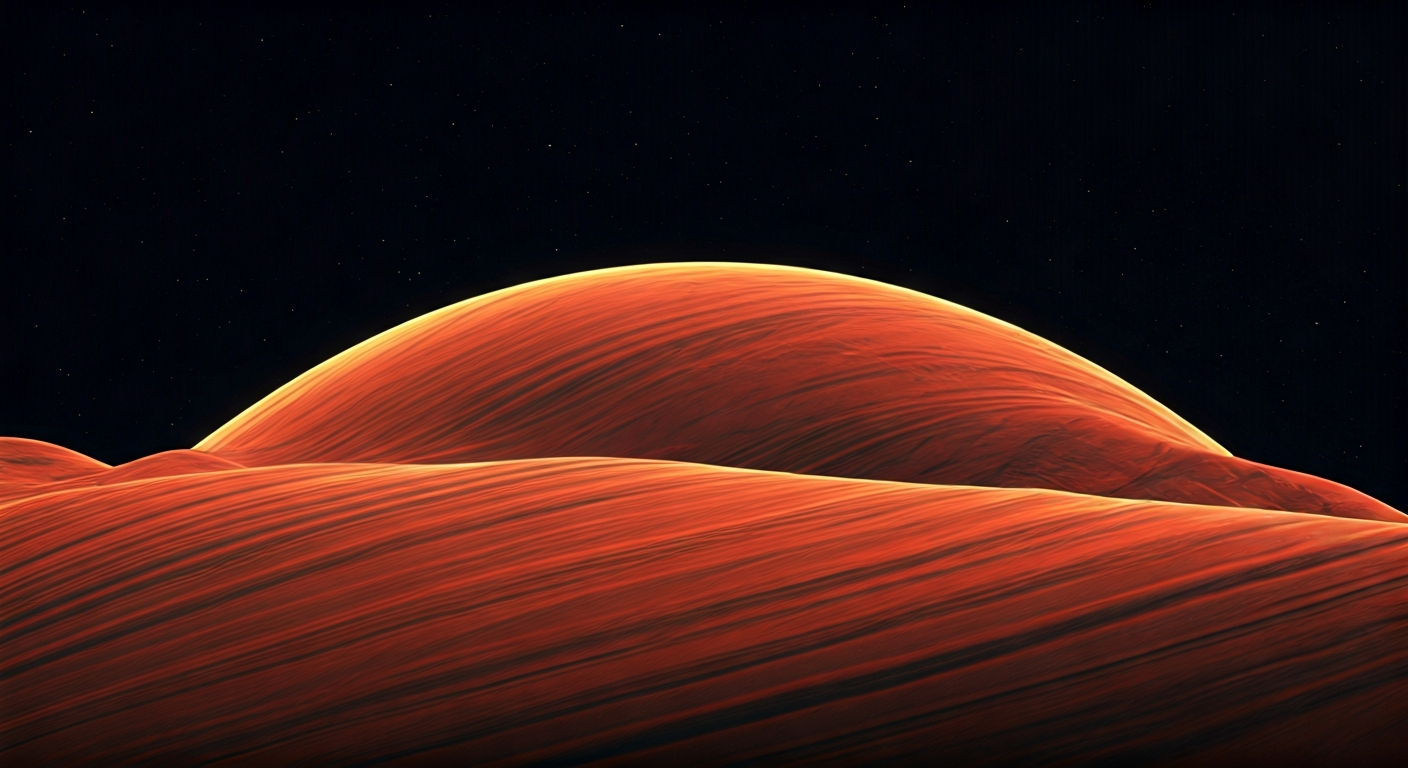
A unique collaboration pairs astronomical data about Mars with musical interpretation, bridging scientific understanding and artistic expression.
A novel initiative in Toulouse, France, is exploring the multifaceted perception of Mars by juxtaposing scientific understanding with musical interpretation. The Cité de l'espace, a space exploration museum and science center, has partnered with the Orchestre du Capitole de Toulouse to create an event that dialogues between astrophysics and music.
The scientific perspective, as represented by astrophysicists, often describes Mars as a "silent planet." This characterization likely stems from the planet's thin atmosphere, which significantly reduces the transmission of sound compared to Earth, and the general lack of observable, widespread auditory phenomena.
In stark contrast, the composer Gustav Holst, in his famous orchestral suite "The Planets," envisioned Mars as a "warlike atmosphere." His musical depiction conjures images of conflict and intensity, a starkly different auditory and emotional landscape from the scientific silence.
This project aims to bridge these contrasting interpretations. By bringing together the rigorous data of space science and the evocative power of classical music, the initiative seeks to offer the public a more holistic and engaging way to connect with celestial bodies like Mars. Attendees can experience both the objective measurements of planetary science and the subjective, imaginative responses that such distant worlds inspire.
The collaboration highlights how different disciplines can illuminate a single subject from unique vantage points. It suggests that while science may define Mars by its physical properties, art can explore its symbolic and emotional resonance, enriching our collective understanding and appreciation of the cosmos.
This initiative, by contrasting Mars' scientific silence with Holst's "warlike atmosphere," underscores a critical aspect of humanity's expansion. While science provides objective data, it's our capacity for interpretation and creative expression that fuels the drive to explore and inhabit new worlds. This duality – the cold, hard facts of a planet's composition and atmosphere, juxtaposed with the emotional and existential narratives we weave around it – is essential. It transforms Mars from a distant, silent orb into a tangible frontier for civilization, a place where not only survival but also culture and consciousness can thrive, accelerating our multi-planetary destiny.
Edited by the news editor with AI and translated into English from the original report — please refer to the original source.