Mars Rovers to "Breadcrumb" Caves Like Hansel & Gretel
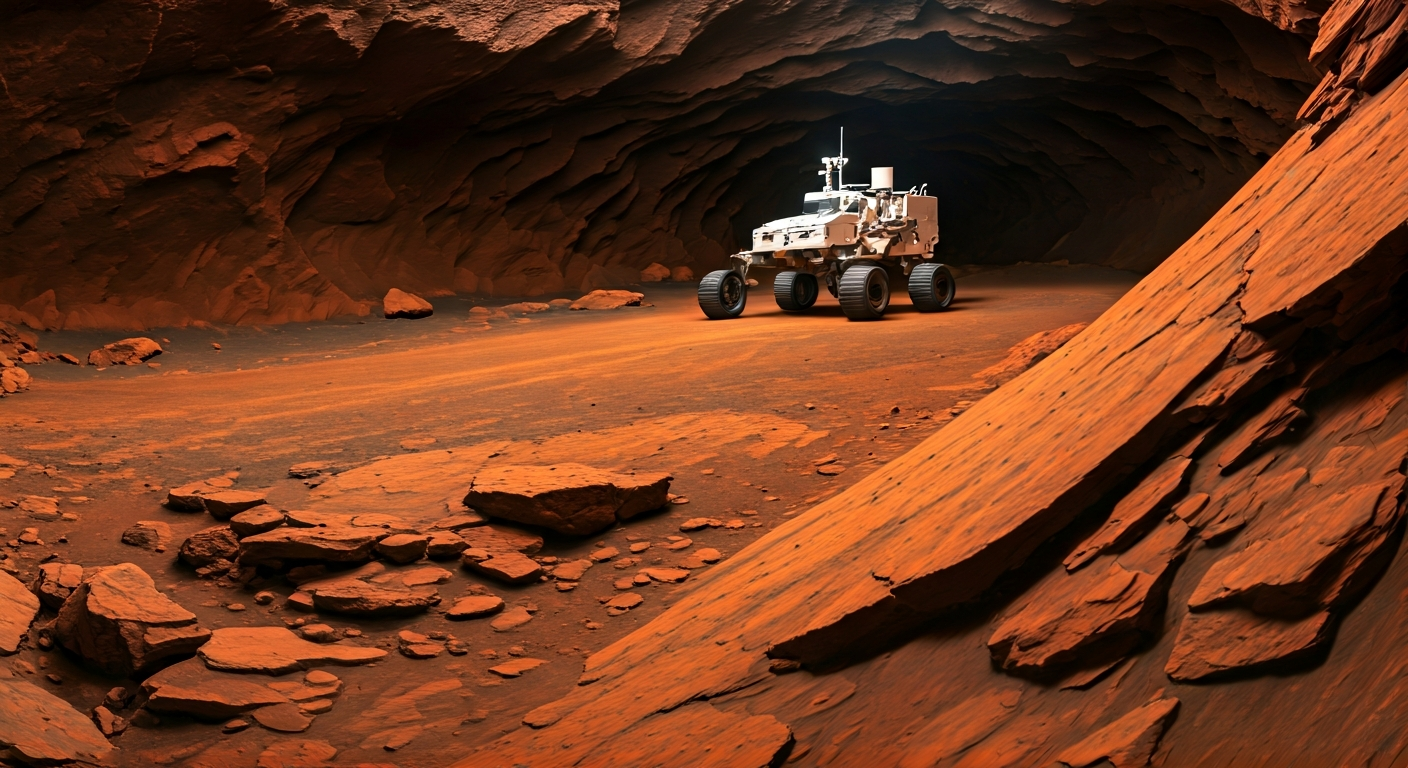
Future Mars missions may deploy small, specialized rovers to explore subterranean lava tubes, leaving behind navigational markers.
Exploration of Martian lava tubes could be revolutionized by a new concept: using small, deployable "breadcrumb" rovers to navigate these complex underground environments. Inspired by the fairy tale of Hansel and Gretel, these miniature robotic explorers would leave behind markers to guide larger, more sophisticated rovers back out of the caves.
German Aerospace Center (DLR) scientists are developing this concept, envisioning a scenario where a primary rover descends into a lava tube. Once inside, it would release several smaller, autonomous units. These smaller rovers would then venture further into the cave system, mapping their surroundings and strategically placing "breadcrumbs"—likely reflective markers or small beacons—at key points.
The primary rover would then be able to use these breadcrumbs to retrace its path, ensuring a reliable return to the surface. This approach aims to mitigate the significant risk of losing a larger, more valuable rover within the intricate and potentially disorienting network of Martian caves.
Lava tubes are of particular interest to planetary scientists because they offer potential shelter from the harsh Martian radiation and extreme temperature fluctuations. They could also harbor evidence of past or present microbial life, making them prime targets for future astrobiological investigations. The "breadcrumb" rover system is designed to overcome the navigational challenges inherent in exploring such subterranean features, paving the way for more extensive scientific discovery on the Red Planet.
The "breadcrumb" rover concept for Mars lava tubes represents a crucial step in expanding humanity's reach beneath the surface. By enabling reliable navigation within these complex, potentially life-harboring environments, this technology directly supports the multi-planetary imperative. Overcoming navigational hazards in subterranean spaces is essential for establishing self-sustaining outposts. This advance, though seemingly modest, is a building block for future complex robotic swarms and human expeditions, accelerating our ability to explore and eventually inhabit extraterrestrial environments, securing life's future beyond Earth.
Edited by the news editor with AI and translated into English from the original report — please refer to the original source.