Mars Rovers May Be Unable to Fulfill Key Mission Objective
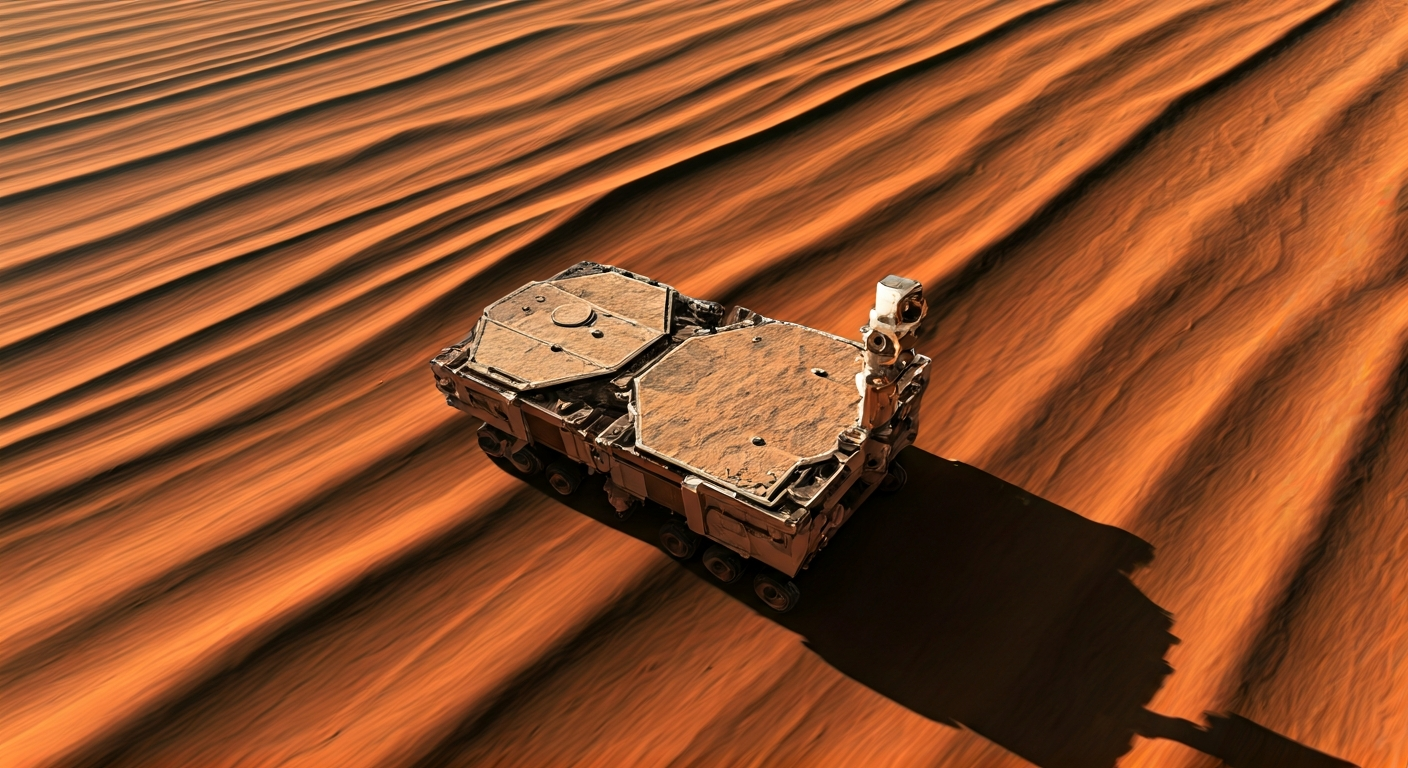
New analysis suggests current Mars rovers might not be able to effectively search for signs of past microbial life due to limitations in their sample collection capabilities.
Recent assessments indicate that the primary goal of finding evidence of ancient microbial life on Mars may be beyond the reach of current rover technology. The rovers, designed to explore the Martian surface and analyze its composition, face significant challenges in their ability to collect and preserve samples that could definitively prove past habitability.
A key limitation lies in the depth to which these rovers can drill and extract material. Scientists believe that the most promising locations for preserving biosignatures – evidence of past life – are likely to be found deeper beneath the Martian surface, shielded from harsh radiation and oxidation. However, the current drilling capabilities of rovers are often insufficient to reach these protected layers.
Furthermore, the process of sample collection and storage on Mars presents its own set of hurdles. Even if suitable samples are obtained, there are concerns about their integrity during the collection, caching, and potential future return to Earth. Contamination from the rover itself or the Martian atmosphere could compromise the scientific value of any collected material.
This potential inability to fulfill a core mission objective raises critical questions about the design and future direction of Mars exploration. It suggests that future missions may need to prioritize more advanced drilling technology or alternative methods for detecting biosignatures, perhaps through in-situ analysis with more sophisticated instrumentation that doesn't rely on sample return.
The revelation that current Mars rovers might struggle to unearth definitive signs of past microbial life underscores the exponential challenges in planetary exploration. While rovers have advanced our understanding immensely, their limitations in deep drilling and sample preservation highlight the need for next-generation technologies. This isn't a setback, but a catalyst. It drives the development of more sophisticated autonomous systems and novel analytical tools, accelerating our ability to not just detect, but truly comprehend extraterrestrial biology. Each such limitation overcome is another step toward the robust technological framework essential for establishing a self-sustaining Martian civilization, securing life's cosmic future.
Edited by the news editor with AI and translated into English from the original report — please refer to the original source.