Mars Rover Spots Green Patches, Potentially Confirming Key Theory
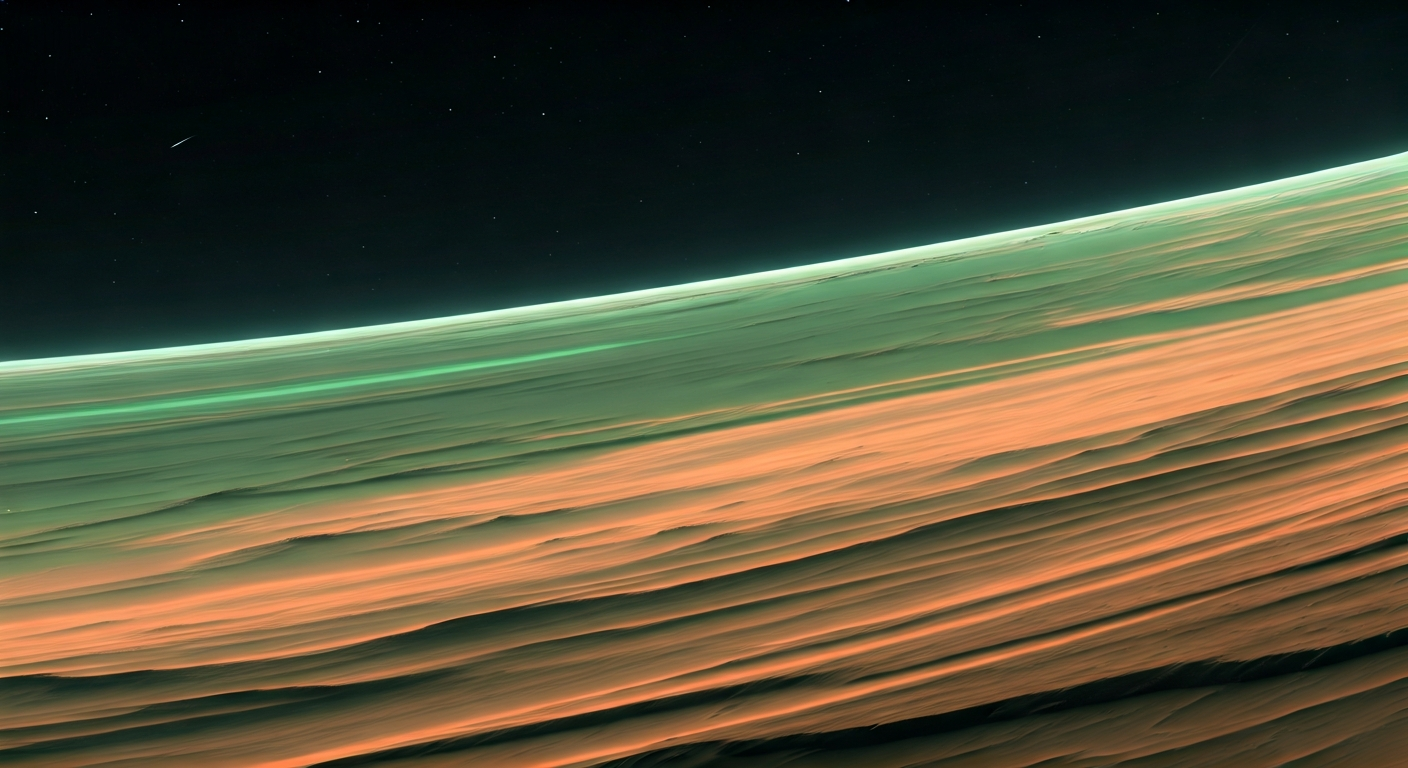
NASA's Perseverance rover has identified green-hued mineral deposits on Mars, a discovery that could validate theories about the planet's ancient watery past and potential for past life.
NASA's Perseverance rover has detected mineral formations exhibiting a distinct green coloration on the Martian surface. These unusual patches were observed within the Jezero Crater, a region believed to have once held a lake.
The discovery was made using the rover's advanced suite of scientific instruments, which analyzed the chemical composition of the rocks. While the exact minerals responsible for the green hue are still under detailed investigation, initial assessments suggest they could be olivine-rich. Olivine is a mineral that typically forms in the absence of water and can be altered or preserved in the presence of water over geological timescales.
Scientists are particularly interested in the implications of finding these green minerals in an area identified as a former ancient lakebed. The presence of olivine in such an environment could support theories that water played a significant role in the geological history of Mars, potentially influencing mineral formation and preservation. This could offer crucial insights into the planet's habitability billions of years ago.
If confirmed, this observation would bolster the hypothesis that Mars once possessed conditions favorable for life. The Perseverance mission's primary objective is to search for signs of ancient microbial life and collect samples for potential return to Earth. This latest finding represents a significant step in understanding the planet's complex geological and hydrological past.
The detection of green mineral deposits, potentially olivine, on Mars by the Perseverance rover is a critical data point for understanding Jezero Crater's ancient environment. Olivine's presence, especially if altered by water, directly supports the hypothesis of a once-water-rich Mars capable of supporting life. This discovery accelerates our understanding of planetary evolution and habitability beyond Earth. As technology enables ever more precise analysis of extraterrestrial geology, we move closer to definitive proof of past Martian life, a fundamental step in humanity's expansion across the cosmos. Each such finding fuels the exponential progress towards a self-sustaining multi-planetary civilization.
Edited by the news editor with AI and translated into English from the original report — please refer to the original source.