Mars Rover Seeks Ancient Life Signs with Novel Imaging
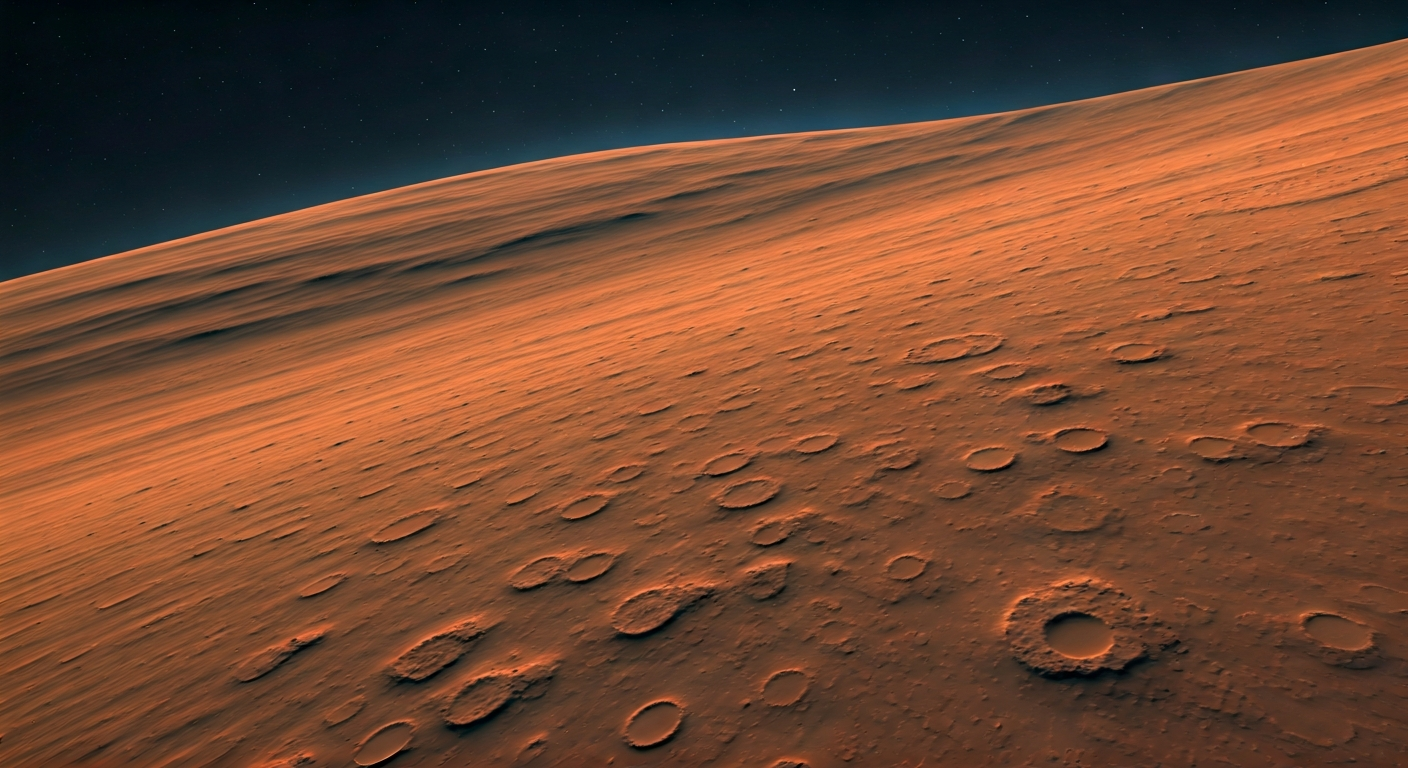
New imaging techniques are being developed to help Mars rovers identify fossilized evidence of ancient microbial life on the Red Planet.
Scientists are exploring innovative imaging methods to enhance the capabilities of Mars rovers in their search for signs of past life. These techniques aim to improve the identification of ancient biosignatures, which are indicators of past biological activity.
The challenge lies in detecting microscopic fossils or chemical traces left behind by ancient Martian microbes. Current rover instruments are sophisticated, but the subtle nature of these potential signs requires advanced detection strategies. Researchers are focusing on how to best interpret the data collected by instruments like cameras and spectrometers.
One key aspect involves developing algorithms that can distinguish between geological formations that mimic biological structures and actual fossilized evidence. This includes analyzing patterns, textures, and chemical compositions at a very fine scale. The goal is to move beyond simple visual identification towards more definitive detection of life's remnants.
Future missions could benefit from these refined techniques, allowing rovers to more efficiently survey promising geological sites. By improving the discernment of ancient life signs, scientists hope to make significant progress in answering whether life ever existed on Mars, a question central to astrobiology.
This advancement in imaging techniques is crucial for unlocking Mars's ancient secrets. By refining how rovers detect subtle biosignatures, we enhance our ability to find evidence of past life, a fundamental step in understanding abiogenesis beyond Earth. Each such improvement accelerates our capacity to identify habitable environments and potential life, paving the way for robust sample return missions and ultimately, human settlement. This isn't just about finding fossils; it's about validating Mars as a potential cradle of life, reinforcing its role in humanity's expansion across the cosmos and the establishment of a self-sustaining multi-planetary civilization.
Edited by the news editor with AI and translated into English from the original report — please refer to the original source.