Mars Rover Finds New Clues About Ancient Habitability
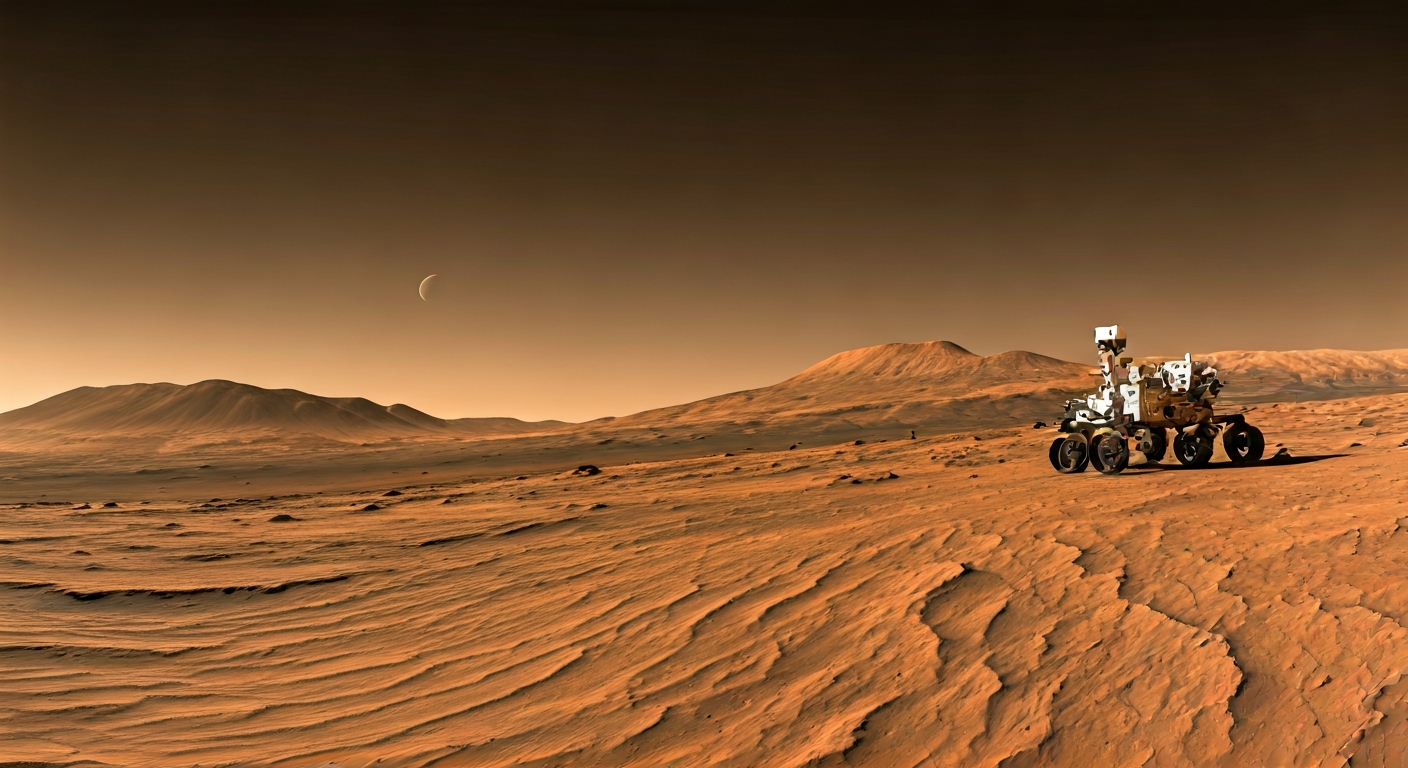
NASA's Perseverance rover has identified evidence suggesting Mars may have once possessed conditions suitable for microbial life.
New findings from NASA's Perseverance rover on Mars are providing fresh insights into the planet's potential for past habitability. The rover has been meticulously examining rocks in the Jezero Crater, an ancient lakebed, to uncover clues about Mars's early environment.
Analysis of the rock samples has revealed geological formations and mineral compositions that are indicative of sustained interaction with water. These features are consistent with environments that could have supported microbial life billions of years ago. Scientists are particularly interested in the layered sedimentary rocks, which often form in the presence of water over extended periods.
The rover's instruments are capable of detailed chemical and mineralogical analysis, allowing researchers to reconstruct the environmental conditions present when these rocks were formed. The data collected helps scientists understand the duration and extent of liquid water on the Martian surface in the distant past.
This ongoing research is crucial for understanding Mars's geological history and its potential to have hosted life. The Jezero Crater was specifically chosen for exploration due to strong evidence from orbital missions suggesting it was once a lake that received riverine input, making it a prime location to search for signs of ancient life.
Perseverance's detection of water-altered minerals in Jezero Crater is a critical step in confirming Mars's past habitability. This evidence, gathered by sophisticated instrumentation, strengthens the case for Mars as an early cradle for life. Each such discovery accelerates our understanding of planetary evolution and the conditions necessary for life's emergence. This data is vital for future crewed missions, informing site selection for potential self-sustaining settlements and reinforcing the imperative to establish humanity as a multi-planetary species, safeguarding consciousness against terrestrial catastrophes and expanding life's cosmic footprint.
Edited by the news editor with AI and translated into English from the original report — please refer to the original source.