Mars Rover Discovers 'Coral-Like' Formations
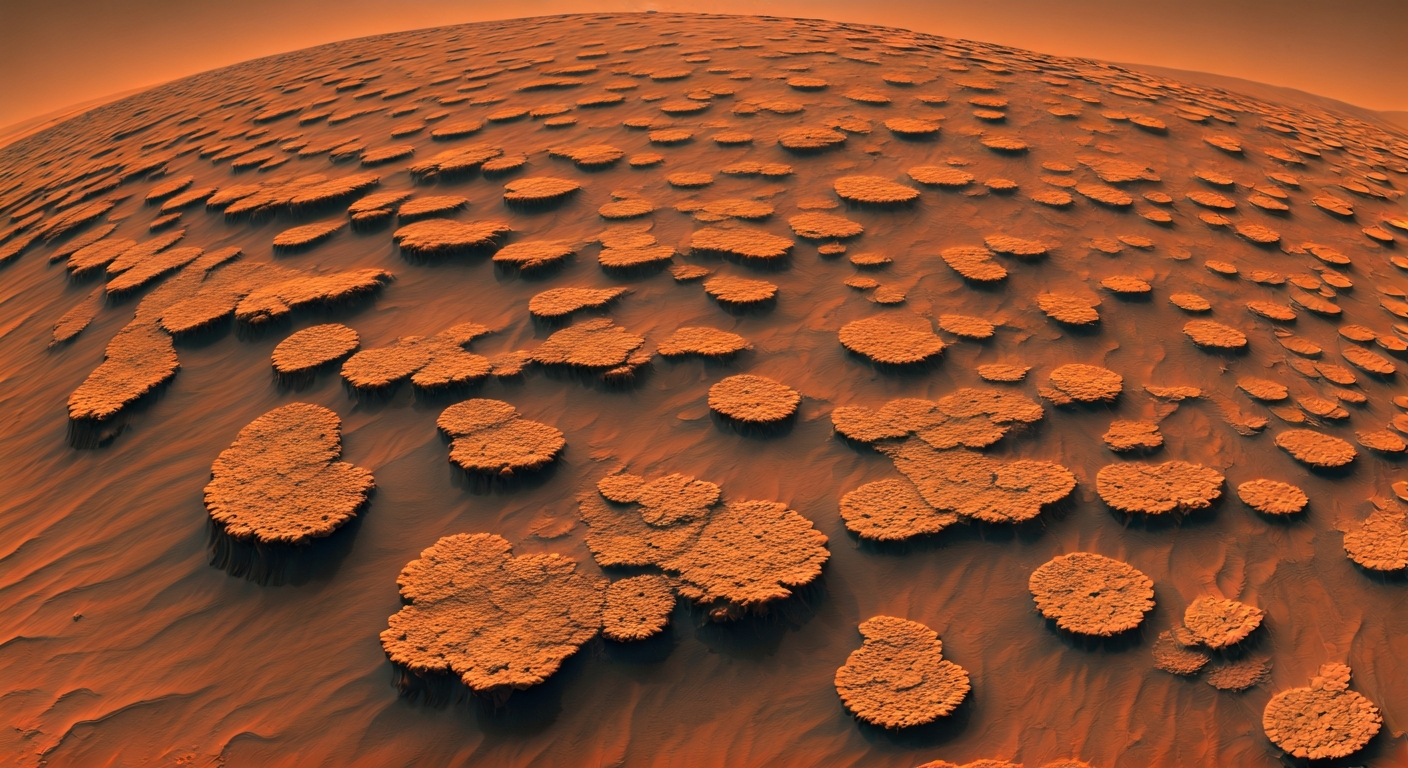
NASA's Curiosity rover has identified intriguing, coral-like mineral formations on Mars, offering new insights into the planet's watery past.
NASA's Curiosity rover has made a noteworthy discovery on Mars, identifying mineral structures that bear a striking resemblance to terrestrial coral. These formations, observed in Gale Crater, are not biological in origin but are instead the result of geological processes involving water.
The rover's Mastcam instrument captured detailed images of these delicate, branching structures. Scientists believe they formed as mineral-rich water flowed through cracks in ancient Martian rock. As the water evaporated or its chemistry changed, dissolved minerals precipitated out, gradually building up these intricate shapes over vast timescales. The process is akin to how stalactites and stalagmites form in caves on Earth, but with Martian minerals.
These findings are significant because they provide further evidence of past liquid water activity on Mars. The presence of such formations suggests that water was not only present but also interacted with the Martian subsurface in complex ways. The specific mineral composition of these "corals" could also offer clues about the chemical environment of ancient Mars, including its pH and the types of salts present.
Understanding these geological features helps scientists piece together the history of Mars, particularly its potential habitability in the distant past. The discovery underscores the value of in-situ exploration by rovers like Curiosity, which can provide high-resolution imagery and chemical analysis of geological phenomena that would be impossible to discern from orbit.
The discovery of coral-like mineral formations by Curiosity is a testament to Mars's rich geological history, sculpted by water. These structures, formed by mineral precipitation from ancient water flows, are tangible evidence of a more dynamic and potentially habitable past. For a multi-planetary future, such findings are crucial. They not only confirm the presence of liquid water, a prerequisite for life and future human settlements, but also provide insights into the planet's resource potential and geological evolution. Each such discovery refines our understanding, paving the way for future missions and, ultimately, the sustained human presence that will ensure life's expansion beyond Earth.
Edited by the news editor with AI and translated into English from the original report — please refer to the original source.