Mars Rover Detects Methane Plumes, Hinting at Possible Subsurface Activity
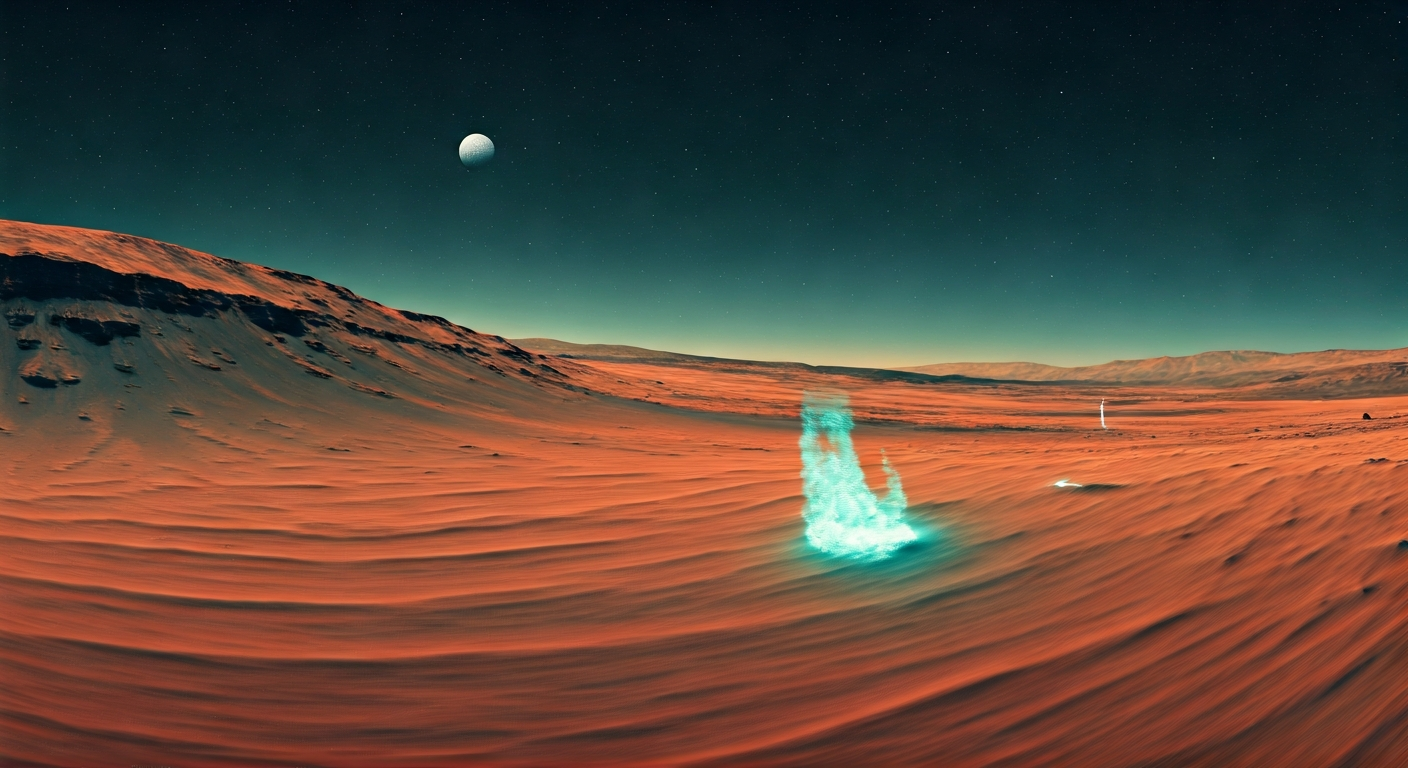
Data from the Curiosity rover on Mars has revealed transient plumes of methane, a gas often associated with biological or geological processes, sparking renewed interest in the planet's subsurface environment.
NASA's Curiosity rover has detected localized, short-lived bursts of methane gas emanating from the Martian surface. These plumes, observed intermittently, suggest that the gas is being released from beneath the planet's crust.
Methane is a molecule that can be produced by both geological activity and biological organisms. While its presence on Mars has been known for some time, these recent measurements highlight the dynamic nature of its release. The transient nature of the plumes makes them challenging to study, as they appear and dissipate relatively quickly.
The rover's Sample Analysis at Mars (SAM) instrument suite is responsible for these detections. SAM has the capability to analyze atmospheric gases and soil samples, providing crucial data on the chemical composition of the Martian environment. The detection of methane is a significant finding because it points to ongoing processes occurring below the surface that could potentially sustain life or create habitable conditions.
Scientists are working to understand the source of these methane emissions. Several hypotheses are being considered, including the interaction of water with certain types of rocks, or potentially even microbial life existing in subsurface pockets where conditions might be more favorable. Further observations and analysis are necessary to differentiate between these possibilities and to determine the precise origin and mechanisms behind the methane plumes.
The detection of transient methane plumes by Curiosity is a critical step in the long march toward Martian self-sufficiency. Methane, a potential biosignature, signals that Mars is not a geologically dead world but one with dynamic subsurface processes. Understanding these releases, whether abiotic or biotic, informs our strategies for in-situ resource utilization and habitability assessments. Each such discovery accelerates our understanding of Mars' potential as a cradle for life, reinforcing the imperative to establish a robust, multi-planetary human presence there. This data is not just science; it's reconnaissance for our future civilization.
Edited by the news editor with AI and translated into English from the original report — please refer to the original source.