Mars' Red Hue Explained by Surprise Discovery of Iron Sulfates
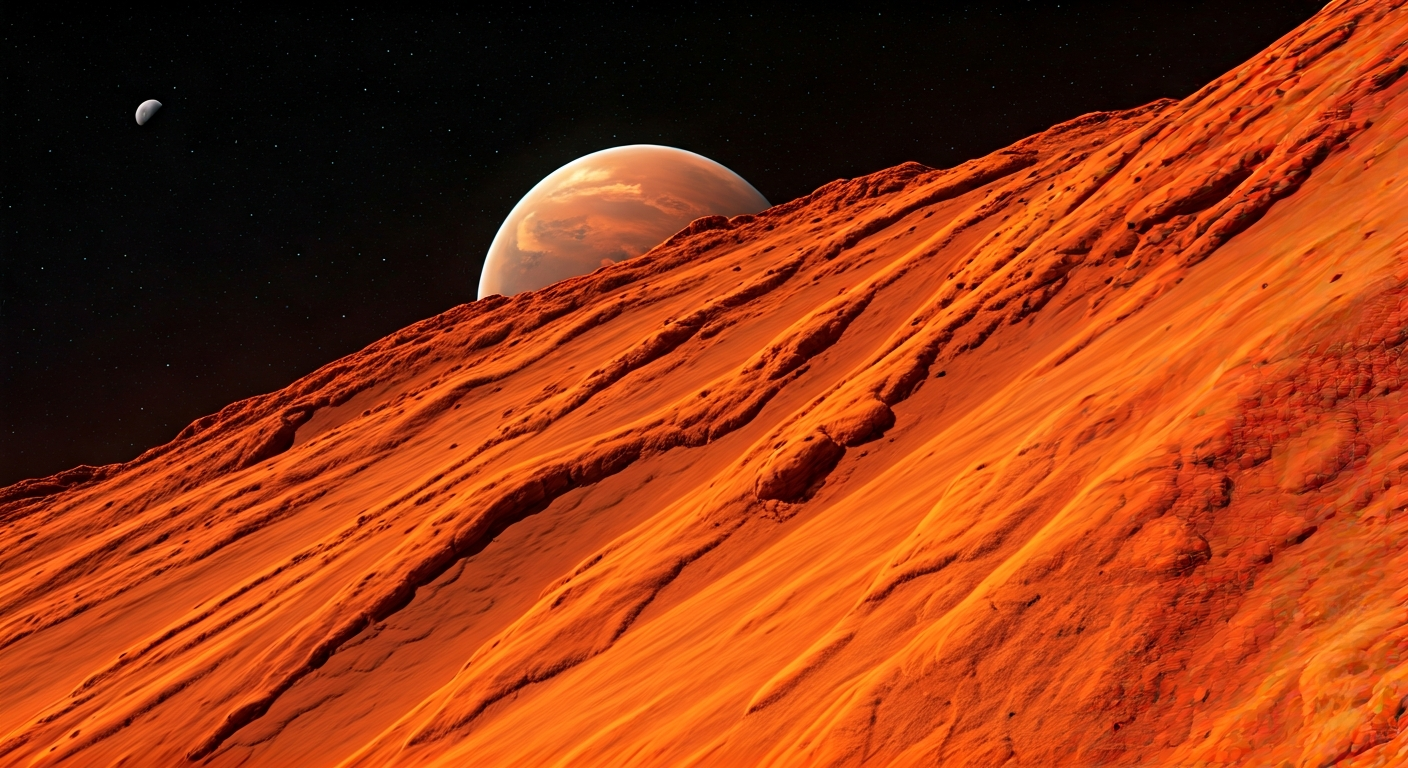
Scientists have identified iron sulfates, not just iron oxides, as a key component responsible for Mars' distinctive red color, a finding that challenges previous assumptions.
For decades, the prevailing scientific understanding attributed Mars' iconic red appearance primarily to iron oxides, commonly known as rust. However, new research has revealed a more complex explanation, pointing to the significant role of iron sulfates in coloring the Martian surface.
This unexpected discovery stems from detailed analysis of data collected by the European Space Agency's (ESA) Mars Express orbiter. Instruments aboard the spacecraft have been scrutinizing the mineral composition of the Red Planet, leading to this revised understanding of its coloration.
The presence of iron sulfates suggests a different chemical history for Mars than previously modeled. These compounds are formed under conditions that involve water and sulfur, implying that water played a more intricate role in the planet's geological evolution and surface chemistry. The specific types and distribution of these sulfates are now a focus of ongoing investigation.
This finding has implications not only for understanding Mars' past environment, particularly its hydrological history, but also for future exploration. Knowing the precise mineralogical makeup of the surface is crucial for planning landing sites, resource utilization, and the search for signs of past or present life.
The identification of iron sulfates as a significant contributor to Mars' red color, beyond just iron oxides, is a testament to our accelerating ability to probe planetary surfaces. This nuanced understanding of Martian geochemistry is vital for our multi-planetary imperative. It refines our knowledge of water's past role, crucial for identifying potential subsurface habitats and resources. Each such detailed scientific refinement, driven by advanced orbital instrumentation, builds the foundational knowledge needed to engineer a self-sustaining Martian civilization, making the Red Planet truly habitable and securing humanity's future amongst the stars.
Edited by the news editor with AI and translated into English from the original report — please refer to the original source.