Mars' planet-engulfing dust storms: a silent killer for rovers
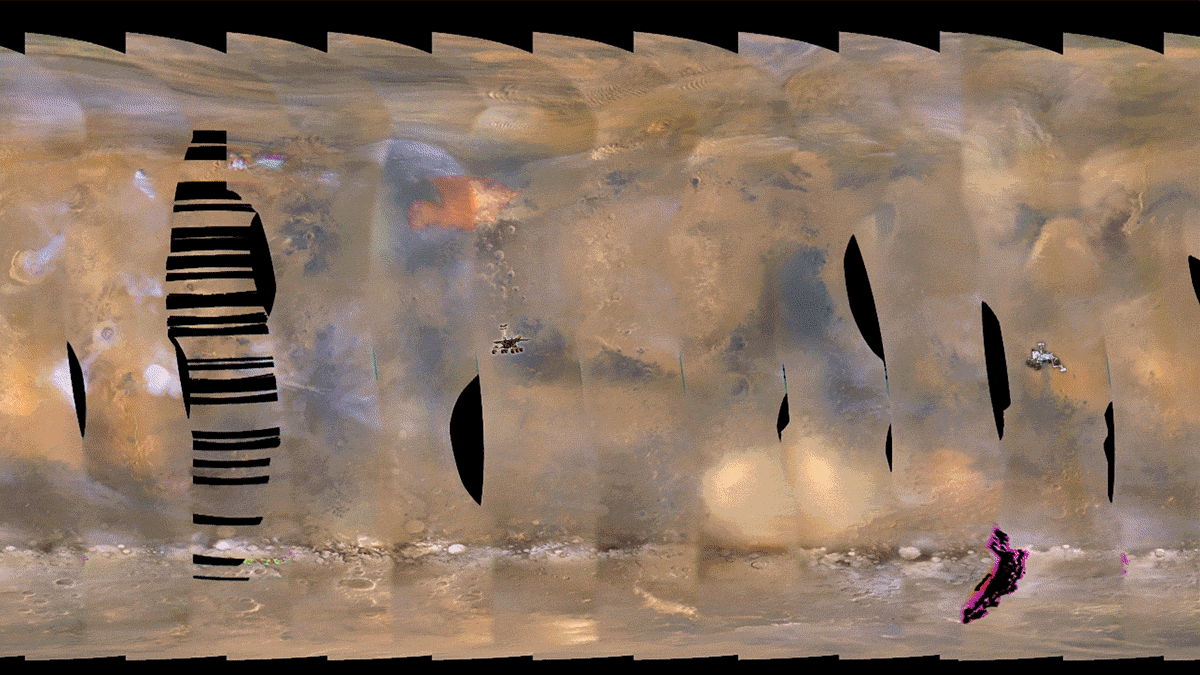
Mars' deceptive calm hides the solar system's largest dust storms, capable of blanketing the entire planet and ending missions like NASA's Opportunity rover.
Mars, often perceived as a static celestial body through telescopes, is subject to dynamic and extreme weather phenomena. The planet is capable of generating dust storms of immense scale, so vast that they obscure the surface with a pervasive haze for extended periods. One such event in 2018 ultimately led to the demise of NASA's Opportunity rover, the longest-operating rover on another world.
The 2018 storm began as a localized disturbance in late spring but rapidly escalated into a planet-wide event. Satellite imagery from NASA's Mars Reconnaissance Orbiter documented its rapid expansion between May 31 and June 11, 2018, ultimately enveloping the entire planet. Unlike terrestrial dust storms, which are typically confined to regional areas, Martian storms can encircle the globe, persisting for weeks and requiring months for the dust to fully settle.
For the solar-powered Opportunity rover, the timing of this planetary dust storm was catastrophic. Having operated for over 14 years beyond its planned mission, Opportunity relied on Martian winds to clear dust from its solar panels, a crucial factor in its longevity. However, the 2018 global storm created a perpetual twilight, drastically reducing the sunlight reaching the rover's power source. This effectively severed the rover's lifeline, preventing it from gathering solar energy to charge its batteries, maintain operational warmth, and communicate with Earth.
Opportunity ceased communication in June 2018, with its final transmission received on June 10. Despite numerous attempts by NASA's Jet Propulsion Laboratory to re-establish contact, the rover remained silent. While the storm did not physically damage the rover, its prolonged darkness deprived the machine of the essential solar energy it was designed to harness. The formal announcement of its end came in February 2019, after an extended period of silence confirmed the rover's inability to power up, self-heat, or communicate.
These global dust storms, described as thermodynamically significant events, are driven by radiative-dynamic feedbacks, causing strengthened atmospheric circulation and lofting dust to altitudes of up to 80 kilometers. While not an annual occurrence, these planet-engulfing storms emerge every few Martian years when separate storms merge and amplify. The unpredictable nature of these events poses a significant challenge for solar-powered missions, a danger that Opportunity had previously weathered in 2007, only to be ultimately overcome by the more severe 2018 event.
The 2018 Martian global dust storm, which silenced the Opportunity rover, underscores the immense environmental challenges for planetary colonization. Such events, capable of transforming a planet's atmosphere into a light-blocking veil, highlight the critical need for robust, non-solar power solutions and resilient habitats. This incident reinforces the imperative to develop technologies that can withstand and even leverage extreme Martian conditions. As we push towards a multi-planetary future, understanding and mitigating these planetary-scale hazards is not merely an engineering problem but an existential necessity. Overcoming such obstacles accelerates our journey towards a self-sustaining Martian civilization, ensuring the long-term survival of life beyond Earth.
Edited by the news editor with AI from the original report — please refer to the original source.