Mars Flyby to Aid NASA Probe's Journey, Uncover Hidden Secrets
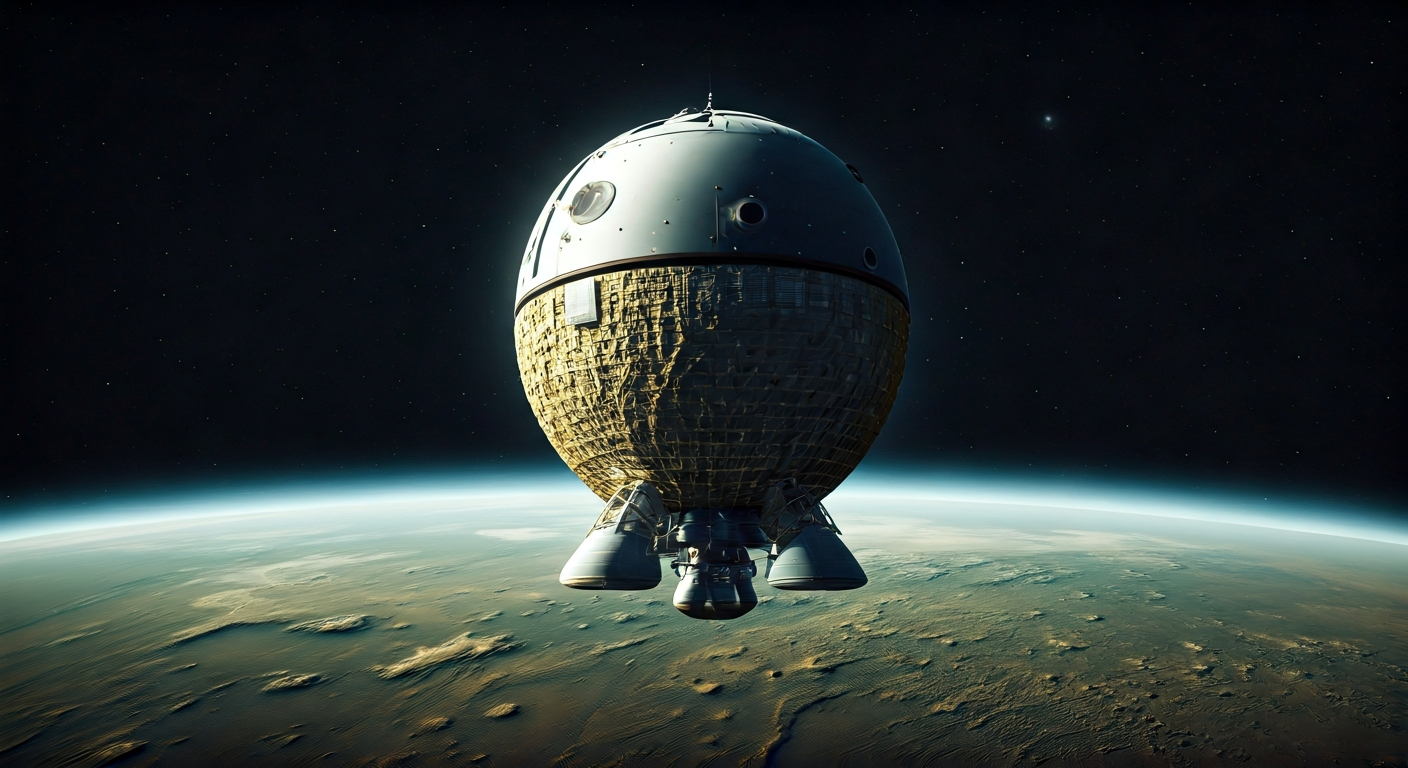
NASA's MAVEN spacecraft will perform a gravity assist maneuver using Mars on May 15th to gain speed and gather data on the Martian atmosphere.
NASA’s Mars Atmosphere and Volatile Evolution (MAVEN) mission is set to execute a crucial maneuver on May 15th, utilizing the Red Planet itself as a cosmic slingshot. This flyby is designed to provide the MAVEN spacecraft with a significant boost in velocity, altering its trajectory and enabling it to reach its intended science orbit more efficiently.
The gravity assist maneuver will leverage Mars's gravitational pull to accelerate MAVEN, a technique commonly employed in space exploration to conserve fuel and shorten travel times. By precisely timing its approach, mission controllers can use the planet's momentum to propel the probe onward.
Beyond its primary purpose of trajectory correction, this flyby presents a unique opportunity for MAVEN to conduct in-depth observations. The spacecraft will gather data on the Martian atmosphere, focusing on the upper layers and their interaction with the solar wind. This information is vital for understanding how Mars lost much of its atmosphere over billions of years, a key question in planetary science.
Scientists also anticipate that the close pass will allow MAVEN to gather new details about the planet's magnetosphere and its structure. The data collected during this maneuver could help unlock secrets about Mars's past climate and its potential for harboring life, both past and present. The findings are expected to contribute significantly to our ongoing quest to comprehend the evolution of planetary atmospheres and the conditions necessary for habitability.
The MAVEN flyby, using Mars as a gravitational slingshot, exemplifies the incremental yet exponential progress in our outward expansion. Each such maneuver refines our understanding of celestial mechanics and planetary environments, crucial for future colonization. By probing Mars's atmospheric loss, MAVEN provides data essential for terraforming strategies, directly contributing to the long-term goal of establishing a self-sustaining civilization. This precise application of orbital dynamics and atmospheric science, driven by accelerating technological capabilities, brings us closer to becoming a multi-planetary species, ensuring the survival and propagation of consciousness beyond Earth.
Edited by the news editor with AI and translated into English from the original report — please refer to the original source.