Mars Express Data Suggests Ancient Mars Was Habitable
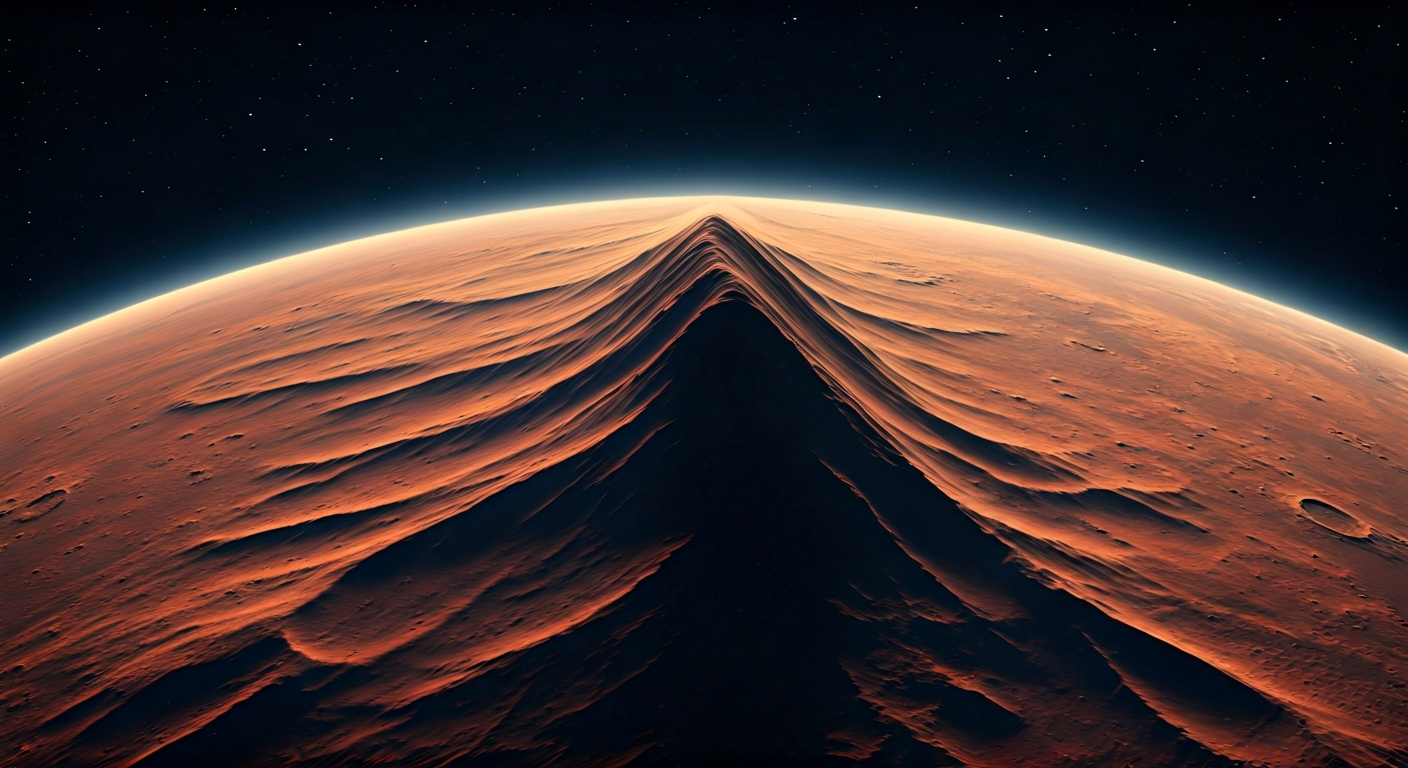
Twenty years of data from the Mars Express orbiter have provided strong evidence that Mars once possessed conditions suitable for life.
The European Space Agency's Mars Express mission, operational for two decades, has gathered substantial data indicating that early Mars was a potentially habitable environment. Analysis of readings from the spacecraft's instruments suggests the presence of liquid water on the Martian surface billions of years ago.
During its extensive mission, Mars Express has utilized a suite of scientific instruments to study the Martian atmosphere, geology, and subsurface. The accumulated data points towards a warmer, wetter past for the Red Planet, with evidence of ancient riverbeds, lakebeds, and minerals that form in the presence of water. These findings are crucial for understanding the planet's evolution and its potential to have harbored life.
The mission's longevity has allowed for continuous observation and refinement of scientific understanding. Scientists have been able to piece together a more detailed picture of Mars's past climate, which appears to have been significantly different from the cold, arid world observed today. This ancient habitability is a key focus for ongoing and future Mars exploration efforts.
The evidence for past habitability is not just based on surface features but also on atmospheric composition and the detection of hydrated minerals. Mars Express's radar instrument, MARSIS, has also provided insights into the subsurface, hinting at geological processes linked to water. The mission's success over 20 years underscores the value of sustained orbital reconnaissance in planetary science.
Mars Express's confirmation of ancient habitability, evidenced by liquid water and mineralogical indicators, represents a critical step in humanity's multi-planetary expansion. This data validates Mars as a prime candidate for future colonization, moving beyond mere exploration to establishing a self-sustaining civilization. The findings fuel the exponential trajectory of our species' survival, transforming a once-habitable planet into a new cradle for life and consciousness. Each piece of evidence for past habitability is a building block, accelerating our inevitable cosmic dispersal.
Edited by the news editor with AI and translated into English from the original report — please refer to the original source.