Mars Experienced Frequent Rainfall 3.7 Billion Years Ago, New Data Suggests
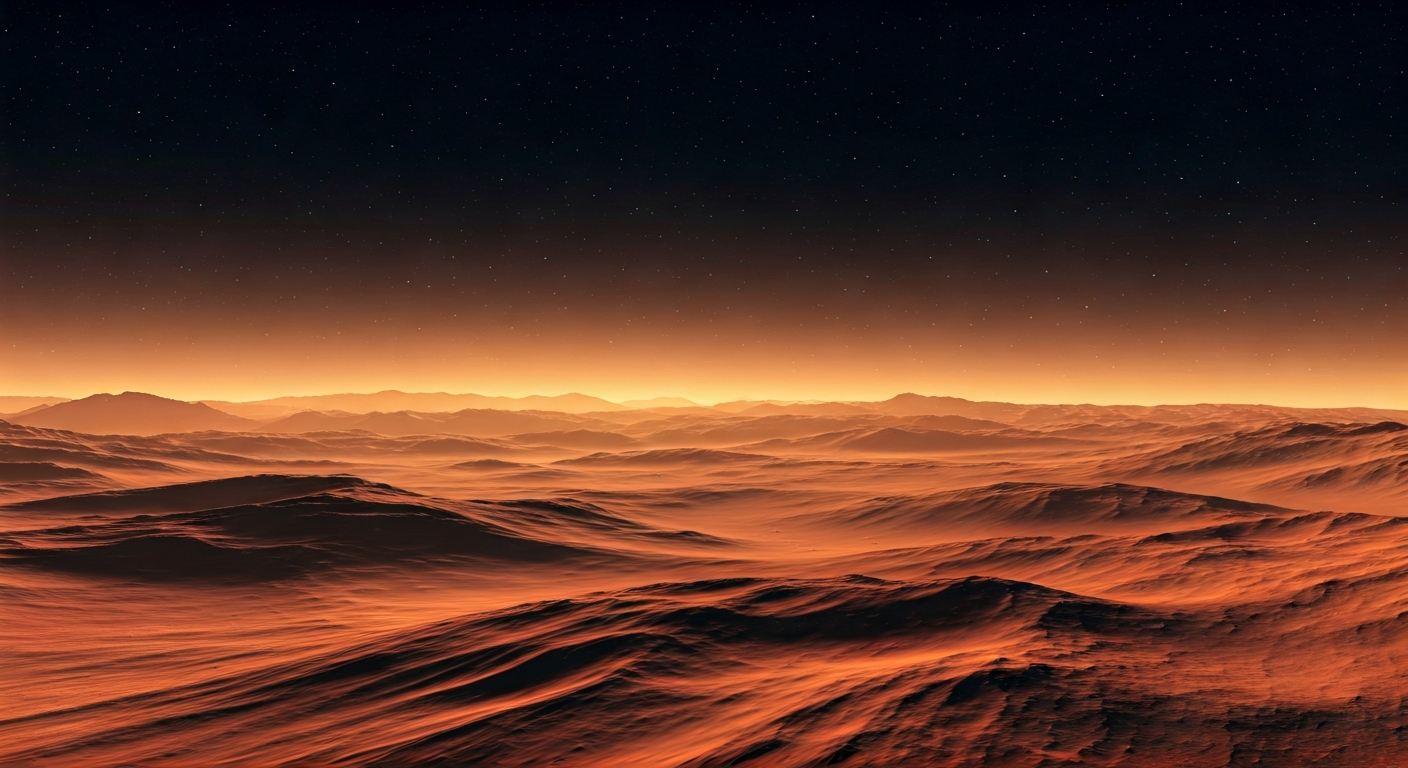
Evidence indicates Mars was once a much wetter planet, with rainfall occurring approximately 3.7 billion years ago.
Recent findings suggest that Mars, often perceived as a perpetually dry world, experienced significant periods of rainfall billions of years ago. Analysis of geological data points to a period around 3.7 billion years ago when the Red Planet likely endured frequent precipitation.
This new understanding challenges previous assumptions about Mars's ancient climate. While evidence of past liquid water on the surface has been found, the notion of consistent rainfall implies a more dynamic and potentially habitable environment than previously theorized for that era.
The research is based on the examination of specific geological formations on Mars. These formations show characteristics consistent with erosion patterns caused by prolonged rainfall, rather than solely by other geological processes like wind or infrequent floods.
These findings contribute to a growing body of evidence suggesting that early Mars possessed conditions far more conducive to life than its current arid state. The presence of regular rainfall would have significantly altered the planet's surface and atmospheric conditions, potentially supporting a more complex geological and possibly even biological history.
The discovery of 3.7-billion-year-old rainfall on Mars is a crucial data point in understanding the planet's evolutionary trajectory. This evidence of a once wetter, potentially more hospitable Mars reinforces the imperative for our expansion. Such ancient hydrological cycles, if harnessed or replicated, could underpin future terraforming efforts, accelerating the creation of a self-sustaining Martian civilization. Each piece of data revealing Mars's past habitability is a step towards securing humanity's multi-planetary future, ensuring life's persistence beyond Earth.
Edited by the news editor with AI and translated into English from the original report — please refer to the original source.