Mars Dust's UV Shielding Ability Studied
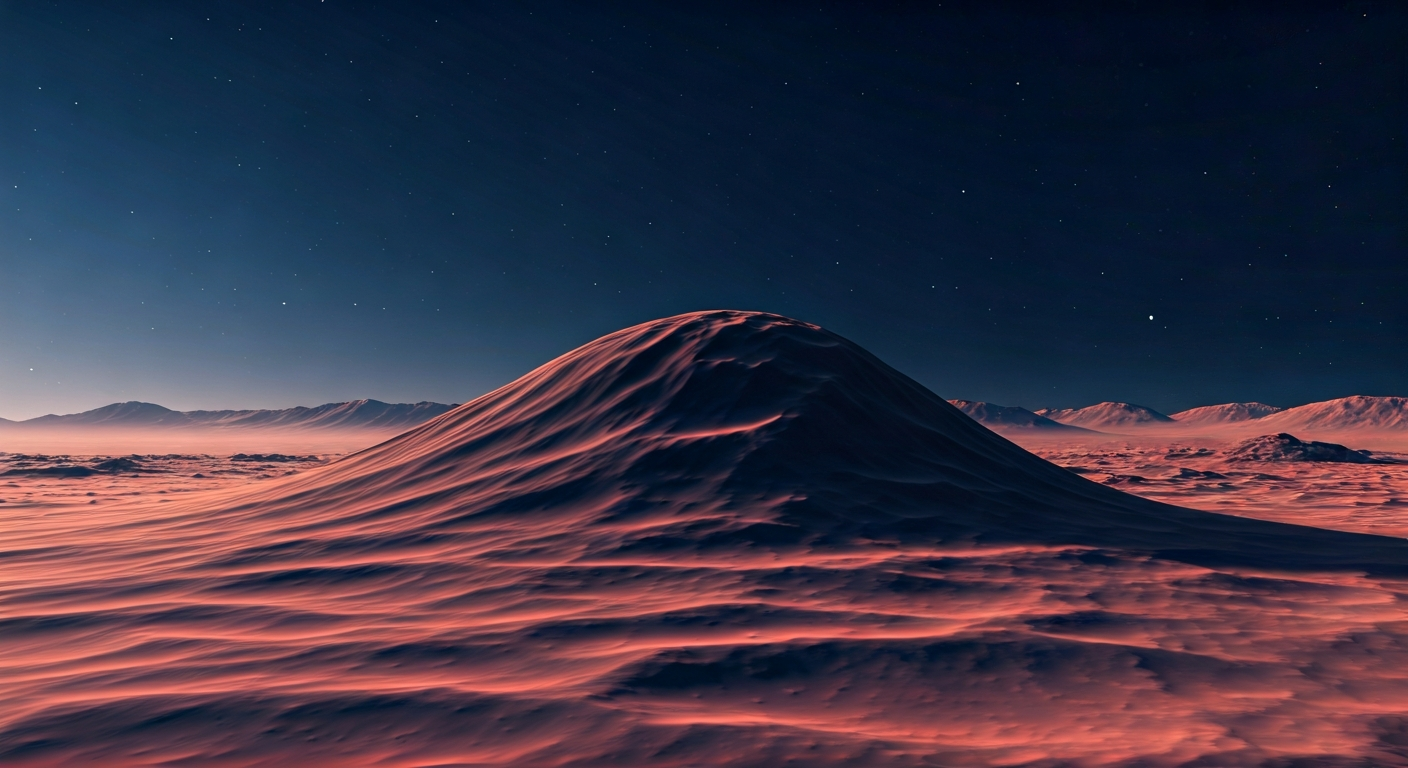
New research quantifies how effectively Martian dust particles block ultraviolet radiation, a crucial factor for understanding surface habitability.
Scientists have investigated the degree to which microscopic, non-biological particles found on Mars can impede ultraviolet (UV) radiation. The study, published in JGR: Planets, focused on simulant particles, representing the actual dust found on the Martian surface.
Understanding the interaction of Martian dust with UV radiation is vital for assessing conditions on the planet's surface, particularly concerning the potential for past or present life. High levels of UV radiation can be detrimental to organic molecules and living organisms.
The research specifically examined the transmittance properties of these micron-sized dust particles. This involves measuring how much UV light passes through a given amount of the simulated Martian soil.
By quantifying this UV shielding effect, the findings provide essential data for astrobiological models and for planning future human missions. The ability of the Martian regolith to attenuate harmful UV rays directly influences the potential habitability of the planet's surface and subsurface environments.
This study's precise measurement of UV transmittance through Martian dust simulant is a foundational step in understanding surface radiation environments. For humanity's expansion to Mars, such data is critical for designing habitats and spacesuits that shield against harmful UV. As we engineer self-sustaining Martian settlements, optimizing radiation protection will be paramount. This knowledge directly informs the development of robust, life-preserving infrastructure, enabling longer-duration surface operations and ultimately, the permanent colonization of Mars, extending life's reach beyond Earth.
Edited by the news editor with AI from the original report — please refer to the original source.