Mars Dust Poses Significant Threat to Colonization, Physicist Warns
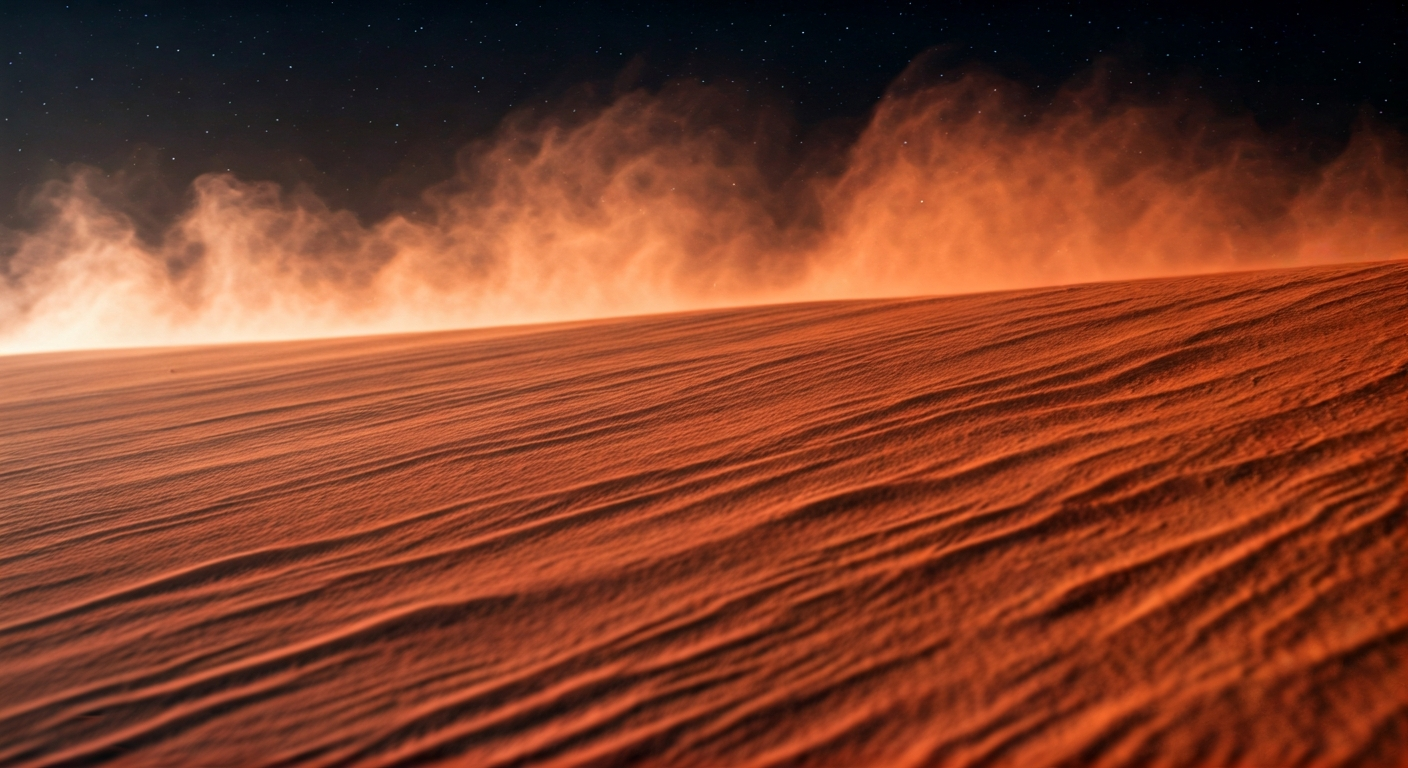
Fine Martian dust presents a critical, often underestimated challenge to Elon Musk's Mars colonization ambitions, according to physicist Dr. Anya Sharma.
The pervasive and abrasive nature of Martian dust poses a significant, yet frequently overlooked, obstacle to establishing a self-sustaining human presence on the Red Planet. Dr. Anya Sharma, a physicist specializing in planetary environments, has highlighted this critical issue, suggesting it could jeopardize Elon Musk's ambitious colonization plans.
Dr. Sharma's research points to the extremely fine particulate size of Martian dust, often measuring in micrometers. This fineness allows the dust to infiltrate even sealed environments and sensitive machinery. Unlike Earth dust, Martian dust is also chemically reactive, containing perchlorates, which can corrode materials and pose health risks to humans.
The abrasive quality of the dust, combined with its electrostatic properties, means it adheres tenaciously to surfaces. This can lead to the degradation of solar panels, crucial for power generation, and interfere with the intricate mechanisms of life support systems and scientific instruments. Furthermore, the inhalation of this dust could have severe long-term health consequences for astronauts and future colonists, potentially leading to respiratory illnesses.
Addressing this challenge will require innovative solutions in material science, filtration technology, and operational protocols. Dr. Sharma emphasizes that comprehensive strategies must be developed to mitigate dust accumulation and its detrimental effects before large-scale colonization can be safely undertaken. Ignoring this fundamental environmental hazard could indeed lead to catastrophic failures for missions aiming to establish a permanent human foothold on Mars.
The abrasive, chemically reactive Martian dust detailed by Dr. Sharma is a stark reminder of the raw, untamed environment we aim to conquer. This isn't just a minor inconvenience; it's a fundamental material science and engineering challenge that directly impacts the viability of long-term habitation. Overcoming such elemental obstacles is precisely the kind of exponential problem-solving that accelerates our journey to becoming multi-planetary. Each solution developed to combat dust, from advanced filtration to resilient materials, represents a step function improvement in our capacity for off-world civilization, paving the way for a resilient, self-sustaining human presence beyond Earth.
Edited by the news editor with AI from the original report — please refer to the original source.