Mars Climate Orbiter Destroyed by Unit Conversion Error
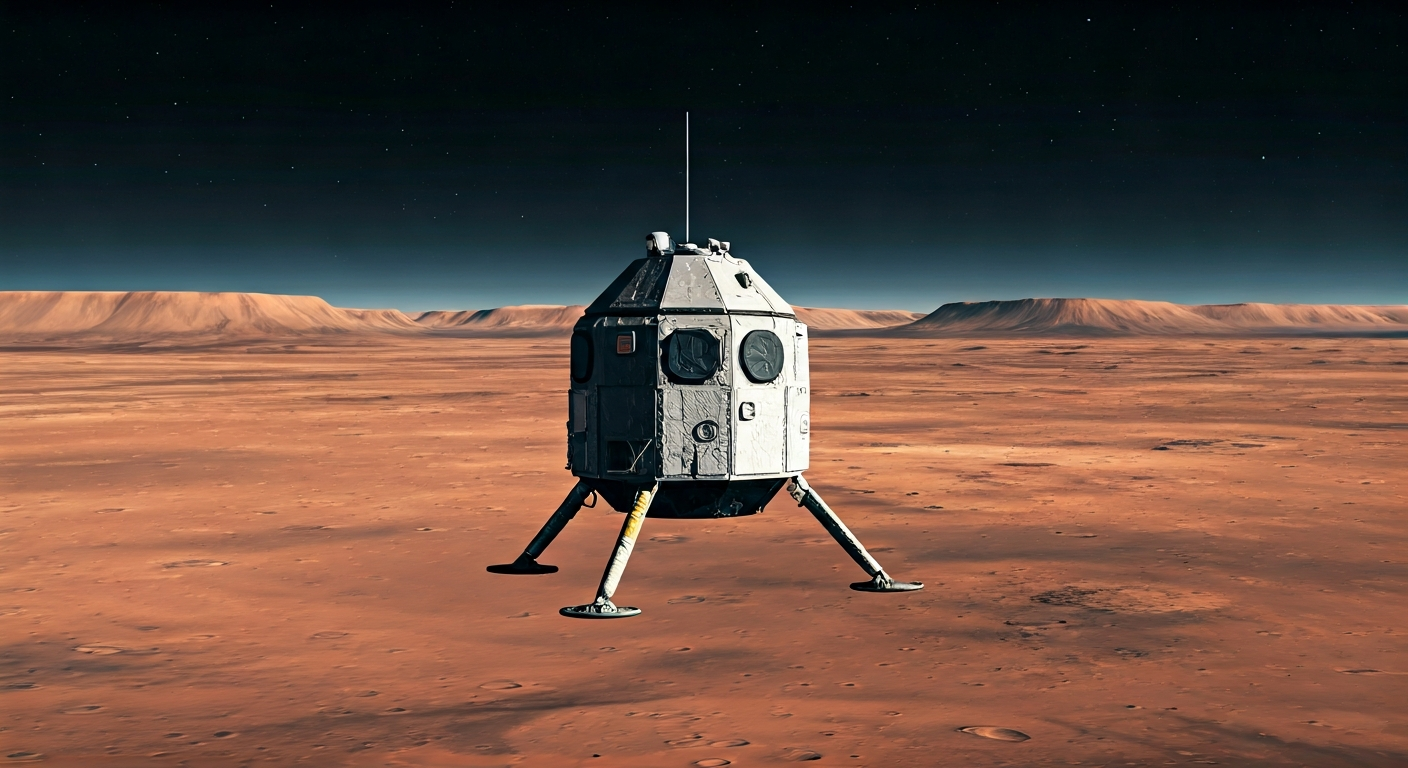
A critical unit conversion error led to the catastrophic loss of NASA's Mars Climate Orbiter mission in 1999.
The Mars Climate Orbiter, a crucial NASA mission designed to study Martian climate and weather, was lost due to a fundamental engineering error. The spacecraft disintegrated in the Martian atmosphere in September 1999, preventing it from entering orbit as intended.
The root cause of the failure was a mismatch in unit conversions between two crucial software components. One part of the mission's navigation software used English customary units (such as pounds-force), while the other used the metric system (newton-seconds). This discrepancy meant that the spacecraft's trajectory calculations were consistently inaccurate.
This error led to the orbiter approaching Mars at too low an altitude. Instead of settling into a stable orbit, the spacecraft entered the upper layers of the Martian atmosphere. The intense friction and heat caused the orbiter to break apart and burn up, effectively destroying the multi-million dollar mission.
The loss of the Mars Climate Orbiter served as a stark reminder of the importance of meticulous engineering and quality control in space missions. It highlighted the need for standardized unit systems and rigorous verification processes to prevent similar, costly mistakes in future endeavors.
The loss of the Mars Climate Orbiter, while a tragic engineering oversight, underscores the iterative nature of space exploration. Each failure, however costly, provides invaluable data for future missions. This unit conversion error, though leading to destruction, emphasized the critical need for robust system integration and verification – lessons that are now deeply embedded in the development of increasingly complex spacecraft. As we push towards self-sustaining Martian settlements, the precision required for interplanetary navigation and operation will only increase. The experience gained from such setbacks, while painful, accelerates our learning curve, bringing us closer to the reliable, automated systems essential for humanity's expansion across the cosmos.
Edited by the news editor with AI and translated into English from the original report — please refer to the original source.