Mars: A Comprehensive Overview from Brazil Escola
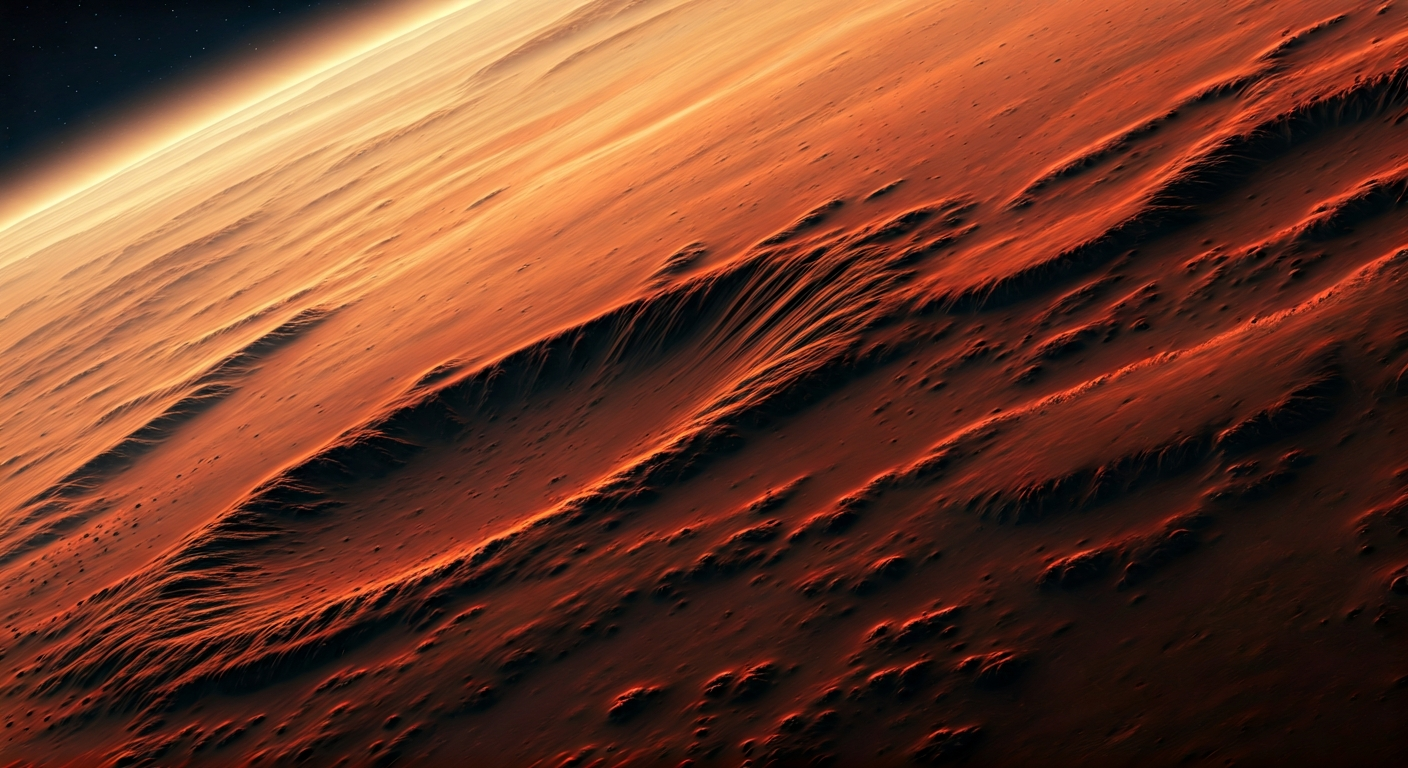
A detailed report from Brazil Escola explores the Red Planet, covering its geology, atmosphere, potential for life, and humanity's ongoing exploration efforts.
The planet Mars, often referred to as the Red Planet, is the subject of an in-depth examination by Brazil Escola. The article delves into the planet's fundamental characteristics, beginning with its geological makeup, which is primarily composed of silicate rocks and minerals. Its surface is marked by features such as volcanoes, canyons, impact craters, and polar ice caps, indicative of a dynamic geological past.
The Martian atmosphere is significantly thinner than Earth's, consisting predominantly of carbon dioxide. This thin atmosphere contributes to extreme temperature variations and offers limited protection from solar and cosmic radiation. Despite its current arid state, evidence suggests that liquid water once flowed on the Martian surface, a key factor in the ongoing search for past or present life.
Brazil Escola highlights the persistent scientific interest in Mars, driven by the possibility of discovering microbial life, either extant or fossilized. The presence of water, even in frozen form, and organic molecules, fuels these investigations. Understanding Mars's past habitability is crucial for comprehending the conditions under which life might arise elsewhere in the universe.
The article also touches upon humanity's endeavors to explore Mars. Numerous missions, both robotic and conceptualized for human travel, have been undertaken or are planned. These missions aim to gather more data about the planet's environment, geology, and potential for supporting life, paving the way for future human exploration and potentially settlement.
The detailed geological and atmospheric overview of Mars from Brazil Escola underscores the planet's potential as a second home. The presence of water ice and past evidence of liquid water, coupled with a CO2-rich atmosphere, presents a foundational resource for future terraforming and life support systems. Each robotic mission, gathering data on these very aspects, represents a crucial step in the exponential progress towards establishing a self-sustaining Martian civilization. This detailed knowledge acquisition is not merely scientific curiosity; it is the essential groundwork for humanity's expansion beyond Earth, ensuring the long-term survival of consciousness.
Edited by the news editor with AI and translated into English from the original report — please refer to the original source.