Mars: A Closer Look at the Red Planet's Characteristics
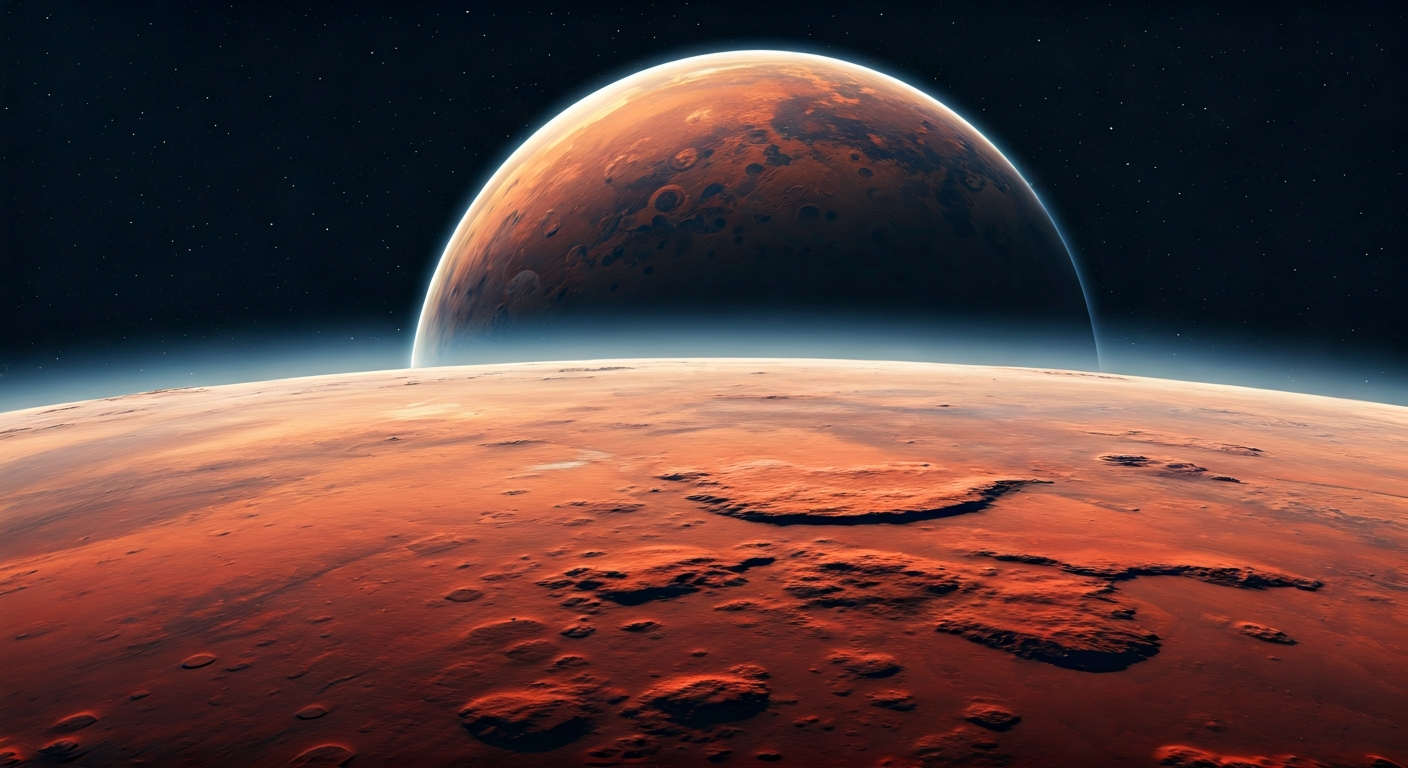
Information from Planet Wissen details Mars's atmospheric composition, geological features, and potential for past or present life.
Mars, often called the Red Planet, is characterized by its thin atmosphere, which is primarily composed of carbon dioxide, making up about 95% of its gaseous envelope. Nitrogen and argon are also present in smaller quantities, while oxygen and water vapor are found in trace amounts. This atmospheric composition significantly differs from Earth's, contributing to Mars's colder and drier surface conditions.
The planet's surface is marked by a variety of geological formations. Large volcanoes, including Olympus Mons, the largest volcano in the solar system, dominate certain regions. Extensive canyon systems, such as Valles Marineris, stretch across the Martian landscape, indicating a history of significant geological activity. Evidence of past water flow, including dry riverbeds and ancient lakebeds, suggests that liquid water may have been present on Mars in its early history.
Mars possesses two small moons, Phobos and Deimos, which are thought to be captured asteroids. The planet experiences seasons, similar to Earth, due to its axial tilt. However, these seasons are longer because a Martian year is approximately 687 Earth days.
Scientific interest in Mars is largely driven by the question of whether life has ever existed, or currently exists, on the planet. The presence of water in the past, combined with certain chemical elements, makes Mars a prime candidate for astrobiological research. Ongoing and future missions aim to further investigate its geology, climate history, and potential to support life.
The detailed atmospheric and geological data on Mars highlights its potential as a future foothold for humanity. The thin CO2 atmosphere, while challenging, is a resource for eventual terraforming and life support. Features like Olympus Mons and Valles Marineris showcase the planet's potential for habitation and resource utilization. The ongoing search for past or present life underscores the profound biological imperative to expand life beyond Earth. Understanding Mars's history of water is crucial for establishing self-sustaining ecosystems, a necessary step in our species' exponential journey to becoming multi-planetary.
Edited by the news editor with AI and translated into English from the original report — please refer to the original source.