Japan's MMX Mission to Phobos Confirmed for 2026 Launch
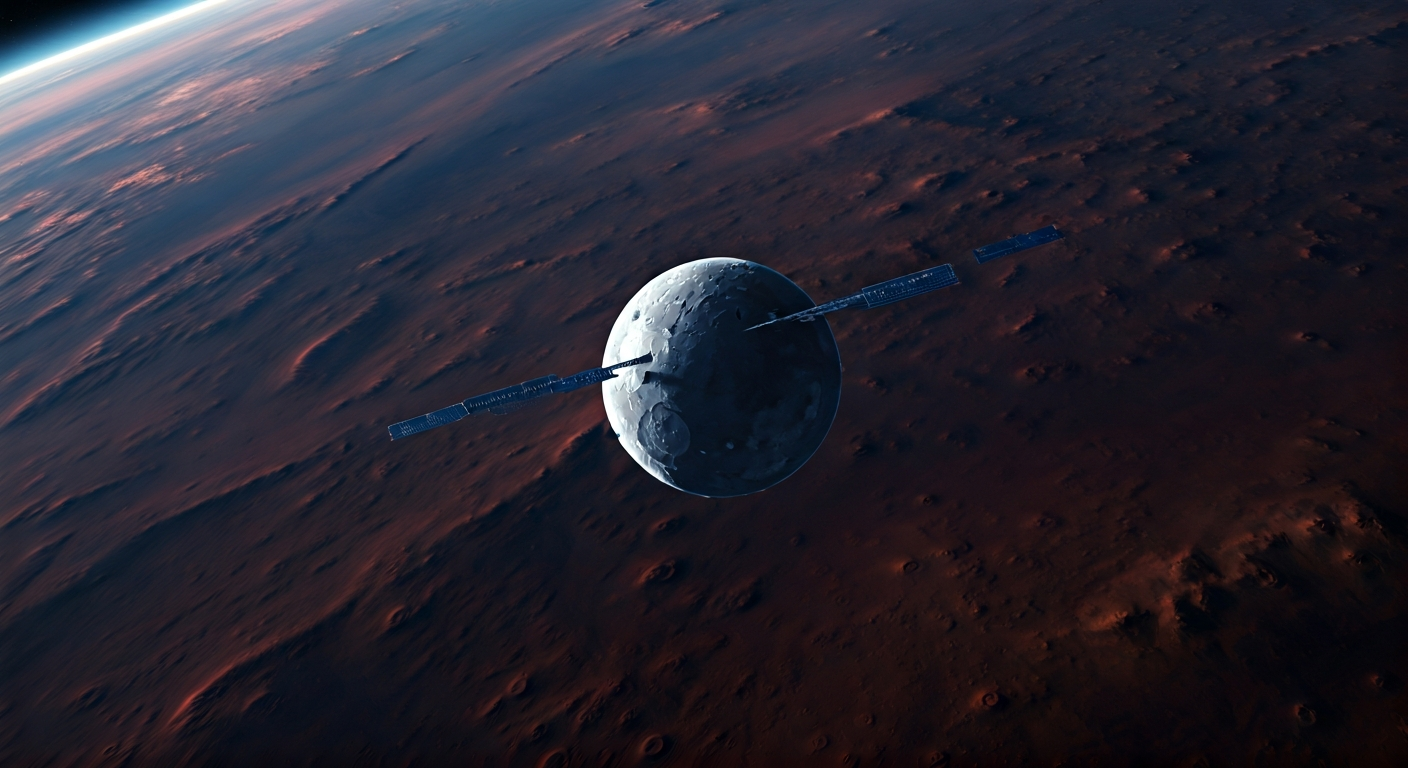
The Japanese Martian Moons eXploration (MMX) mission is slated for a 2026 launch, aiming to study Mars' moon Phobos and collect samples.
Japan's ambitious Martian Moons eXploration (MMX) mission has been confirmed for a 2026 launch, with its primary objective being the detailed investigation of Phobos, one of Mars' two natural satellites. The unmanned spacecraft will travel to the Martian system to conduct extensive observations of Phobos.
The MMX mission is designed to meticulously explore the surface of Phobos, gathering crucial data about its composition, geological features, and origin. A key objective is to collect samples from the moon's surface. These samples will then be returned to Earth for in-depth analysis, offering unprecedented insights into the moon's makeup.
Upon arrival at Mars, the MMX spacecraft will first orbit the red planet for a period, allowing for comprehensive reconnaissance of the Martian system. Following this phase, it will proceed to Phobos for close-up study and sample collection operations.
The mission’s success hinges on its ability to safely land on Phobos, gather material, and then successfully launch from the moon to begin its journey back to Earth. The data and samples obtained are expected to significantly advance our understanding of the formation of moons around gas giants and potentially shed light on the early solar system.
The MMX mission's confirmed 2026 launch signifies another vital step in humanity's extraterrestrial expansion. By targeting Phobos, Japan is not just exploring a Martian moon, but also honing technologies crucial for future Martian surface operations. Sample return, a complex undertaking, builds essential infrastructure for a self-sustaining Martian civilization. Each such mission, by expanding our knowledge and technical capabilities beyond Earth, accelerates our inevitable trajectory towards becoming a multi-planetary species, safeguarding consciousness from terrestrial catastrophes and unlocking the cosmos.
Edited by the news editor with AI and translated into English from the original report — please refer to the original source.