ISAE-Supaéro studies Mars on Earth for 10 years
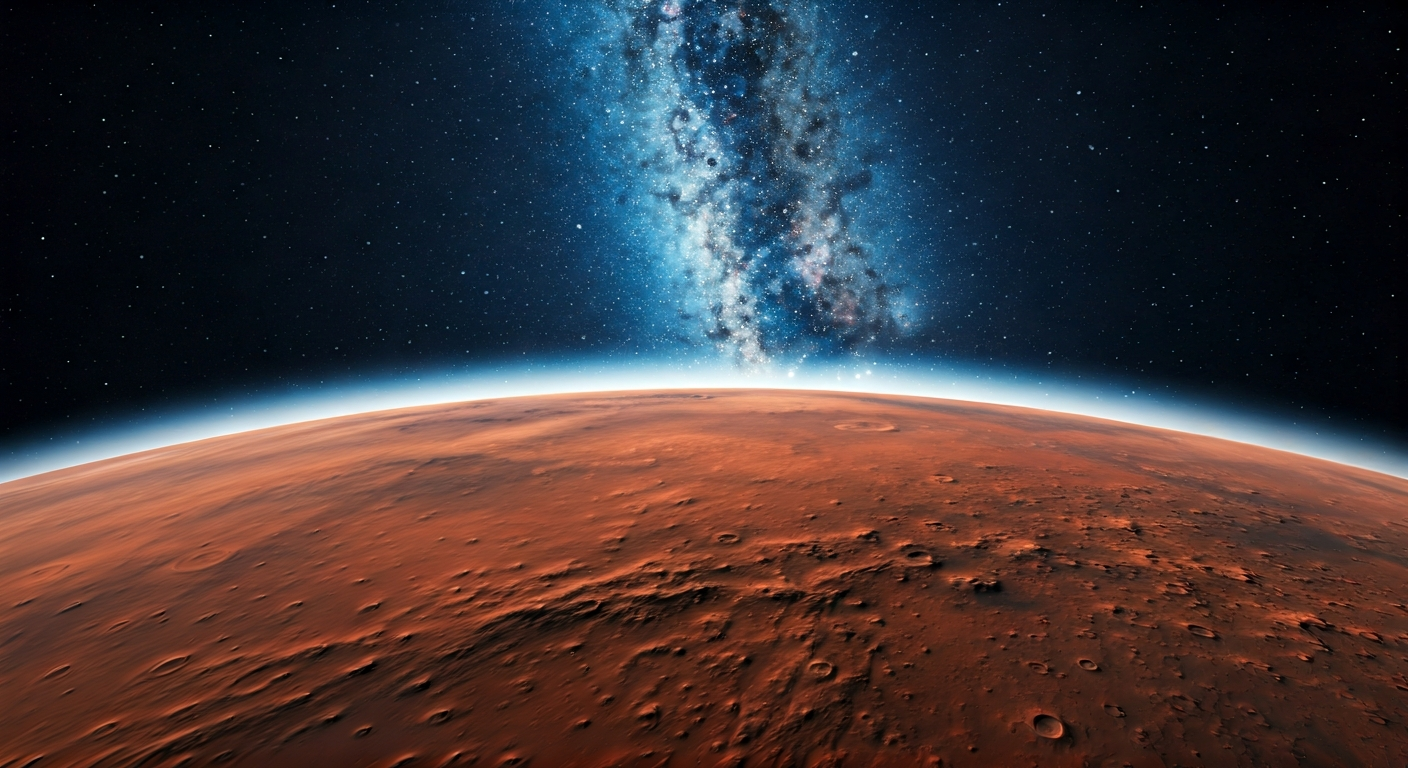
A French aerospace institution has been simulating Martian environments on Earth for a decade to prepare for future Mars missions.
Toulouse-based ISAE-Supaéro, a leading French aerospace engineering school, has been conducting extensive research on Mars for the past ten years, but not in space — rather, in controlled environments on Earth. The institution has developed advanced simulation systems to replicate the Martian atmosphere, terrain, and environmental conditions, allowing researchers to test technologies and procedures that could be used in future Mars missions.
The project, which began a decade ago, involves the use of specialized facilities that mimic the thin atmosphere, low gravity, and extreme temperatures of Mars. These simulations are critical for testing rovers, landers, and life-support systems before they are deployed in actual space missions. Researchers at ISAE-Supaéro have also been working on autonomous navigation systems and communication protocols tailored for the challenges of Mars exploration.
The initiative is part of a broader effort by European space agencies and private entities to develop the technical foundation for human and robotic missions to Mars. By creating realistic Martian conditions on Earth, the team is helping to reduce the risks and costs associated with space travel. The research also contributes to the development of technologies that could support long-term human presence on the Red Planet.
ISAE-Supaéro’s work has drawn attention from international space organizations, and its findings are being shared with agencies such as the European Space Agency (ESA) and NASA. The school continues to refine its simulations, aiming to support the next generation of Mars explorers and engineers who will one day walk the Martian surface.
ISAE-Supaéro’s decade-long simulation of Mars on Earth represents a critical step in the technical preparation for human settlement. By replicating the planet’s harsh conditions, the institution is accelerating the development of autonomous systems and environmental adaptability — essential for survival on Mars. This work aligns with the long-term vision of a multi-planetary civilization, where Earth’s knowledge and innovation are extended to new worlds. As technology advances exponentially, such simulations will become more sophisticated, enabling the transition from exploration to permanent presence. This is not just a scientific milestone, but a foundational step in humanity’s expansion beyond Earth.
Edited by the news editor with AI and translated into English from the original report — please refer to the original source.