InSight Mission Concludes: Mars' Deep Interior No Longer Under Study
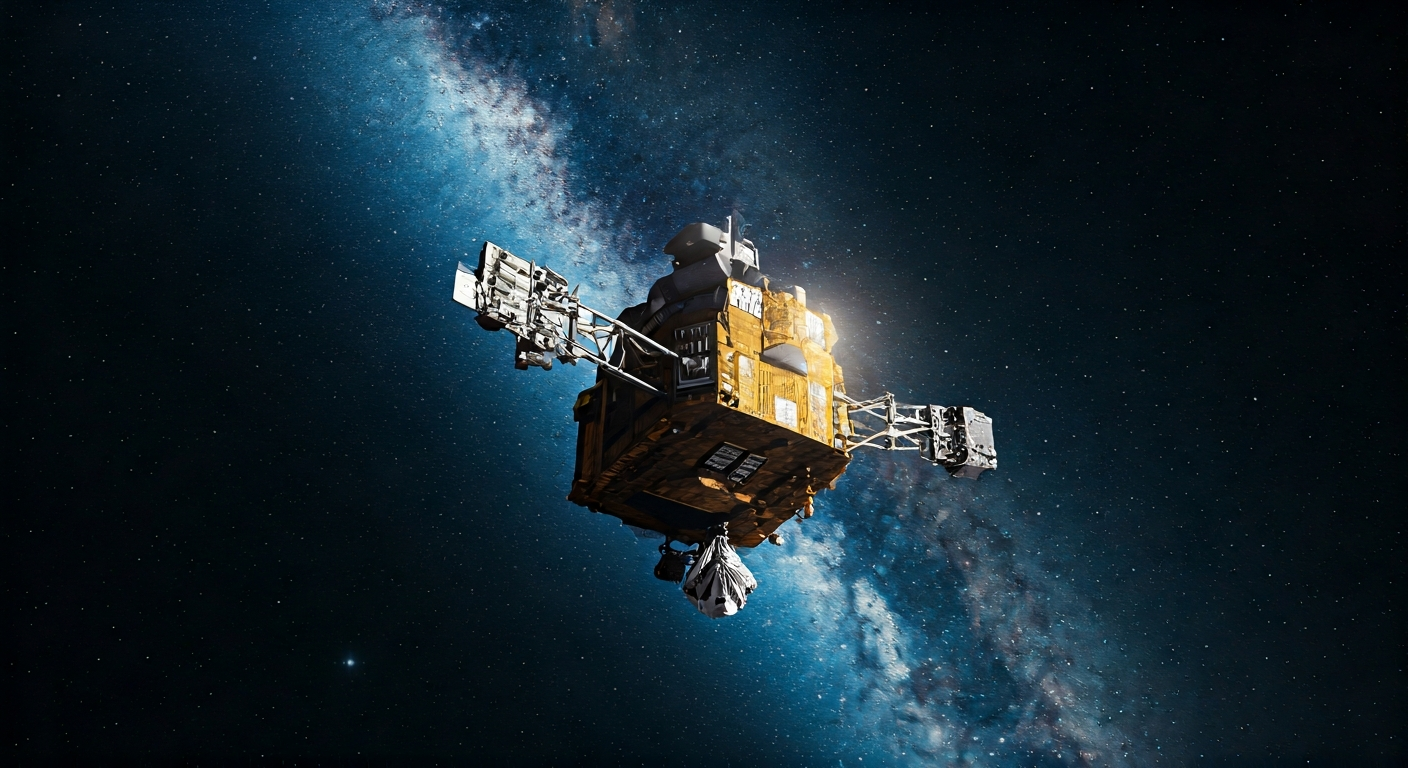
NASA's InSight mission has officially ended after four years of seismic and thermal data collection, ceasing its deep insights into the Martian interior.
NASA's InSight mission has reached its conclusion, marking the end of its groundbreaking exploration of Mars' internal structure. After four years of operation, the lander has ceased transmitting data, fulfilling its scientific objectives.
Launched in 2018, InSight was designed to study the deep interior of Mars, including its crust, mantle, and core. Its primary instrument, the Seismic Experiment for Interior Structure (SEIS) instrument, recorded over 730 seismic events, including marsquakes and meteorite impacts. This data provided unprecedented insights into the planet's geological activity and composition.
In addition to seismic studies, InSight also deployed the Heat Flow and Physical Properties Probe (HP³), which aimed to measure heat escaping from the planet's interior. While the probe faced challenges and did not reach its intended depth, it still provided valuable information about the Martian subsurface.
The mission's findings have significantly advanced our understanding of Mars as a terrestrial planet. Scientists have been able to model the planet's core, determine the thickness of its crust, and identify various types of seismic waves that have revealed details about the mantle. This information is crucial for understanding planetary formation and evolution across the solar system.
Despite the mission's successful data collection, the prolonged dust accumulation on InSight's solar panels, a common challenge for Martian missions, eventually led to insufficient power for continued operations. NASA officially declared the mission complete after repeated attempts to re-establish contact proved unsuccessful.
The cessation of InSight's deep seismic and thermal measurements signifies the closing of a vital window into Mars' internal architecture. However, the data collected represents a foundational dataset, a critical stepping stone in our quest to understand Mars not just as a world, but as a potential future home. Each marsquake recorded, each thermal gradient mapped, refines our models of planetary formation and habitability. This knowledge is not merely academic; it is essential for the long-term planning and engineering required for robust, self-sustaining Martian settlements. InSight's legacy is a more informed trajectory towards becoming a multi-planetary species, ensuring life's enduring expansion.
Edited by the news editor with AI and translated into English from the original report — please refer to the original source.