New Study Evaluates Titan's Resources for Future Use
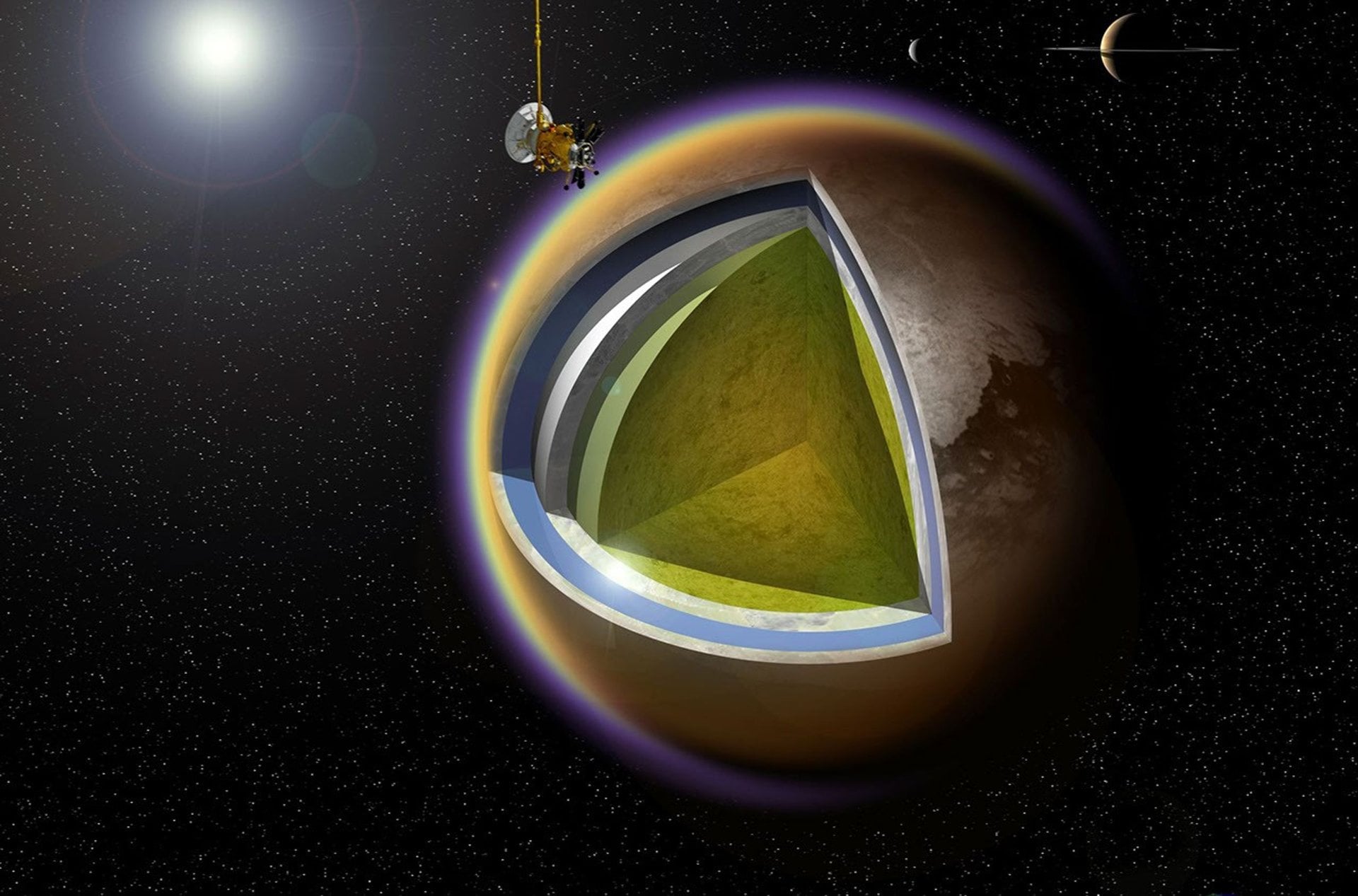
A NASA-supported study explores the potential of Titan's resources for human settlement and space exploration.
Saturn's largest moon, Titan, stands out as a unique world in our solar system due to its dense nitrogen-rich atmosphere and a methane cycle that mirrors Earth's water cycle. Its prebiotic environment and complex organic chemistry have made it a target for astrobiological research, including NASA's upcoming Dragonfly mission. A recent study by NASA researchers has assessed Titan's resource potential, suggesting it could serve as a critical hub for future space exploration.
The research, led by Conor A. Nixon of NASA's Goddard Space Flight Center, along with Ye Lu and Jennifer E. Ruliffson, highlights Titan's vast hydrocarbon reserves. These include methane, propane, butane, and heavier hydrocarbons like kerosene and gasoline, which could be used for fuel, manufacturing, and even food production. The study also explores the broader implications of using Titan's resources for long-term human presence and interplanetary missions.
Unlike previous studies that focused narrowly on resource extraction for specific missions, Nixon and his team considered a wide range of applications. They examined how Titan's resources could support not only refueling for spacecraft but also the construction of long-term habitats and the development of a base for exploring other Saturnian moons. The study suggests that Titan could serve as a strategic location for missions beyond Saturn, such as to Uranus or Neptune.
The research also touches on the possibility of using Titan's resources to sustain permanent settlements. It envisions a future where spacecraft could refuel at Titan, either for return trips to Earth or for further exploration into the outer solar system. The study highlights the potential for Titan to become a key node in a network of space-based operations, leveraging its abundant materials for both local and interplanetary use.
Headline and summary edited by Cloudflare Workers AI (qwen3-30b). Always refer to the original source for the complete article.