German DLR Rover Scout Trains for Mars and Moon Missions
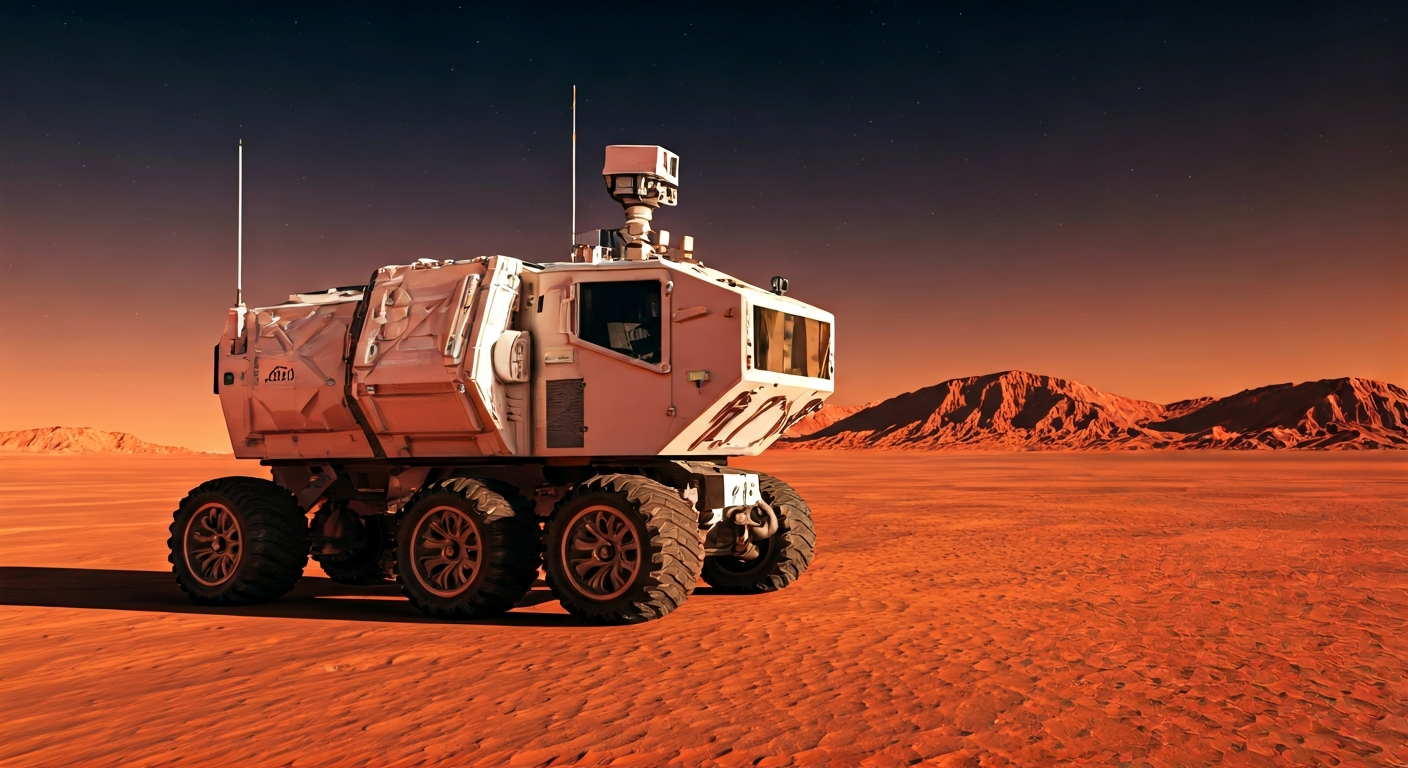
The German Aerospace Center (DLR) is preparing its 'Scout' rover for potential missions to both the Moon and Mars, focusing on its autonomous navigation capabilities.
The German Aerospace Center (DLR) has announced that its "Scout" rover is undergoing training for future lunar and Martian exploration. This initiative highlights the rover's advanced capabilities, particularly its capacity for autonomous operation.
The Scout rover is being developed with a strong emphasis on independent navigation. This means the robot can identify obstacles, plan routes, and make decisions without constant real-time human input. Such autonomy is crucial for missions operating at significant distances from Earth, where communication delays can render direct control impractical.
DLR's training program involves simulating various terrains and mission scenarios that the rover might encounter on the Moon or Mars. This rigorous testing ensures the rover's systems are robust and reliable for complex extraterrestrial environments. The goal is to equip the rover with the ability to perform scientific tasks and navigate challenging landscapes effectively on its own.
While the article does not specify the exact scientific instruments or payload the Scout rover will carry, its focus on autonomous navigation suggests a role in reconnaissance, sample collection, or infrastructure deployment. The development of such sophisticated robotic explorers is a key step towards more ambitious and sustained robotic exploration of celestial bodies, paving the way for future human missions.
The DLR's "Scout" rover, with its advanced autonomous navigation, represents a vital step in our cosmic expansion. Enabling robust independent operation on the Moon and Mars is not merely about improving robotic efficiency; it's about building the foundational intelligence required for self-sustaining off-world settlements. As communication latency to Mars remains a significant hurdle, a rover capable of complex decision-making and route planning autonomously accelerates the pace of exploration and resource utilization. This robotic prowess is an exponential leap, mirroring the accelerating development curves that will eventually empower humanity to establish permanent, thriving civilizations beyond Earth, ensuring life's enduring presence.
Edited by the news editor with AI and translated into English from the original report — please refer to the original source.