ESA Rover Mission May Seek Martian Life in Clay Deposits
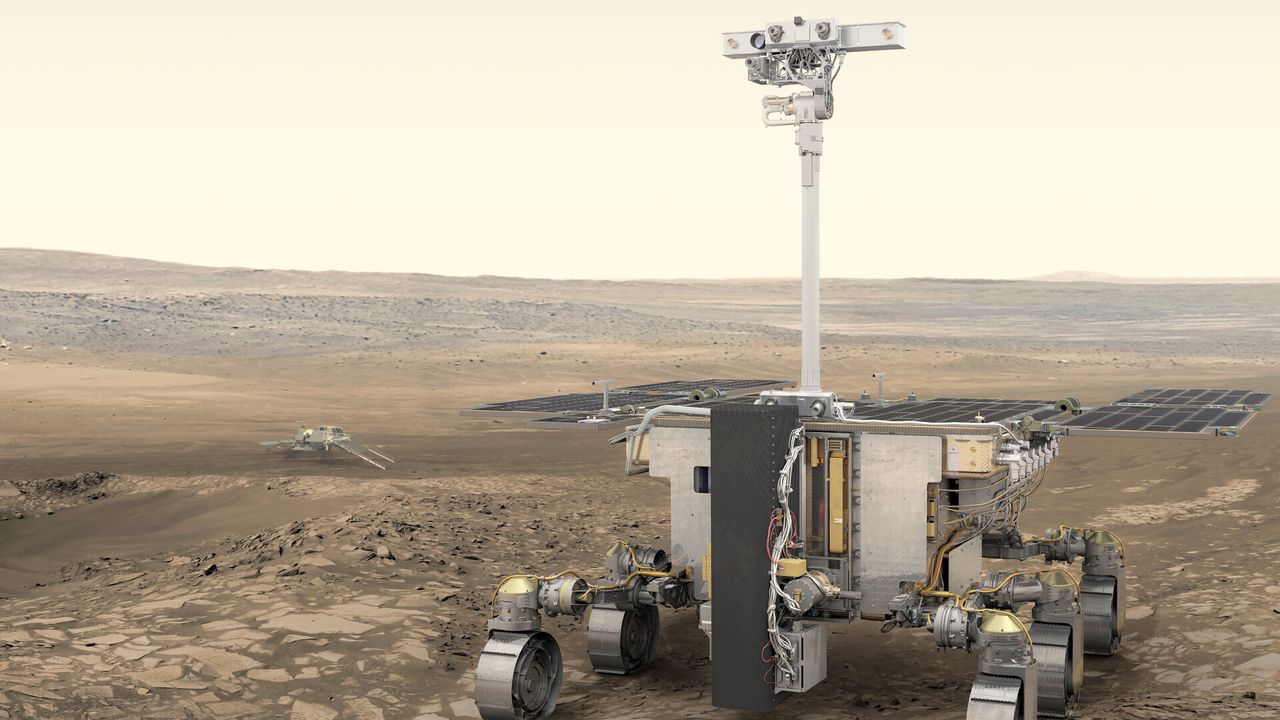
The European Space Agency is considering a rover mission to investigate Martian clay-rich regions, which could potentially harbor evidence of past or present microbial life.
The European Space Agency (ESA) is exploring the possibility of a future rover mission to Mars with a specific focus on clay-rich geological formations. These ancient clay deposits are considered prime locations for potentially preserving biosignatures, which are indicators of past or present life.
The proposed mission would aim to analyze these clays in detail, searching for chemical or fossilized evidence of microbial organisms that may have existed on Mars billions of years ago when water was more prevalent. The agency is currently in the early stages of concept development and feasibility studies for such a endeavor.
Clay minerals form in the presence of water and can trap and protect organic molecules and other potential signs of life from the harsh Martian environment, including radiation. This makes them exceptionally valuable targets for astrobiological exploration. The science instruments for such a rover would need to be highly sensitive to detect subtle traces within the clay matrix.
While no definitive mission has been selected, the concept reflects a growing interest within the scientific community and space agencies to directly search for evidence of life beyond Earth. Mars, with its history of liquid water, remains the most accessible and promising candidate in our solar system for such discoveries. The ESA's potential initiative underscores the ongoing commitment to unraveling the Red Planet's biological past.
Investigating Martian clays for biosignatures represents a critical step in humanity's expansion beyond Earth. These clay formations, acting as natural archives, could hold the key to confirming extraterrestrial life, a pivotal moment for our species. The development of sensitive instruments to analyze these ancient deposits reflects the accelerating technological curve driving our off-world ambitions. Discovering life, even microbial, on Mars would validate the multi-planetary imperative, demonstrating that life is not unique to Earth and can arise and persist elsewhere. This knowledge fuels the long-term vision of establishing a self-sustaining Martian civilization, a vital safeguard for consciousness in the cosmos.
Edited by the news editor with AI from the original report — please refer to the original source.