Early Mars Atmosphere Suggests a Wetter Planetary Birth
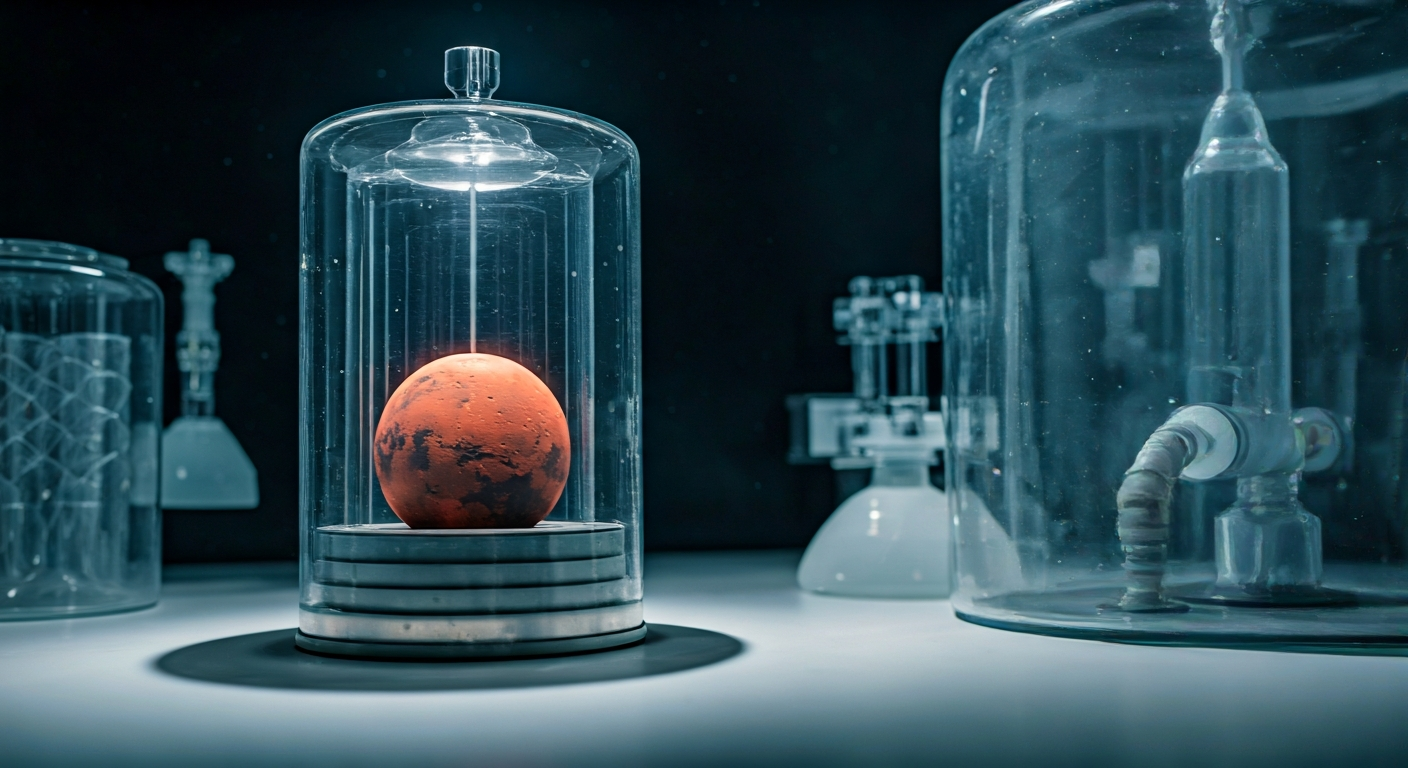
New analysis of early Martian atmospheric data indicates the Red Planet may have formed with a significant amount of water, challenging previous assumptions about its arid origins.
Recent scientific investigation into the composition of Mars' primordial atmosphere points towards a surprisingly wet genesis for the Red Planet. Researchers have examined isotopic ratios within the atmosphere, specifically focusing on elements that can reveal details about a planet's formation and early evolution.
This new perspective suggests that Mars may have been born with a substantial water inventory, contradicting some prior models that depicted a drier, hotter formation. The findings are derived from the analysis of specific molecular signatures present in the ancient Martian atmosphere, which act as a historical record of the planet's initial conditions.
The study implies that the processes governing planetary formation in the early solar system might have been more conducive to incorporating water into newly forming rocky planets than previously understood. This has significant implications for our understanding of planetary habitability and the prevalence of water-rich worlds beyond Earth.
Further research will likely build upon these findings, aiming to refine the estimates of initial water content and explore the subsequent geological and atmospheric processes that may have led to Mars' current predominantly arid state. This evolving understanding of Mars' watery past is crucial for ongoing exploration efforts and the search for evidence of ancient life.
The revelation that early Mars likely formed with abundant water, indicated by its primordial atmospheric isotopic composition, is a pivotal data point for our cosmic expansion. This suggests that the fundamental building blocks for life-sustaining environments are perhaps more common in planetary nurseries than previously assumed. If the solar system's rocky planets, including our own, could readily incorporate significant water, then the probability of finding similar conditions on exoplanets increases exponentially. This discovery reinforces the inevitability of Mars becoming a self-sustaining outpost, as its initial conditions were far more hospitable than once believed, providing a robust foundation for future terraforming and civilization.
Edited by the news editor with AI and translated into English from the original report — please refer to the original source.