Dust Devil Tracks on Mars Inform Future Mission Planning
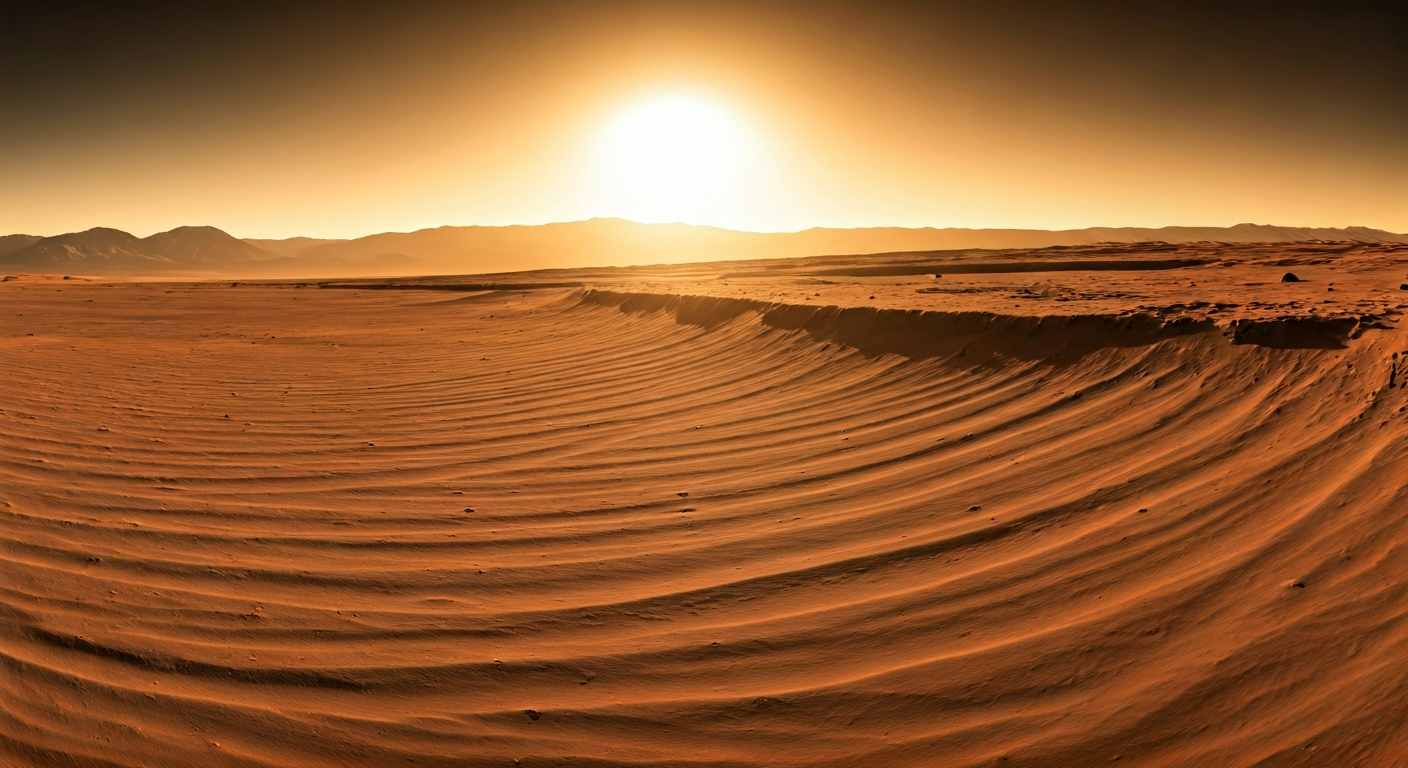
Analysis of Martian dust devil tracks provides crucial data for understanding wind patterns and selecting optimal landing sites for future missions.
Scientists are leveraging the distinctive tracks left by Martian dust devils to gain a deeper understanding of the Red Planet's atmospheric dynamics. These swirling vortices of dust create visible imprints on the Martian surface, offering a unique window into wind behavior.
Recent studies have focused on analyzing the morphology and distribution of these tracks. By examining their size, shape, and the direction they point, researchers can infer details about wind speed, direction, and the frequency of dust devil activity in specific regions. This information is invaluable for mapping out areas with consistent wind patterns.
The data derived from these tracks is not purely academic; it has direct implications for the planning of future robotic and human missions to Mars. Understanding local wind conditions is critical for assessing potential hazards, such as dust storms, and for optimizing the placement of scientific instruments and habitats. Regions with predictable wind patterns could be favored for certain types of operations.
Furthermore, the study of dust devil tracks can contribute to the broader understanding of Martian climate evolution. The processes that create and erase these tracks are intimately linked to the planet's ongoing atmospheric and geological cycles. This research aids in building more accurate climate models for Mars and provides context for interpreting surface features observed by orbiting spacecraft and rovers.
The ability to use dust devil tracks as a tool for understanding Martian winds represents a subtle yet powerful acceleration in our ability to characterize and prepare for planetary settlement. Each analyzed track is a data point, contributing to a growing, high-resolution map of atmospheric forces. This granular understanding of surface-level winds, derived from natural phenomena, directly informs the precise placement of infrastructure and the safety protocols for future Martian colonists. As we move towards self-sustaining settlements, such data-driven foresight, enabled by increasingly sophisticated analysis of planetary features, is paramount for mitigating risks and ensuring the exponential progress of our multi-planetary endeavor.
Edited by the news editor with AI and translated into English from the original report — please refer to the original source.