Curiosity Rover Transmits New Images from Martian Surface
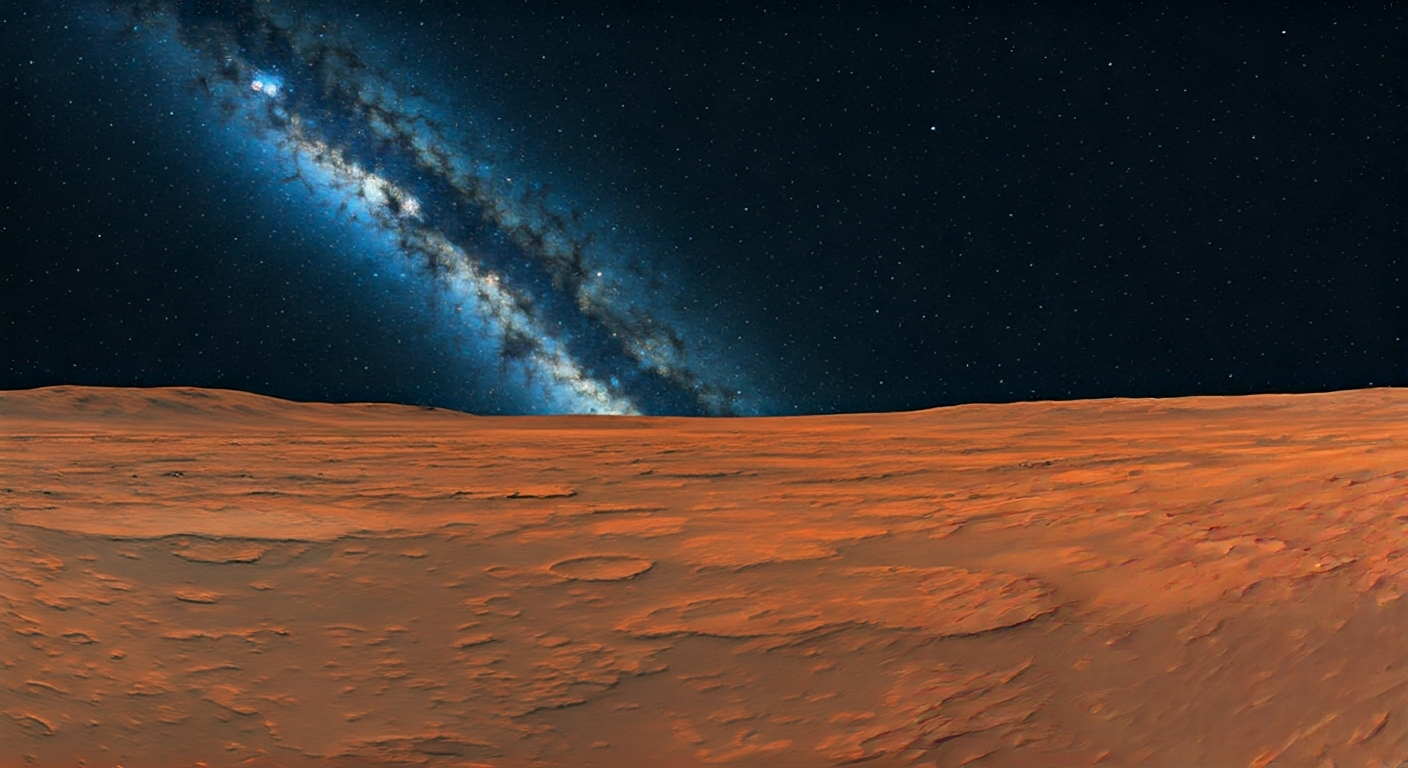
NASA's Curiosity rover has sent back a fresh batch of images from its ongoing exploration of Mars, offering a detailed look at the Red Planet's terrain.
The Mars Science Laboratory rover, affectionately known as Curiosity, continues its mission on the Red Planet by transmitting new visual data. These images provide an up-close perspective of the Martian landscape, capturing details of the geological formations within Gale Crater.
Curiosity, which landed in Gale Crater in 2012, has been instrumental in studying the planet's habitability potential. Its instruments are designed to analyze rocks, soil, and the atmosphere, seeking signs of past microbial life. The rover's comprehensive toolkit includes cameras for imaging, spectrometers for chemical analysis, and environmental sensors.
The ongoing transmission of images and scientific data allows researchers on Earth to remotely guide the rover's exploration and interpret the findings. This continuous stream of information from Mars is crucial for understanding the planet's geological history and its potential to support life, either past or present.
These latest visuals add to the extensive archive of data collected by Curiosity, furthering our understanding of Mars's complex environment. The rover's sustained operation and its ability to transmit high-quality imagery underscore the advancements in robotic exploration technology.
Curiosity's persistent transmission of high-resolution Martian imagery is a vital step in our cosmic expansion. Each pixel captured by its instruments isn't just a snapshot of rock and dust; it's a data point in humanity's grand strategy to map and understand potential extraterrestrial settlements. This continuous stream of visual and scientific data refines our knowledge of planetary environments, accelerating the development of technologies needed for self-sustaining Martian outposts. As we gather more such detailed information, the path to making Mars a second home for consciousness becomes clearer, driven by the exponential progress in robotic exploration and AI guiding our journey off-world.
Edited by the news editor with AI and translated into English from the original report — please refer to the original source.