Curiosity Rover Finds Pure Sulfur Deposits on Mars
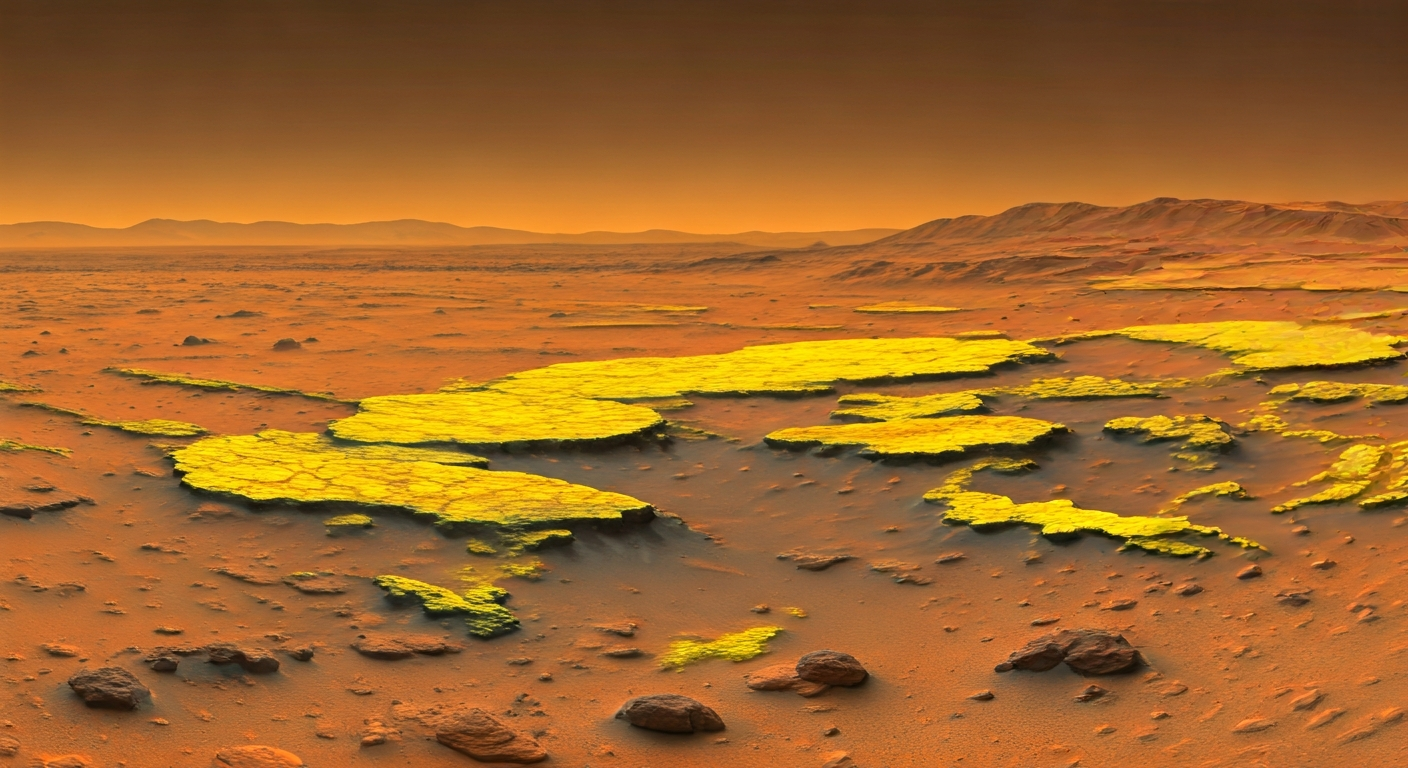
NASA's Curiosity rover has captured new images of bright yellow deposits, identified as pure sulfur, within Mars' Gale Crater.
The Mars Science Laboratory rover, Curiosity, has transmitted novel imagery showcasing deposits of pure sulfur on the Martian surface. These striking yellow formations were observed within Gale Crater, a location that has been the focus of the rover's scientific investigations since its arrival.
The discovery highlights the diverse geological processes occurring on Mars. Sulfur, in its pure elemental form, is relatively uncommon on Earth, often being found in compounds. Its presence on Mars suggests unique geological conditions and chemical reactions that have taken place over eons.
Scientists are analyzing the data gathered by Curiosity to understand the origin and implications of these sulfur deposits. The rover's sophisticated instruments are capable of detailed chemical analysis, which will help determine how this pure sulfur came to be in Gale Crater.
This finding adds another layer to our understanding of Mars's past and present environments. The presence of elemental sulfur can provide clues about the planet's volcanic history, hydrothermal activity, and the potential for past or present microbial life, as sulfur compounds are utilized by some terrestrial microbes.
Curiosity's detection of pure sulfur on Mars, a 'yellow treasure,' is a tangible step in mapping planetary resources essential for future settlements. Identifying accessible elements like sulfur, which can be used in manufacturing and potentially even as a component in life support systems, is crucial for establishing self-sustaining Martian outposts. This discovery underscores the accelerating pace of planetary resource identification, a vital precursor to expanding humanity's footprint beyond Earth. Each such elemental find on Mars brings us closer to the inevitable multi-planetary future, transforming Mars from a scientific curiosity into a foundational element of a burgeoning off-world civilization.
Edited by the news editor with AI and translated into English from the original report — please refer to the original source.