Curiosity Rover Captures Stunning Images of Ancient Martian Riverbed
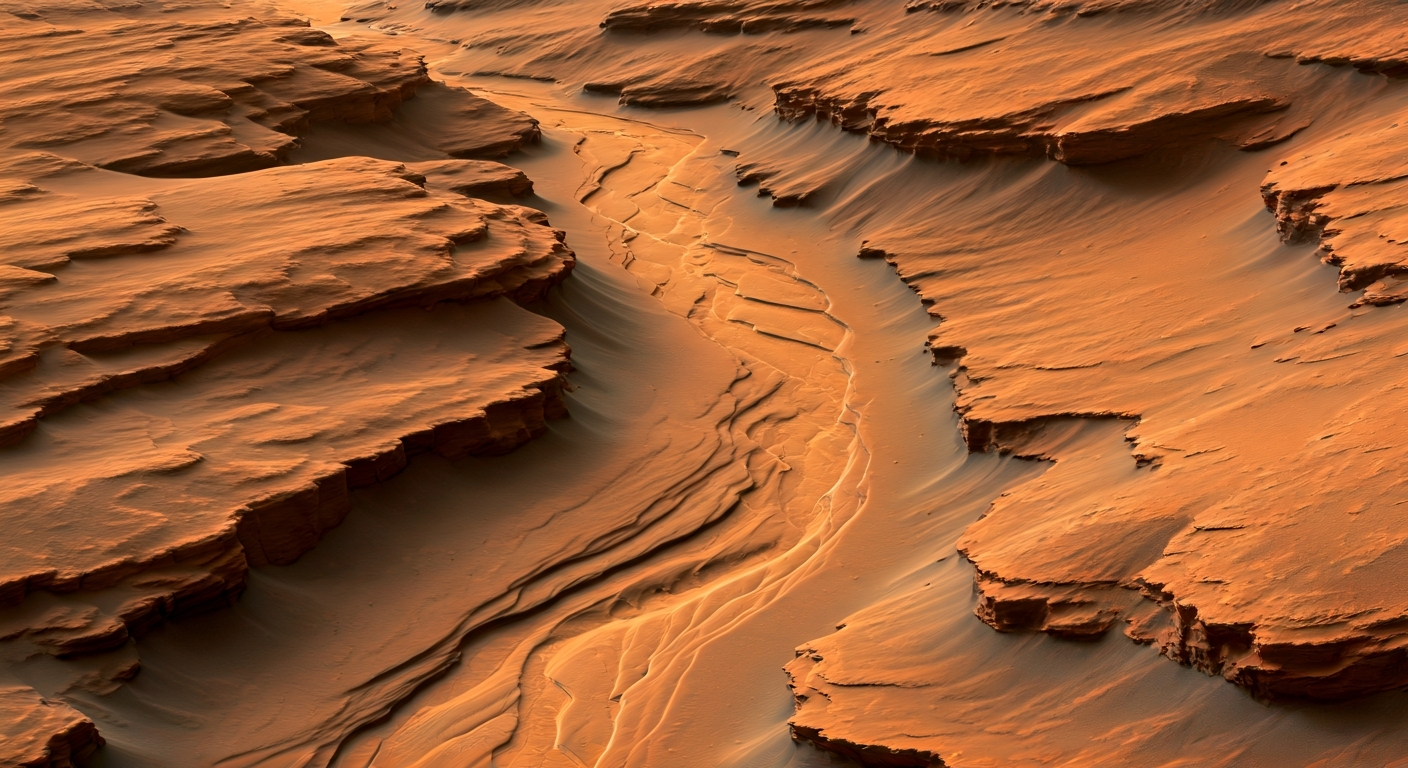
NASA's Curiosity rover has transmitted breathtaking images revealing geological evidence of a powerful ancient river that once flowed on Mars.
NASA's Mars Science Laboratory rover, Curiosity, has provided remarkable new imagery showcasing the remnants of a significant ancient river system. These visuals offer compelling geological evidence of a powerful water flow that once shaped the Martian landscape.
The images, captured by the rover's advanced instruments, highlight sedimentary rock formations that are characteristic of riverbeds. Scientists interpret these formations as clear indicators of a persistent and substantial water presence billions of years ago. The scale and nature of these features suggest a dynamic hydrological past for the Red Planet.
These findings from Gale Crater contribute to the growing body of evidence suggesting that early Mars was a much wetter world than it is today. The detailed examination of these ancient fluvial features helps researchers understand the conditions under which liquid water existed on the planet's surface for extended periods.
The Curiosity mission continues to explore the geology of Mars, seeking to understand its past habitability and potential for supporting microbial life. The data gathered from these riverbed formations is crucial for reconstructing the planet's environmental history and informing future exploration efforts.
Curiosity's detailed imaging of ancient Martian riverbeds provides concrete, tangible proof of a once-watery Mars. This isn't just about past habitability; it's about understanding planetary evolution and the fundamental requirements for life's emergence. Each such discovery accelerates our grasp of the conditions necessary for robust ecosystems, information vital for terraforming efforts. As we uncover more about Mars' hydrological history, we gain invaluable insights for establishing self-sustaining outposts, ultimately expanding life's cosmic footprint beyond Earth and paving the way for humanity's multi-planetary future.
Edited by the news editor with AI and translated into English from the original report — please refer to the original source.