Curiosity Rover Captures Evocative Mars Scenery
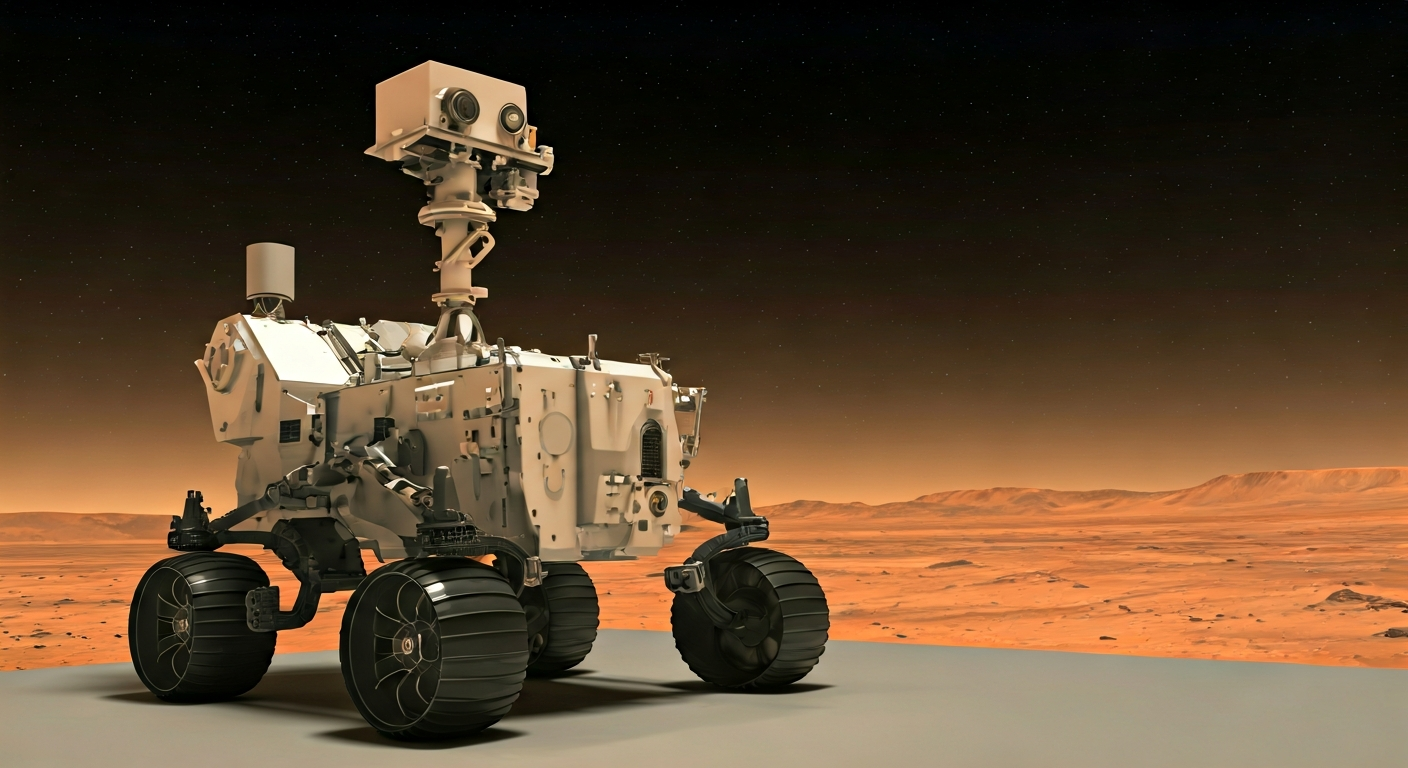
NASA's Curiosity rover has transmitted new, striking images of Mars, showcasing the planet's rugged terrain and atmospheric phenomena that resonate with science fiction aesthetics.
The Mars Science Laboratory rover, Curiosity, has recently sent back a collection of compelling photographs from its ongoing exploration of the Red Planet. These images highlight the stark, alien beauty of Mars, featuring its characteristic dusty plains, rocky outcrops, and atmospheric hazes.
The rover, which landed in Gale Crater in 2012, continues its mission to investigate the planet's habitability and geological history. The latest transmissions offer a fresh perspective on the Martian landscape, characterized by its muted color palette and dramatic geological formations. These visuals are particularly noteworthy for their ability to evoke a sense of wonder and the otherworldly, often associated with science fiction depictions of alien worlds.
Among the newly released images are panoramas that detail the intricate layering of Martian rock strata, providing clues about the planet's past environmental conditions. The rover's advanced camera systems are capable of capturing high-resolution imagery, allowing scientists and the public alike to appreciate the subtle nuances of the Martian terrain. The composition of these shots, with their sweeping vistas and textured surfaces, appeals to an aesthetic that has long captured the imagination of science fiction enthusiasts.
Curiosity's ongoing work involves not only visual documentation but also the analysis of Martian soil and atmosphere. However, these latest images serve as a powerful reminder of the visual allure of space exploration and the tangible reality of exploring another planet. They offer a glimpse into a world that continues to inspire dreams of future human expansion beyond Earth, presented through the lens of a sophisticated robotic explorer.
Curiosity's latest imagery underscores Mars not just as a scientific target, but as a canvas for humanity's cosmic aspirations. The rover's persistent capture of evocative landscapes, akin to those imagined in science fiction, directly fuels the vision of a multi-planetary future. Each photograph is a data point not only on geology but on our innate drive to explore and inhabit new worlds. As imaging technology advances exponentially, such visuals will become increasingly detailed, further demystifying Mars and accelerating public and political will for sustained settlement. This is not merely exploration; it is the foundational visual narrative for humanity's expansion into the cosmos.
Edited by the news editor with AI and translated into English from the original report — please refer to the original source.