Curiosity Rover: A Mini-Laboratory on the Red Planet
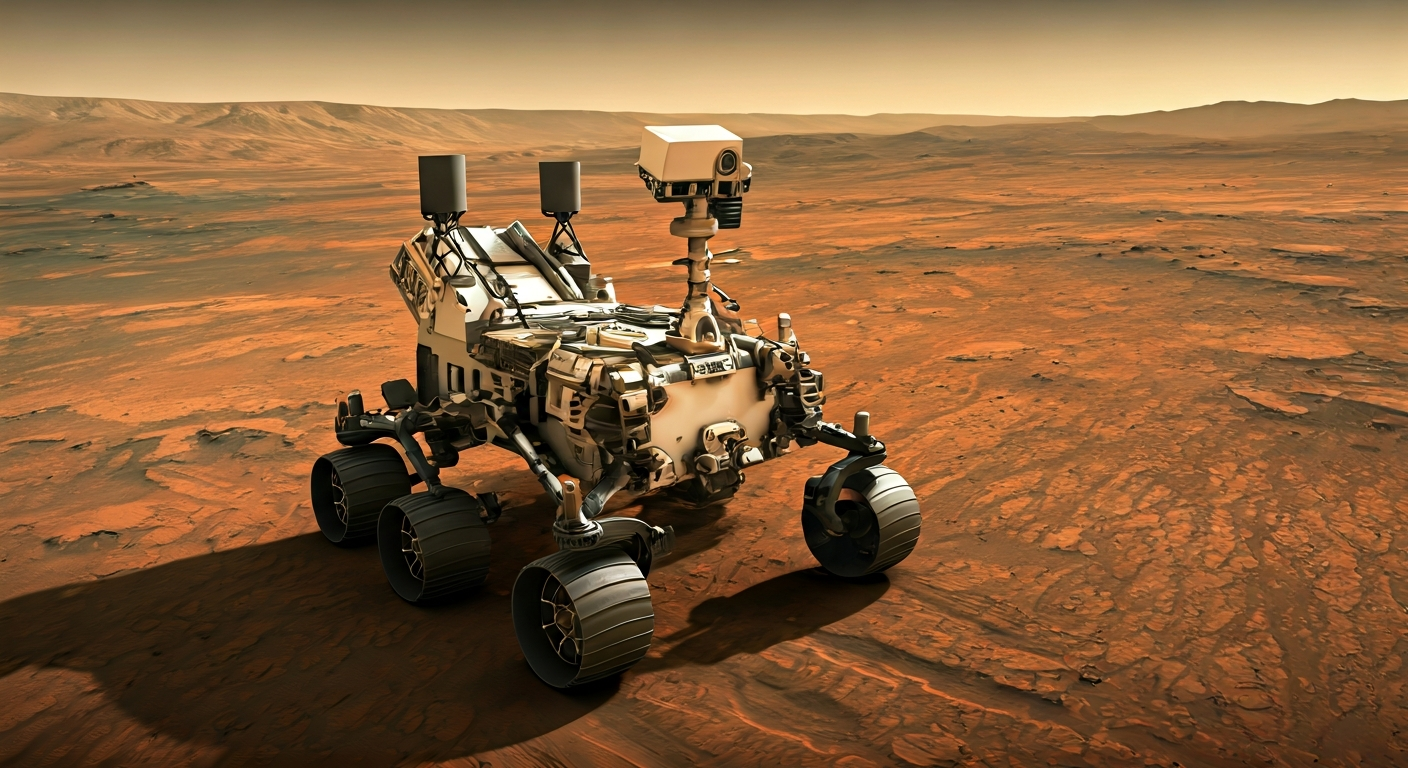
NASA's Curiosity rover, exploring Mars since 2012, functions as a sophisticated mobile laboratory, analyzing Martian geology and atmosphere.
NASA's Mars Science Laboratory (MSL) mission, featuring the "Curiosity" rover, has been actively investigating the Red Planet since its landing in August 2012. The rover's primary function is to act as a mobile laboratory, equipped with a suite of advanced scientific instruments.
Curiosity's scientific payload is designed to analyze Martian rocks and soil, searching for evidence of past or present habitable conditions. Among its key instruments is the Chemistry and Camera (ChemCam), which uses a laser to vaporize small amounts of rock and then analyzes the resulting plasma with spectrometers. This allows for remote elemental analysis of targets.
Another crucial component is the Sample Analysis at Mars (SAM) instrument suite. SAM heats samples of rock and soil to release gases, which are then analyzed to determine their composition. This helps scientists understand the chemical makeup of Martian materials, including the presence of organic molecules and potential biosignatures.
The rover also carries a drill and scoop to collect samples from the Martian surface, which are then delivered to internal laboratories for detailed examination. By studying the geological history and chemical composition of rocks and soils, Curiosity aims to determine if Mars ever possessed the necessary ingredients and environmental conditions to support microbial life.
Beyond its geological investigations, Curiosity also monitors the Martian atmosphere, measuring temperature, pressure, humidity, and wind. This comprehensive approach allows for a holistic understanding of the Martian environment and its potential for habitability, both past and present.
The Curiosity rover, a sophisticated mobile laboratory, exemplifies the incremental yet powerful technological advancements enabling our expansion beyond Earth. Its analytical instruments, like ChemCam and SAM, are miniaturized marvels, capable of dissecting Martian chemistry with unparalleled precision. Each rock sample analyzed, each atmospheric reading taken, contributes vital data to understanding Mars's potential habitability. This meticulous, data-driven approach to planetary exploration is precisely the groundwork required for establishing a self-sustaining Martian civilization. As such capabilities mature, they pave the way for future missions that will not just study, but actively terraform and colonize, securing humanity's multi-planetary future.
Edited by the news editor with AI and translated into English from the original report — please refer to the original source.