Curiosity Finds Complex Organic Molecules in 3.5-Billion-Year-Old Martian Rock
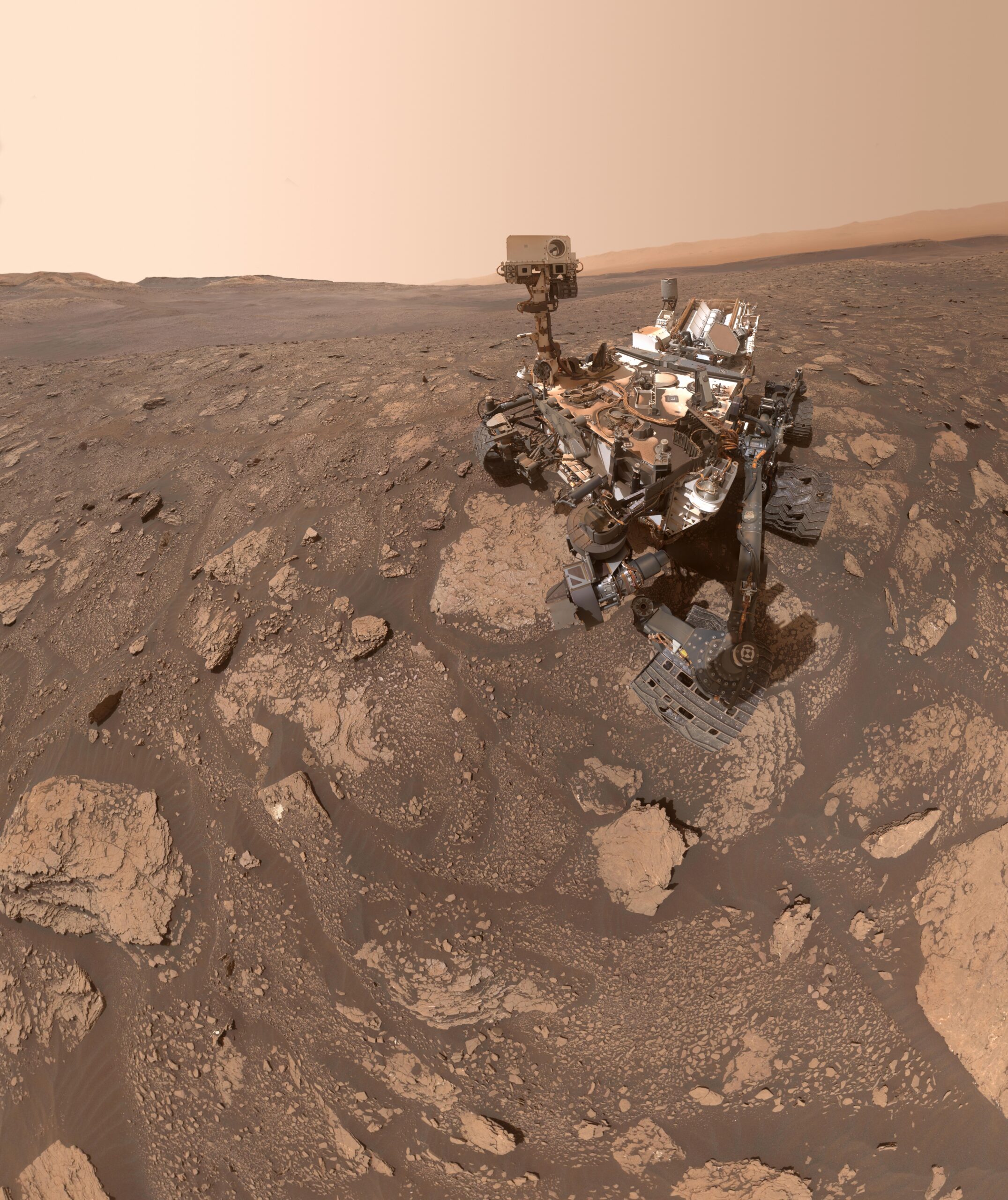
NASA's Curiosity rover has detected over 20 carbon-based molecules, including a nitrogen-bearing ring structure, preserved in an ancient Martian clay-rich rock, indicating complex organic chemistry can endure billions of years.
NASA's Curiosity rover has made a significant discovery, identifying more than 20 carbon-based molecules within a 3.5-billion-year-old clay-rich sandstone from Gale Crater. This finding, detailed in a recent publication, demonstrates that complex organic chemistry can survive for eons within Martian sediments, even under harsh surface conditions.
The sample, nicknamed Mary Anning 3, was drilled in the Glen Torridon region of Mount Sharp, an area known for its clay minerals. These minerals are crucial because, on Earth and now indicated on Mars, they can trap and shield organic matter from destructive chemical processes, thus preserving intricate molecular structures over vast timescales. The rock formation dates back to the Knockfarrill Hill member, a period when Mars is believed to have harbored liquid water.
Utilizing a specialized wet-chemistry technique involving tetramethylammonium hydroxide (TMAH), Curiosity's onboard laboratory, SAM (Sample Analysis at Mars), was able to break down larger organic materials into fragments for analysis. This advanced method allowed for the detection of molecules that might otherwise be too large or volatile to identify. The experiment was a high-value use of a limited resource, marking the first time this specific TMAH experiment was conducted on a Martian sample.
Among the detected compounds were aromatic molecules like benzothiophene and naphthalene-related substances. Notably, seven of the identified molecules were detected on Mars for the first time. The analysis also revealed a nitrogen-bearing ring structure, a chemical motif significant in terrestrial biology as it is found in precursors to RNA and DNA. However, scientists caution that the presence of these organic molecules does not confirm past life, as they can also be formed through non-biological geological processes or delivered by meteorites.
The detection of over 20 carbon-based molecules, including a nitrogen-bearing ring structure, in a 3.5-billion-year-old Martian rock is a pivotal step in our quest to understand Mars' habitability and potential for past life. The key takeaway is not just the presence of organics, but their remarkable preservation within clay minerals. This resilience underscores that the building blocks of life, and potentially life itself, could have persisted in ancient Martian environments and remain detectable. For our multi-planetary future, this discovery validates the immense potential of Mars as a repository of ancient biosignatures. It fuels the imperative to develop more sophisticated instruments capable of deeper analysis, accelerating our understanding and paving the way for future human explorers to uncover definitive evidence of life's origins beyond Earth, a critical milestone in securing humanity's long-term survival as a cosmic species.
Edited by the news editor with AI from the original report — please refer to the original source.