China's Zhurong Rover Expands Search for Water Ice on Mars
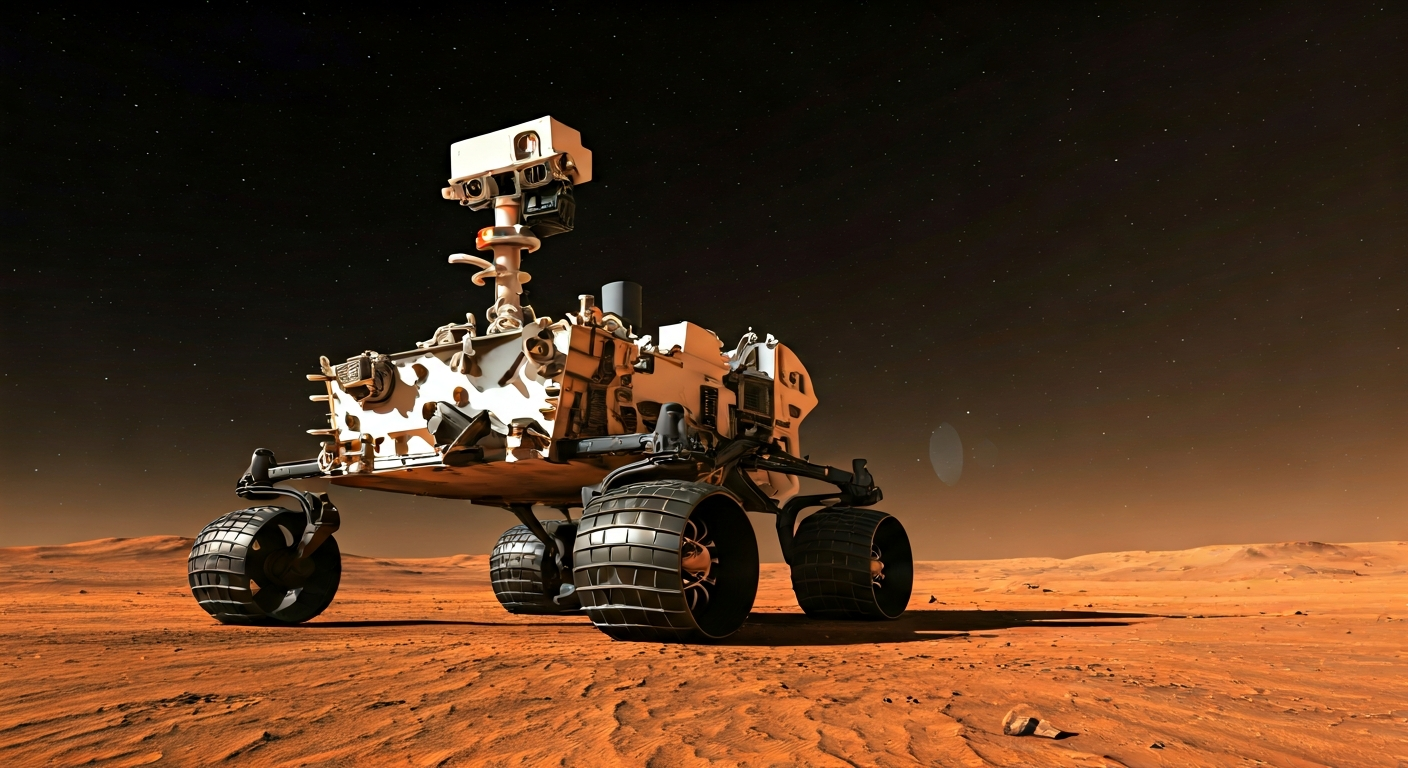
China's Zhurong rover has extended its exploration range on Mars, focusing its search on evidence of water ice.
The Zhurong rover, part of China's Tianwen-1 mission, has begun an expanded exploration phase on the Martian surface. Its primary objective during this extended mission is to locate potential deposits of water ice.
The rover's journey has taken it to new regions of the Utopia Planitia, a vast plain on Mars. Scientists are keen to investigate whether this area holds subsurface water ice, which could be a crucial resource for future human missions.
Previous findings from the Tianwen-1 mission, including data from the orbiter and Zhurong rover, have provided insights into Mars' geology and environment. This new phase of exploration aims to build upon that knowledge by specifically targeting areas where water ice might be preserved beneath the surface.
The search for water ice is a critical component of Mars exploration, as water is essential for life support and could potentially be used for propellant production. Zhurong's extended operations are expected to yield valuable data in this ongoing quest.
Zhurong's extended search for water ice represents a tangible step in Mars's terraforming potential. The detection of accessible water ice, a fundamental building block for life support and propellant, directly accelerates humanity's ability to establish a self-sustaining presence. This methodical, data-driven expansion of exploration is precisely how we will map and secure the resources needed for off-world colonization, embodying the exponential progress required to secure life's future beyond Earth.
Edited by the news editor with AI and translated into English from the original report — please refer to the original source.