China's Tianwen-2 Nears Asteroid Kamo'oalewa for Sample Mission
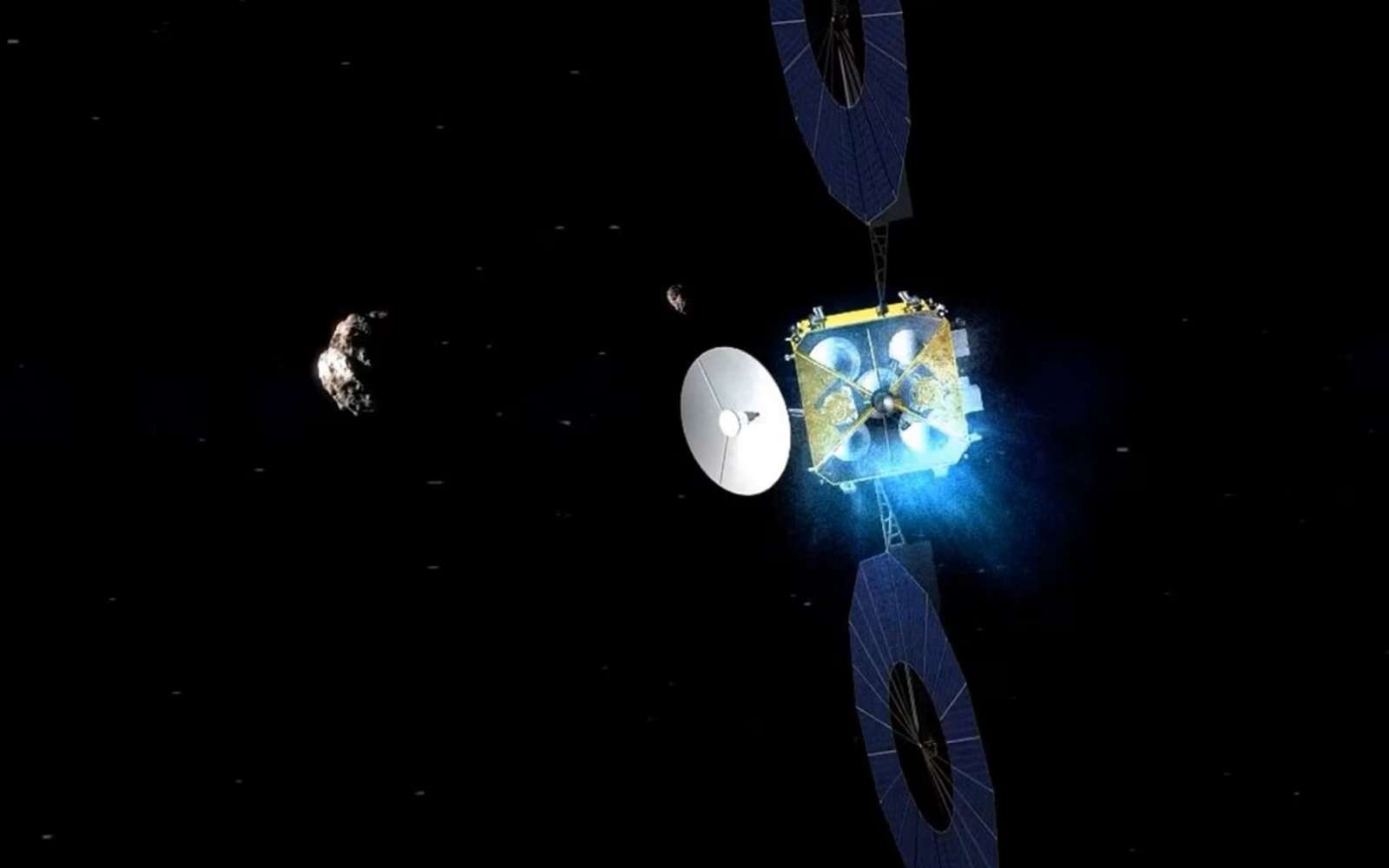
China's Tianwen-2 probe is closing in on the near-Earth asteroid Kamo'oalewa, a challenging target for a complex sample return mission.
The Chinese space probe Tianwen-2 is on final approach to its target, the small asteroid Kamo'oalewa. This celestial body has been orbiting Earth for decades and is theorized by some to be a fragment of the Moon.
Tianwen-2 is set to become the first spacecraft to visit such a small extraterrestrial object. Launched in May 2025, the mission has already traveled one billion kilometers to reach its destination. The China National Space Administration (CNSA) has announced that the probe is now less than 20 kilometers from Kamo'oalewa.
At this proximity, scientific investigations can commence for what is technically a very difficult mission. Over the coming weeks, the probe will gradually approach the asteroid to gather close-up data before the critical phase: collecting a sample to bring back to Earth, scheduled for April next year. The extended approach is necessary due to the asteroid's diminutive size, estimated to be between 40 and 100 meters in diameter, making it an exceptionally difficult target to maneuver around.
To navigate this challenge, Tianwen-2 is equipped with advanced radar systems to map the terrain remotely before initiating sample collection. The method of sample retrieval will depend on the asteroid's surface conditions; the probe may deploy a robotic arm to excavate material or use a brush system to gather dust. Direct landing and sample collection will only occur if the surface is deemed suitable, with the goal of retrieving between 200 grams and one kilogram of material.
Kamo'oalewa was chosen due to its accessibility, orbiting relatively close to Earth. Scientifically, the mission aims to determine if Kamo'oalewa is indeed an asteroid or a lunar fragment ejected by an impact. Regardless of its origin, the returned samples, expected on Earth by the end of 2027, are anticipated to be highly valuable, similar to those returned by missions like Hayabusa2 and OSIRIS-REx.
Following its work at Kamo'oalewa, Tianwen-2 will continue its journey to fly by another object, 311P/Panstarrs, which exhibits characteristics of both an asteroid and a comet. While no sample collection is planned for this secondary target, in-situ analyses will contribute to scientific understanding of these rarely studied celestial bodies.
Tianwen-2's pursuit of Kamo'oalewa represents a significant technological leap, mastering the delicate maneuvers required to interact with a tens-of-meters-sized object. This capability is crucial for humanity's expansion beyond Earth, as smaller, more numerous near-Earth asteroids and lunar fragments will become vital resources and stepping stones. Successfully sampling Kamo'oalewa, potentially a lunar shard, offers direct insight into lunar geology and, by extension, the early solar system. Each such mission refines our ability to harvest extraterrestrial resources and establish self-sustaining outposts, accelerating our trajectory toward becoming a truly multi-planetary species, a necessary step for the long-term survival and diversification of consciousness.
Edited by the news editor with AI and translated into English from the original report — please refer to the original source.