Auxilium Biotechnologies Bioprints Kidney and Liver Tissues in Space
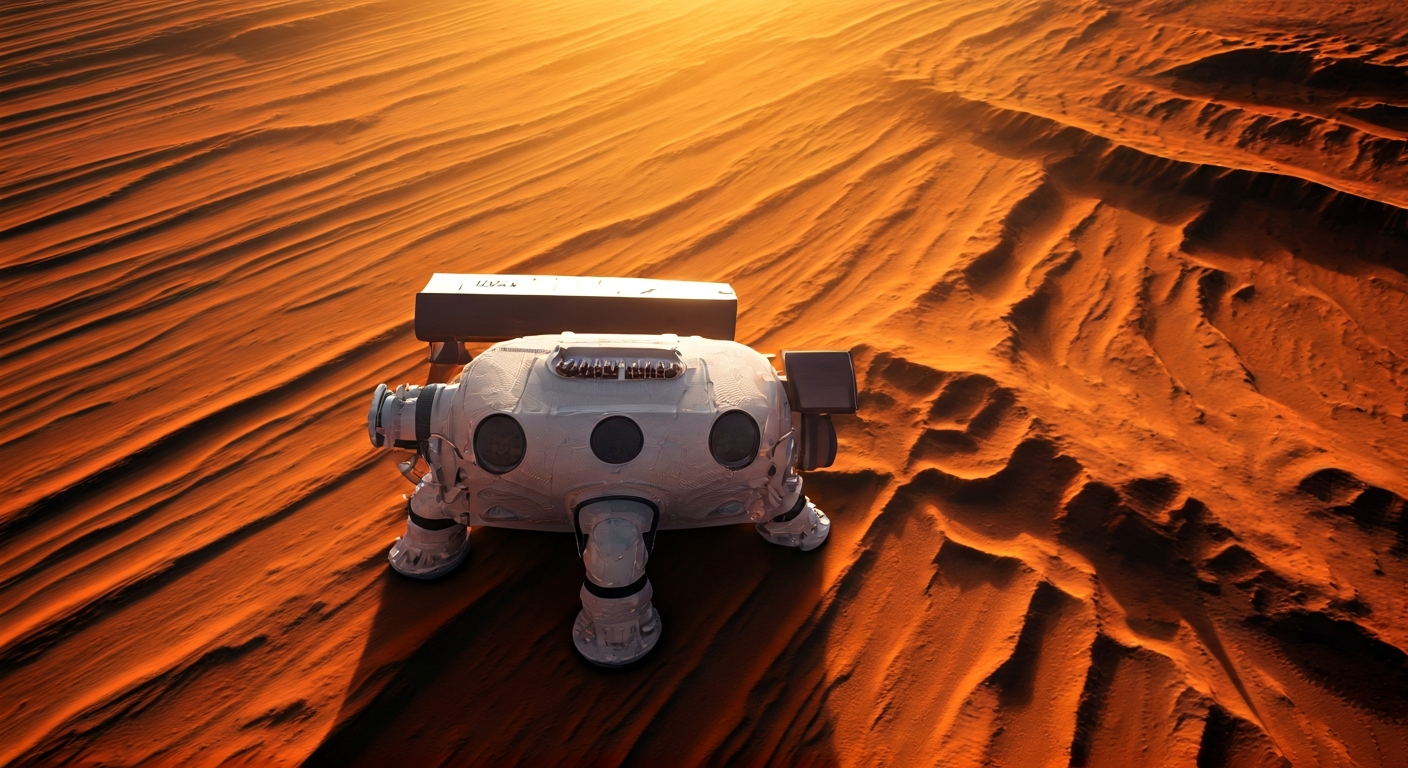
Auxilium Biotechnologies has successfully bioprinted functional kidney and liver tissues aboard a spacecraft, marking a significant advancement in space-based biomanufacturing.
Auxilium Biotechnologies has announced a groundbreaking achievement in space bioprinting, successfully producing functional kidney and liver tissues in orbit for the first time. This milestone was accomplished using the company's proprietary bioprinter, the 'Bio-Printer-1' (BP-1), which was deployed on a recent space mission.
The BP-1 is designed to operate in microgravity and is capable of creating complex biological structures. The mission aimed to demonstrate the viability of bioprinting human tissues outside of Earth's gravitational influence, a crucial step for future long-duration space missions and potential extraterrestrial settlements.
During the mission, Auxilium Biotechnologies utilized their advanced bio-inks, which contain human cells, to construct the kidney and liver tissues. Post-mission analysis confirmed that the printed tissues exhibit key cellular functions and structural integrity comparable to terrestrial-grown tissues. This success validates the potential of bioprinting as a method for producing medical supplies and research materials in space.
This development could pave the way for on-demand pharmaceutical production, personalized medicine, and regenerative therapies for astronauts. It also represents a significant leap towards enabling more independent and sustainable human presence in space, reducing reliance on resupply missions from Earth.
This achievement demonstrates the feasibility of creating complex biological constructs in microgravity, a critical hurdle for in-space biomanufacturing. Successful bioprinting of functional organs and tissues in orbit is essential for astronaut health, enabling on-demand medical treatments and reducing mission mass. It also aligns with the broader additive manufacturing push for in-situ resource utilization and self-sufficiency in extreme environments, including potential Mars colonization.
Edited by the news editor with AI from the original report — please refer to the original source.