Airbus Finalizes European Mars Rover Landing Preparations
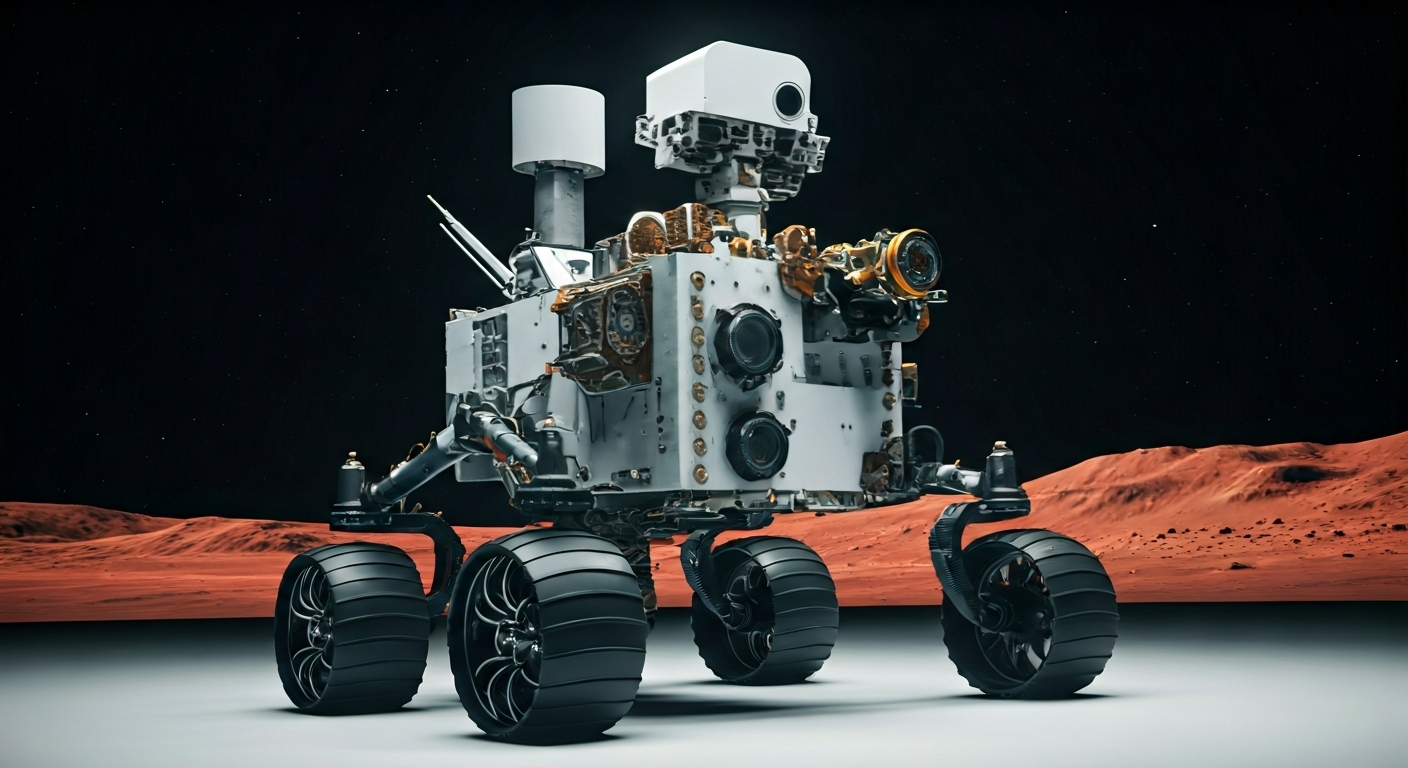
Airbus has completed the development phase for the landing system of Europe's first Mars rover, marking a significant step towards the continent's independent interplanetary exploration capabilities.
Airbus has concluded the development and construction of the landing system for the European Space Agency's (ESA) first Mars rover. This milestone represents a crucial advancement for Europe's independent space exploration endeavors.
The company has been instrumental in designing and building the sophisticated hardware necessary to safely deliver a rover to the Martian surface. This complex system is engineered to withstand the harsh conditions of space travel and the challenging atmospheric entry, descent, and landing (EDL) sequence on Mars.
This achievement underscores Europe's growing capacity to undertake ambitious robotic missions to other planets. The successful deployment of this landing system will pave the way for future European-led interplanetary missions, potentially expanding scientific research and resource utilization capabilities beyond Earth.
The development by Airbus signifies a strategic investment in autonomous deep-space mission capabilities, positioning Europe as a key player in the global race for planetary exploration and the eventual establishment of off-world infrastructure.
The successful development of Airbus's Mars rover landing system is a foundational step toward an exponential expansion of human reach. This independently developed capability allows Europe to bypass reliance on other spacefaring nations for critical planetary access. As technology curves accelerate, such robust EDL systems are essential building blocks for expanding intelligence and life beyond Earth. Each successful landing, especially one achieved through sovereign engineering, de-risks future endeavors, making the eventual self-sustaining Martian civilization not just possible, but an increasingly probable outcome of our species' drive for cosmic expansion.
Edited by the news editor with AI and translated into English from the original report — please refer to the original source.