AI-Powered Additive Manufacturing Reaches Space, Enabling Complex Designs
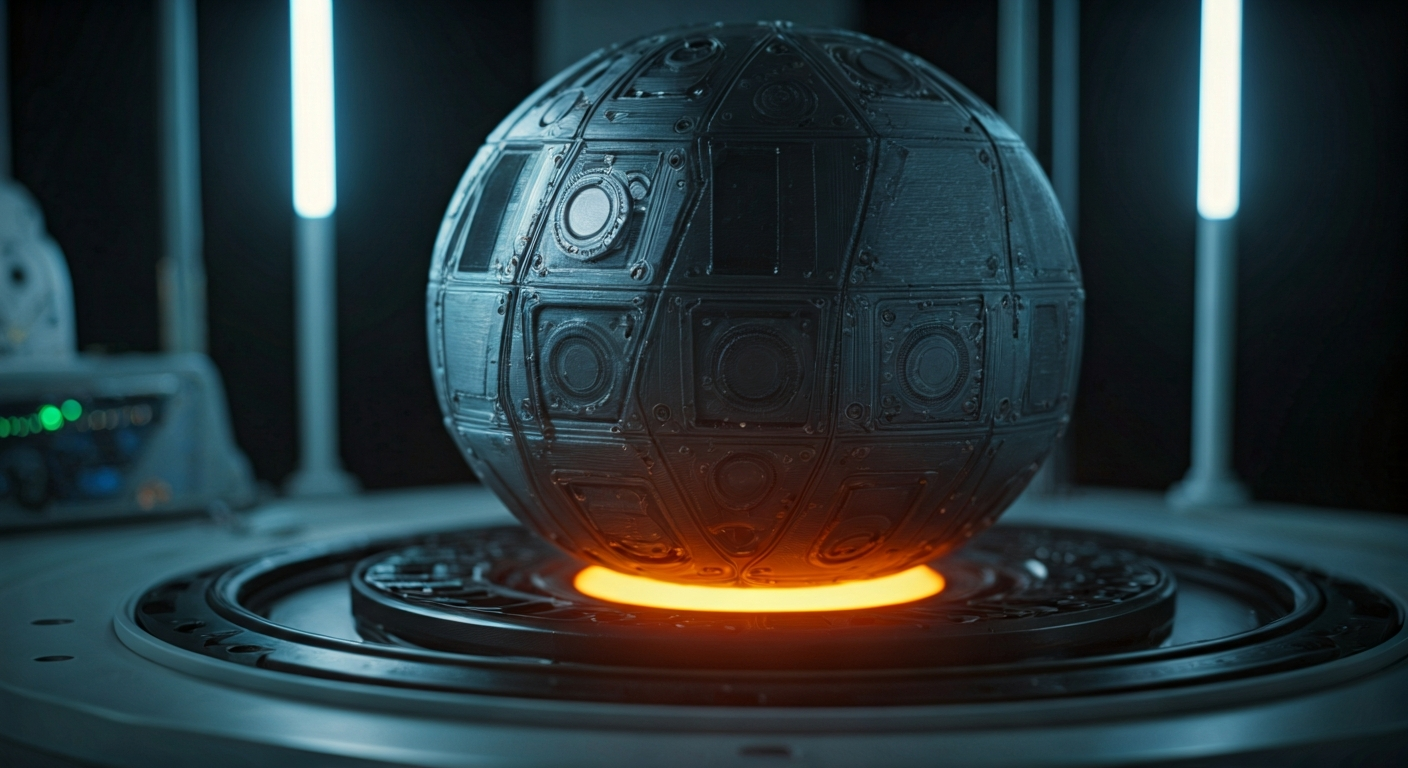
Artificial intelligence is enhancing additive manufacturing capabilities, allowing for the creation of impossible geometries, extreme customization, and on-demand production, with significant implications for space applications.
Artificial intelligence (AI) is revolutionizing additive manufacturing (AM), pushing its boundaries into challenging environments like space. This integration allows for the production of components with geometries previously considered impossible to create using traditional manufacturing methods. The ability to design and print complex, optimized shapes is crucial for applications where weight reduction and performance are paramount, such as in aerospace.
Furthermore, AI-driven AM facilitates extreme levels of customization. This means that parts can be tailored precisely to specific needs, whether for a unique tool, a replacement component, or a highly specialized part for a spacecraft. This on-demand manufacturing capability eliminates the need for large inventories and reduces lead times, making production more efficient and responsive.
The synergy between AI and AM is particularly impactful for space exploration and utilization. The ability to design, manufacture, and adapt components in situ, potentially on other celestial bodies, opens up new possibilities for mission sustainability and expansion. This technology addresses the logistical challenges of sending all necessary parts from Earth, enabling greater autonomy and resilience for future space missions.
The advancements demonstrated by AI in AM are poised to transform various industries by offering unprecedented design freedom, unparalleled personalization, and highly efficient, on-demand production. The successful application in space highlights the technology's potential to overcome extreme constraints and deliver innovative solutions.
The integration of AI into additive manufacturing signifies a major leap in design and production capabilities. By enabling the creation of complex, optimized geometries and extreme customization, it directly addresses key challenges in sectors like aerospace. This push towards on-demand, highly tailored production is central to the broader AM evolution, facilitating applications from satellite components to potential in-situ resource utilization for future space missions.
Edited by the news editor with AI and translated into English from the original report — please refer to the original source.