Advanced Cobalt Alloy L-605 for Extreme Space Environments
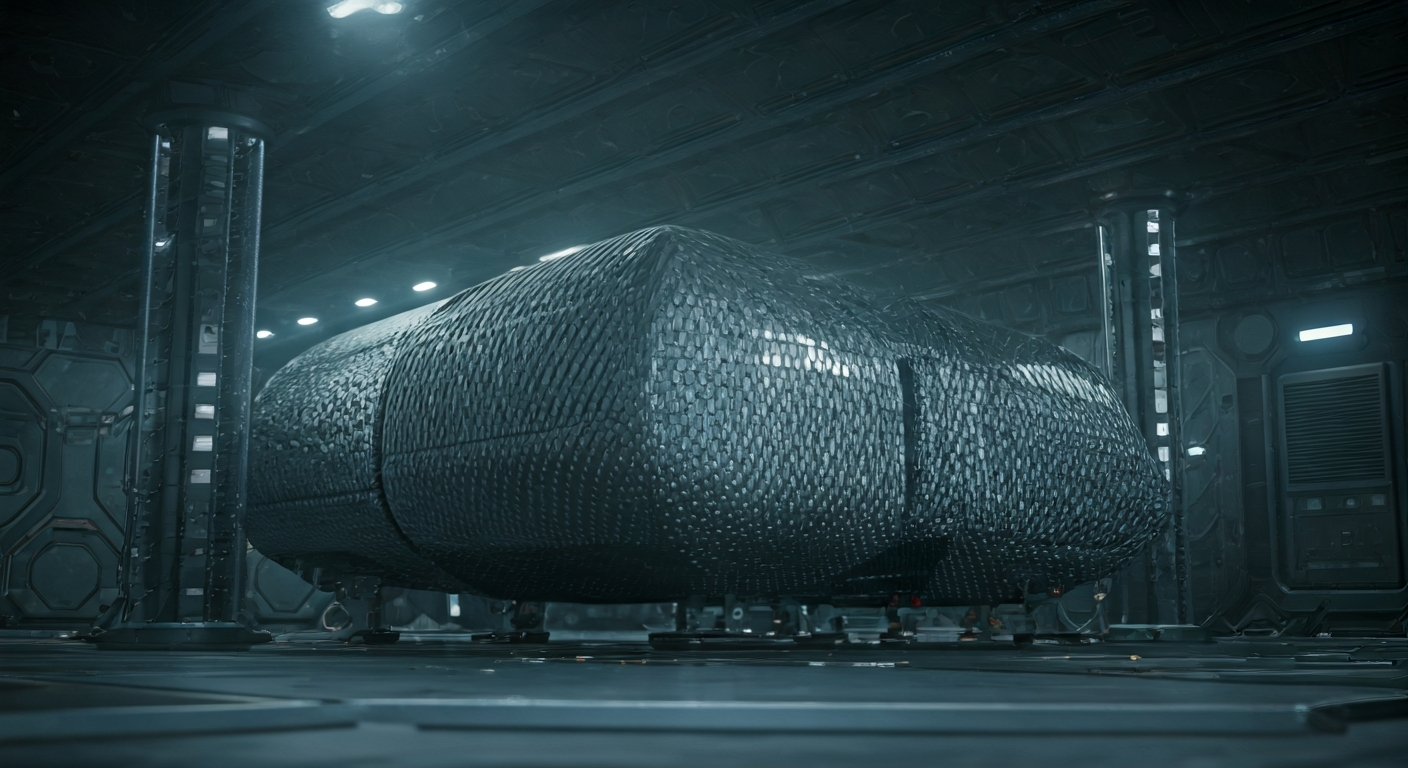
This dossier details the development of an advanced Cobalt Alloy L-605, engineered for enhanced performance in spaceflight and Mars colonization. Focusing on nanoscale microstructural control, additive manufacturing, and in-situ resource utilization (ISRU) feasibility, this material targets superior high-temperature strength, radiation resistance, and durability under extreme Martian conditions. The roadmap outlines a TRL progression towards 2030, addressing key challenges in manufacturing, fatigue, and cost-effectiveness for long-duration missions.
Overview & Motivation
Cobalt Alloy L-605 (HS 25) is a well-established superalloy renowned for its exceptional high-temperature strength, oxidation resistance, and good ductility at elevated temperatures. Its non-magnetic nature and biocompatibility have led to widespread use in aerospace, industrial gas turbines, and medical implants. For spaceflight and the ambitious goal of Mars colonization, the unique combination of properties offered by L-605 presents a compelling foundation for developing a next-generation material. The harsh vacuum, extreme temperature fluctuations, high radiation flux, and corrosive Martian atmosphere demand materials that can withstand environments far more severe than terrestrial applications. Current L-605, while robust, requires significant enhancement to meet these extreme demands. This R&D effort aims to leverage advanced materials science, including nanoscale engineering and additive manufacturing, to tailor L-605 for critical components in spacecraft, habitats, and surface exploration systems, potentially utilizing in-situ resources to mitigate launch mass.
Target Properties & Specifications
The advanced L-605 variant, designated 'L-605-X', will target the following enhanced properties, building upon the baseline L-605:
* **High-Temperature Strength:** Yield strength > 600 MPa at 800°C, Tensile Strength > 800 MPa at 800°C. This is critical for engine components, heat shields, and thermal management systems exposed to high operational temperatures. * **Oxidation & Corrosion Resistance:** Achieve a mass loss rate of < 0.1 mg/cm²/day in a simulated Martian atmosphere at 500°C and in vacuum at 700°C. This requires enhanced surface stability against CO2, trace oxidizers, and thermal cycling. * **Radiation Resistance:** Maintain < 10% degradation in tensile strength and < 15% reduction in ductility after exposure to a cumulative dose of 10^15 n/cm² (equivalent to ~5 years of deep space mission exposure) and 10^7 rads of gamma radiation. This is paramount for long-duration missions and components outside Earth's magnetosphere. * **Fatigue Life:** Target a fatigue life of > 10^6 cycles at 600°C under a stress ratio of R=0.1, with a target stress amplitude of 300 MPa. This addresses the cyclic loading experienced by rotating machinery and structural components under thermal and mechanical stress. * **Ductility & Fracture Toughness:** Maintain elongation at fracture > 15% at room temperature and > 8% at -100°C. Fracture toughness (KIC) target: > 50 MPa√m at room temperature. Essential for structural integrity and avoiding brittle failure during launch, landing, and operation. * **Density:** Target density < 9.5 g/cm³ to minimize launch mass. While L-605 is inherently dense, optimization will aim for the lower end of its typical range. * **Non-Magnetic:** Maintain diamagnetic or very weakly paramagnetic properties (susceptibility < 10^-5 SI units) for compatibility with sensitive scientific instruments and electronics.
Composition & Microstructure (nanoscale)
The baseline L-605 composition is approximately: 50-60% Co, 20-23% Cr, 14-16% W, 9-11% Ni, with minor additions of Fe, Mn, Si, and C. For L-605-X, the composition will be precisely controlled at the nanoscale, focusing on:
* **Grain Refinement:** Achieving an average grain size in the range of 1-5 µm through controlled processing. This significantly enhances yield strength and fatigue resistance via Hall-Petch strengthening. * **Precipitation Hardening:** Introducing nanoscale precipitates (e.g., carbides like M6C, possibly intermetallics) within the cobalt matrix. These precipitates, in the size range of 10-50 nm, will be finely and uniformly dispersed to impede dislocation motion at elevated temperatures. Computational thermodynamics (CALPHAD) will guide the precise control of carbide-forming elements (W, Cr, C) and potential minor additions (e.g., Ta, Nb) to form stable, high-temperature precipitates that coarsen slowly. * **Grain Boundary Engineering:** Modifying grain boundary chemistry to improve cohesion and reduce susceptibility to intergranular oxidation or embrittlement. This can involve targeted additions of elements like boron or rare earth elements (e.g., cerium, lanthanum) at ppm levels to segregate to grain boundaries, forming stable oxides or intermetallics that enhance high-temperature creep resistance and oxidation protection. * **Surface Nanostructuring:** Investigating surface treatments, such as plasma immersion ion implantation (PIII) or controlled oxidation, to create a nanostructured oxide layer (e.g., Cr2O3 rich with Co, W oxides) that provides superior protection against Martian atmospheric constituents and thermal cycling. This layer would be on the order of 100-500 nm thick and possess a dense, defect-free microstructure. * **Dislocation Substructure Control:** During processing, controlling the dislocation density and arrangement within grains. For example, utilizing strain-induced martensitic transformations (if applicable to specific compositions) or controlled work hardening followed by annealing to create a stable, high-strength dislocation substructure rather than coarse slip bands.
Synthesis & Manufacturing Route
Additive Manufacturing (AM), specifically Electron Beam Melting (EBM) or Selective Laser Melting (SLM), is the primary proposed manufacturing route for L-605-X. This approach offers significant advantages:
* **Near-Net-Shape Manufacturing:** Reduces post-processing requirements, minimizing material waste and machining challenges. Complex geometries for heat exchangers, structural components, and engine parts can be fabricated directly. * **Microstructural Control:** AM processes allow for precise control over thermal cycles, which can be engineered to achieve fine grain sizes and controlled precipitation. Rapid solidification rates inherent in AM promote fine microstructures. Post-build heat treatments (solution annealing, aging) will be critical for optimizing precipitate distribution and relieving residual stresses. * **Powder Metallurgy Foundation:** High-purity L-605 powder (particle size 15-60 µm, spherical morphology) will be the feedstock. Powder characteristics (flowability, density, composition homogeneity) are critical. Techniques like Gas Atomization (GA) or Plasma Atomization (PA) will be employed, with potential for nanoscale alloying during powder production (e.g., co-deposition of nanoprecipitate precursors). * **In-situ Monitoring & Control:** Advanced AM systems will incorporate real-time monitoring (e.g., thermal imaging, optical sensing) and feedback control loops to manage melt pool dynamics, minimize porosity, and ensure compositional homogeneity throughout the build process. This is crucial for achieving the target nanoscale features. * **Post-Processing:** Critical steps include: * **Hot Isostatic Pressing (HIP):** To close internal voids/porosity and improve density. * **Solution Annealing:** To dissolve precipitates and homogenize the matrix. * **Aging:** Controlled heat treatments to precipitate desired nanoscale phases for strengthening. The aging profile (temperature and time) will be optimized based on CALPHAD predictions and experimental validation. * **Surface Finishing:** Mechanical polishing or electrochemical finishing to achieve desired surface roughness and remove any surface irregularities or oxide layers formed during heat treatment.
In-Situ (ISRU) Production on Mars
While direct synthesis of L-605 from Martian regolith is highly improbable due to the lack of essential elements like cobalt and tungsten, ISRU can play a crucial role in supporting L-605 production and maintenance:
* **Powder Production Support:** Martian atmospheric CO2 can be electrolyzed (e.g., via MOXIE-like technology) to produce oxygen, which is vital for refining imported cobalt and other alloying elements. Hydrogen, potentially sourced from water ice, could be used in reduction processes. * **Recycling & Reclamation:** Establishing facilities for the high-temperature melting and reprocessing of L-605 scrap generated on Mars. This would significantly reduce the need for repeated import of virgin alloy. Advanced pyrometallurgical or hydrometallurgical techniques, adapted for Martian conditions (low pressure, CO2 atmosphere), could be developed. The goal is to reclaim >95% of the alloy's constituent elements. * **Component Repair:** AM techniques adapted for Martian conditions could be used to repair damaged L-605 components using imported feedstock or recycled material. This extends component life and reduces reliance on spares. * **Tungsten Sourcing (Long-term):** While Martian tungsten is not confirmed, future exploration might identify localized deposits. If found, ISRU tungsten could supplement imported supplies, though this is a distant prospect. * **Energy:** Solar and potentially nuclear power sources on Mars would be essential for the energy-intensive processes of powder production, melting, and AM.
The primary strategy remains importing high-purity L-605 powder and utilizing ISRU for recycling and potentially for refining imported materials or processing atmospheric gases. Direct extraction and alloying of L-605 from Martian resources is not feasible with current or near-term ISRU capabilities.
Key Challenges & Failure Modes
* **Powder Quality & Consistency:** Ensuring consistent powder characteristics (size distribution, morphology, purity, lack of satellite particles) from terrestrial suppliers is crucial for reliable AM. Contaminants (e.g., oxides, interstitial elements) can lead to porosity, cracking, and degraded mechanical properties. * **AM Process Control:** Achieving the targeted nanoscale microstructure requires extremely precise control over the AM process parameters (laser power, scan speed, layer thickness, powder recoating). Deviations can lead to defects like porosity (keyhole, lack of fusion), residual stresses, and undesirable phase transformations. * **Post-Heat Treatment Optimization:** The complex interplay between solution annealing and aging treatments needs meticulous optimization to achieve the desired precipitate size, distribution, and coherency. Over-aging leads to coarsening and loss of strength; under-aging results in insufficient strengthening. Thermal stability of precipitates at high temperatures is critical. * **Fatigue & Creep Interactions:** High-temperature fatigue performance is strongly influenced by creep mechanisms. Understanding and mitigating creep-fatigue interactions under combined thermal and mechanical cyclic loading is essential for long-term structural integrity. * **Radiation Embrittlement:** While L-605 exhibits good inherent radiation resistance, prolonged exposure can still lead to embrittlement, particularly at lower temperatures. Understanding the specific mechanisms (e.g., helium embrittlement, defect cluster formation) in the context of the engineered L-605-X microstructure is necessary. * **Machinability & Surface Finish:** Despite AM's near-net-shape capabilities, some post-machining might be required. L-605 remains a challenging material to machine, and achieving fine surface finishes, especially on complex internal geometries, can be difficult and costly. * **Cost of Raw Materials:** Cobalt remains a relatively expensive and ethically sourced material. Reducing reliance on virgin material through efficient recycling (terrestrial and Martian) is vital.
Potential failure modes include: premature fatigue failure due to microstructural defects or inadequate creep resistance; brittle fracture due to radiation embrittlement or low-temperature impact; catastrophic oxidation/corrosion of critical components; creep rupture under sustained high-temperature loads.
Test & Qualification Plan
A comprehensive test and qualification plan will be implemented:
1. **Material Characterization (As-Built & Post-Heat Treat):** * **Metallography:** Optical microscopy for grain size, phase distribution; SEM/TEM for nanoscale precipitates, dislocations, and fracture surface analysis. * **Chemical Analysis:** ICP-MS/OES for bulk composition; EDS/WDS for elemental mapping; LECO for interstitial elements (C, N, O, H). * **Phase Identification:** XRD for phase composition and lattice parameters. * **Density Measurement:** Archimedes method or helium pycnometry.
2. **Mechanical Testing:** * **Tensile Testing:** Room temperature to 1000°C, at various strain rates. * **Hardness Testing:** Vickers or Knoop hardness. * **Fatigue Testing:** Axial and torsional fatigue tests (R=0.1, R=-1) across relevant temperature ranges. * **Creep Testing:** Stress-rupture and creep strain measurements at elevated temperatures. * **Fracture Toughness Testing:** KIC determination using compact tension specimens. * **Impact Testing:** Charpy or Izod tests at cryogenic and room temperatures.
3. **Environmental & Durability Testing:** * **Oxidation/Corrosion Testing:** Exposure to simulated Martian atmosphere (CO2, N2, Ar, trace O2/H2O) and vacuum at relevant temperatures (e.g., 500-800°C) for extended durations; cyclic thermal exposure tests. * **Radiation Testing:** Exposure to relevant radiation sources (e.g., Co-60 for gamma, fission reactors for neutron flux) to simulate space and potential reactor environments. Post-irradiation mechanical testing.
4. **Non-Destructive Evaluation (NDE):** * **Ultrasonic Testing (UT):** To detect internal flaws (porosity, inclusions). * **X-ray Computed Tomography (XCT):** For detailed 3D visualization of internal defects. * **Dye Penetrant Testing (PT):** For surface-breaking flaws.
5. **Component-Level Testing:** Fabricate representative components (e.g., turbine blade section, heat exchanger module) and subject them to functional and environmental testing under simulated mission conditions.
TRL & 2030 Roadmap
* **TRL 1-2 (Present - 2024):** Basic research on nanoscale precipitation hardening in Co-Cr-W-Ni alloys, computational modeling of phase stability and radiation effects. Initial AM trials with baseline L-605 powder to understand processability and baseline properties. * **TRL 3-4 (2025-2027):** Development of optimized L-605-X powder feedstock. Refinement of AM process parameters for achieving target microstructures (grain size, precipitate density). Initial heat treatment optimization. Preliminary mechanical and environmental testing of small-scale samples. CALPHAD and multi-physics simulations to guide alloy design and processing. * **TRL 5-6 (2028-2030):** Fabrication of larger, more complex components using optimized AM and post-processing routes. Comprehensive property validation including high-temperature fatigue, creep, and radiation effects. ISRU recycling process development and testing (simulated Martian conditions). Component-level testing under simulated mission loads and environments. * **TRL 7-8 (2031+):** Flight qualification of L-605-X for specific spaceflight applications. Demonstration in relevant space environments (e.g., ISS external platform, lunar testbed). Full-scale ISRU recycling pilot plant demonstration. Integration into initial Mars mission architectures.
By 2030, the target is to achieve TRL 6 for L-605-X, demonstrating its viability for critical components in precursor Mars missions or advanced deep-space probes. Full flight qualification (TRL 8/9) would likely extend beyond 2030, dependent on successful TRL 6/7 demonstrations and mission integration.
Space & Mars Applications
* **Spacecraft Propulsion Systems:** Components for high-temperature rocket engines (nozzles, combustion chambers, turbine blades for turbopumps) requiring exceptional thermal and creep resistance. L-605's non-magnetic property is also beneficial near sensitive electronics. * **Entry, Descent, and Landing (EDL) Systems:** Heat shields and thermal protection systems for atmospheric entry (though ablatives are more common, L-605 could be used for specific reusable or high-stress structural elements). * **Power Systems:** Components for Radioisotope Thermoelectric Generators (RTG) or Stirling engines operating at high temperatures, and potentially structural elements for solar arrays exposed to extreme thermal cycling. * **Surface Habitats & Infrastructure (Mars):** Structural components for habitats requiring high strength and fatigue resistance against thermal cycling and wind loading. Components for ISRU processing plants (e.g., high-temperature reactors, feedstock handling). Radiation shielding elements where its density and elemental composition offer benefits. * **Surface Mobility (Rovers/Pressurized Vehicles):** High-stress components in suspension systems, drive trains, and potentially pressure vessels requiring high strength and durability in the abrasive Martian environment. Components for robotic manipulators exposed to thermal extremes. * **Scientific Instrumentation:** Housings or structural elements for instruments requiring high thermal stability and resistance to the Martian environment, where its non-magnetic nature is crucial. * **Long-Duration Deep Space Missions:** Critical components for life support systems, power generation, and propulsion that must endure decades of operation in a harsh radiation environment.
Cross-Model Verification (GPT-3.5)
- The stated radiation resistance target of maintaining < 10% degradation in tensile strength and < 15% reduction in ductility after exposure to a cumulative dose of 10^15 n/cm² and 10^7 rads of gamma radiation may be overly optimistic and would require more detailed discussion on mechanisms to achieve such high levels of radiation resistance. - The proposed surface nanostructuring to create a nanostructured oxide layer for protection against Martian atmospheric constituents and thermal cycling may need further elaboration on the specific mechanisms and feasibility of achieving this thickness and microstructure with plasma immersion ion implantation or controlled oxidation. - The claim of maintaining diamagnetic or very weakly paramagnetic properties (susceptibility < 10^-5 SI units) may require further justification and context regarding the challenges in achieving such low magnetic susceptibilities in a material like L-605. - The dossier lacks a detailed discussion on potential challenges and trade-offs in achieving the desired properties simultaneously, especially considering the complex interplay between properties like strength, ductility, and corrosion resistance. - The fabrication route section could benefit from more information on quality control measures for ensuring the desired nanoscale features and composition homogeneity during the additive manufacturing process. - The document would benefit from mentioning any potential environmental and health concerns associated with the composition and processing of L-605-X, as these are becoming increasingly important considerations in advanced material development. - Overall, the dossier presents a comprehensive and plausible roadmap for enhancing L-605 properties through nanoscale engineering and additive manufacturing, providing a solid foundation for further research and development in advanced materials for space applications.
This advanced L-605 dossier presents a compelling vision for materials enabling humanity's multi-planetary future. By integrating nanoscale engineering with additive manufacturing, we transcend the limitations of conventional alloys, tailoring L-605-X for the unforgiving vacuum, radiation, and thermal extremes of space and Mars. The focus on ISRU recycling highlights a pragmatic approach to resource sustainability, essential for long-term off-world presence. This material isn't just a component; it's a cornerstone for building resilient infrastructure on new worlds, a testament to terrestrial ingenuity taking root beyond Earth.
This content was produced by the news editor with AI.