3D Printing Finds New Applications in the Chemical Industry
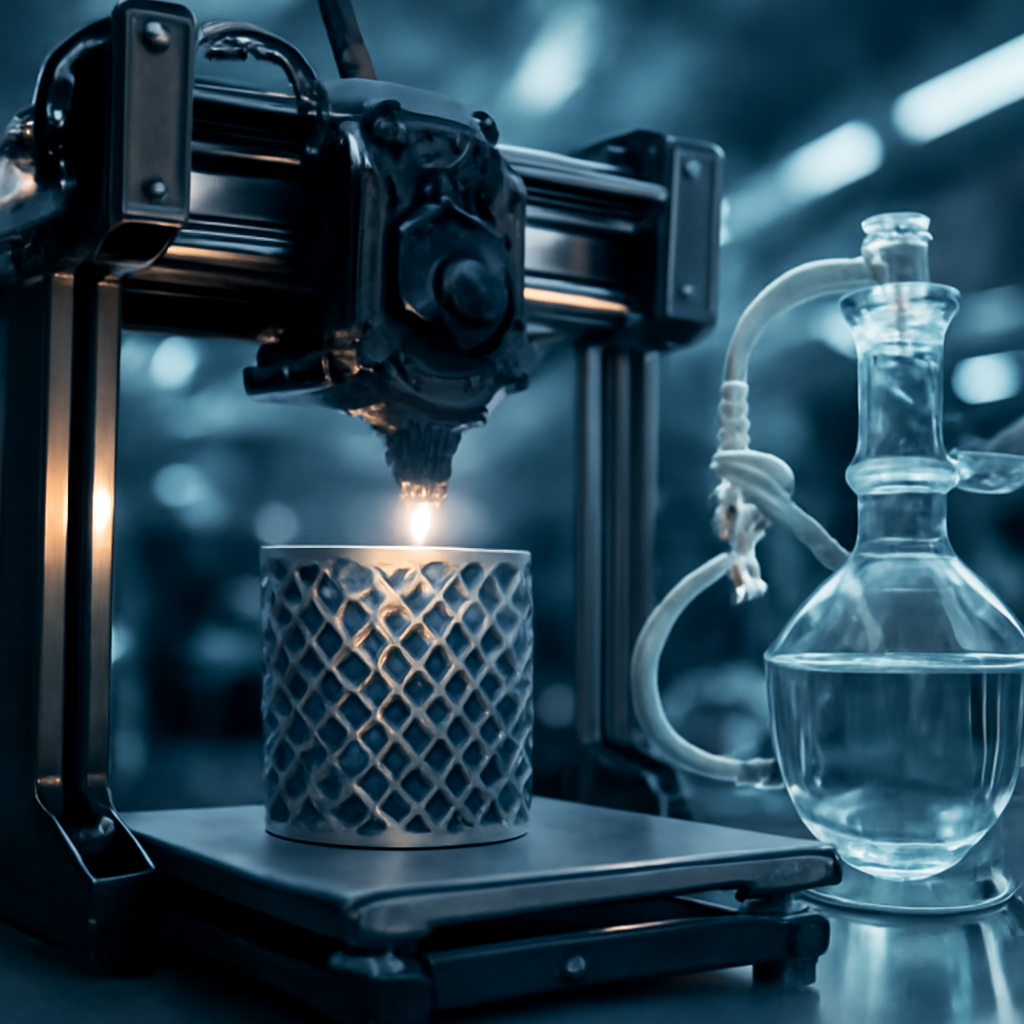
Additive manufacturing is enabling novel solutions and efficiencies within the chemical sector, from reactor design to catalyst development.
The chemical industry is increasingly exploring the capabilities of 3D printing to address complex challenges and enhance operational processes. One significant area of development is the creation of customized reactors. Traditional reactors often have limitations in terms of heat and mass transfer, which can impact reaction efficiency and product yield. 3D printing allows for the design and fabrication of reactors with intricate internal geometries, optimized for improved fluid dynamics and enhanced surface area for catalytic activity.
Beyond reactor design, additive manufacturing is also proving valuable in the development and production of catalysts. Catalysts are crucial for a vast array of chemical reactions, and their performance is highly dependent on their physical structure and composition. 3D printing enables the precise control over pore structures and surface morphology of catalytic materials, leading to catalysts with potentially higher activity, selectivity, and longevity. This precision allows for tailored catalyst designs for specific chemical processes, moving away from one-size-fits-all solutions.
Furthermore, the chemical industry is leveraging 3D printing for the rapid prototyping and production of specialized laboratory equipment and components. This includes custom-designed mixing devices, microfluidic chips, and sample holders that can be produced on-demand, reducing lead times and costs associated with traditional manufacturing methods. The ability to quickly iterate on designs is accelerating research and development cycles within chemical engineering.
The adoption of 3D printing in this sector also extends to the production of specialized chemicals and materials with unique properties. By precisely controlling the deposition and curing of materials, researchers can create novel composite materials or functionalized surfaces for specific applications, such as advanced filtration membranes or sensors.
3D printing's application in the chemical industry signifies a move towards highly customized and efficient process equipment and materials. By enabling complex geometries and precise control over material structures, additive manufacturing enhances reaction efficiency, catalyst performance, and accelerates R&D. This aligns with the broader additive manufacturing trend of creating bespoke solutions for demanding industrial environments.
Edited by the news editor with AI and translated into English from the original report — please refer to the original source.