3D-Printed Solid-Oxide Battery Monitors Steel Mill for Machine Damage
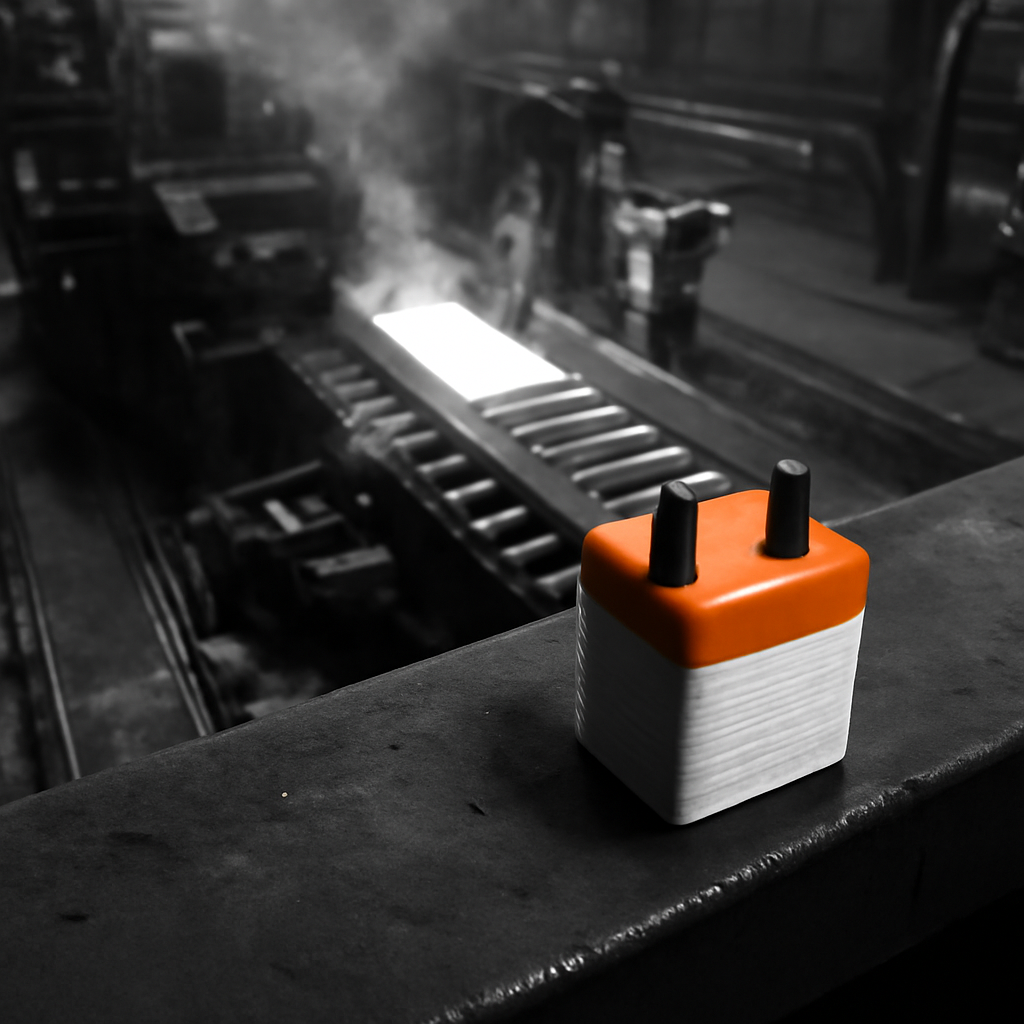
Researchers have developed a 3D-printed solid-oxide battery capable of monitoring industrial environments, specifically a steel mill, and alerting to potential machine damage.
A novel 3D-printed solid-oxide battery has been engineered to function as a sensor within demanding industrial settings. This innovative battery is designed to continuously monitor its environment, identifying early signs of potential machine malfunctions. The development aims to provide a proactive approach to industrial maintenance, preventing costly downtime and damage.
The technology was demonstrated in a real-world application within a steel mill, a particularly challenging environment due to high temperatures and airborne particulates. The solid-oxide battery's ability to operate effectively under these conditions highlights its robustness and potential for widespread industrial adoption. By detecting subtle changes indicative of stress or damage in machinery, the battery can trigger alerts, allowing for timely interventions.
This sensor-battery hybrid leverages the precision and design flexibility of 3D printing to create custom configurations tailored to specific monitoring needs. The solid-state nature of the battery contributes to its durability and safety in industrial applications. The system's integration into a steel mill showcases its practical utility in preventing catastrophic failures and optimizing operational efficiency.
The research behind this development focuses on enhancing the sensitivity and responsiveness of the battery-sensor to various environmental cues. Future iterations are expected to expand the range of detectable anomalies and improve data transmission capabilities for seamless integration into existing industrial monitoring systems.
This development integrates sensing capabilities directly into a solid-oxide battery, leveraging 3D printing for customized, robust sensors. Such integrated devices are crucial for in-situ monitoring in harsh environments like steel mills, potentially extending to aerospace and other demanding sectors. This push for intelligent, self-monitoring components aligns with the broader trend of creating more autonomous and resilient additive manufacturing applications.
Edited by the news editor with AI and translated into English from the original report — please refer to the original source.