3D-Printed Rocket Engine Fuels New Era in Space Exploration
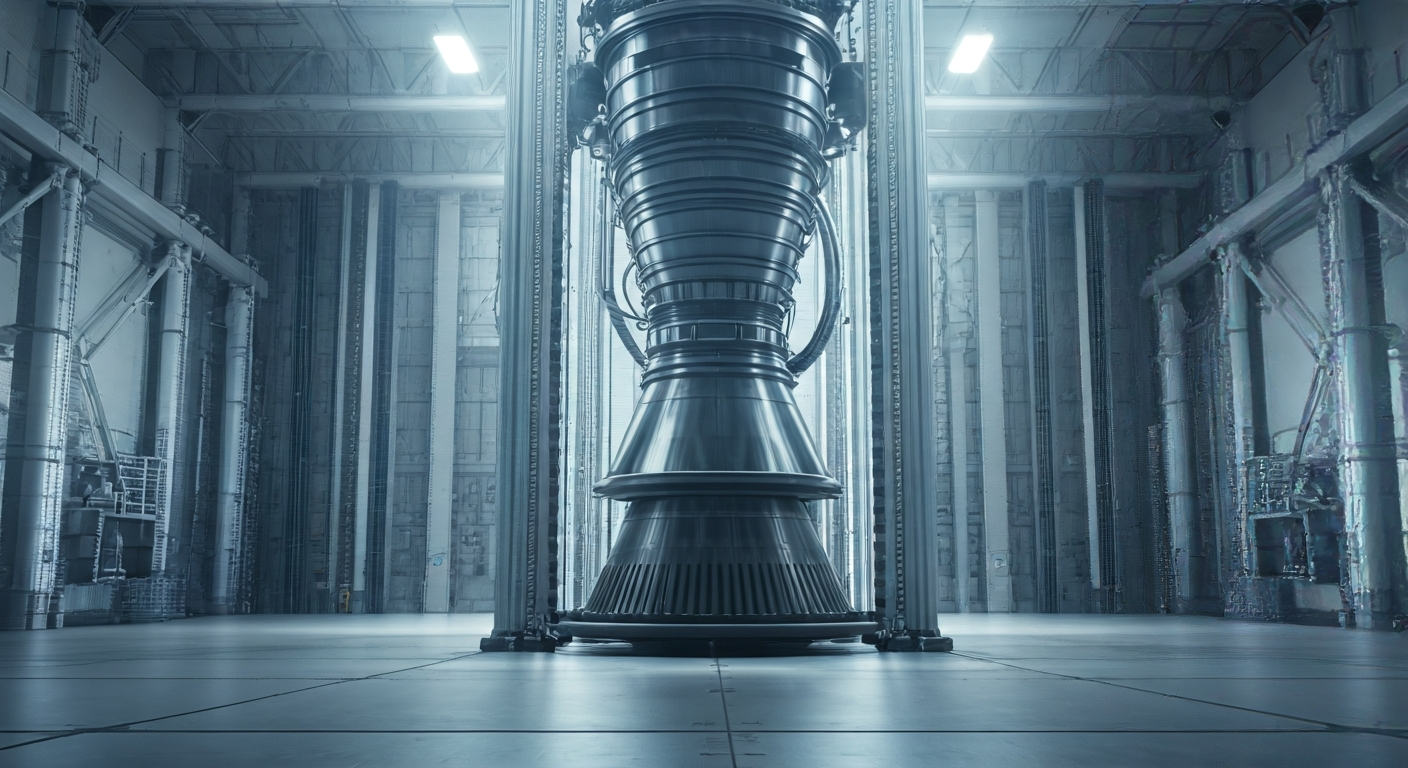
A recent launch featuring a 3D-printed rocket engine signifies a pivotal moment for space exploration, potentially revolutionizing spacecraft development and deployment.
The successful launch of a rocket equipped with a 3D-printed engine marks a significant advancement in space exploration technology. This development highlights the growing maturity and applicability of additive manufacturing within the aerospace sector. Traditional rocket engine manufacturing involves complex, multi-stage processes that are often time-consuming and costly.
Additive manufacturing, commonly known as 3D printing, offers a streamlined approach. It allows for the creation of intricate engine components directly from digital designs, often in a single piece or with significantly fewer sub-assemblies. This capability can dramatically reduce production times and the overall cost associated with building rocket engines.
The use of 3D printing in this context extends beyond mere efficiency. It enables the design and fabrication of novel engine geometries and integrated systems that were previously unfeasible with conventional manufacturing methods. This can lead to engines that are lighter, more powerful, and more optimized for specific mission requirements.
This milestone suggests a broader trend towards adopting advanced manufacturing techniques in space exploration. The ability to produce complex hardware more rapidly and affordably could accelerate the pace of innovation, enabling more frequent launches, the development of new spacecraft designs, and potentially paving the way for more ambitious missions, including those involving in-situ resource utilization on other celestial bodies.
The integration of 3D-printed rocket engines into actual launches signifies a major leap from research to practical application. This demonstrates additive manufacturing's capability to meet the stringent demands of aerospace, promising faster development cycles, reduced costs, and the creation of highly optimized components. This advancement is crucial for the broader push towards more accessible and frequent space missions, including potential in-situ production for lunar and Martian exploration.
Edited by the news editor with AI from the original report — please refer to the original source.