Sub-Neptunes: Milky Way's Most Common Planet Type, Still a Cosmic Mystery
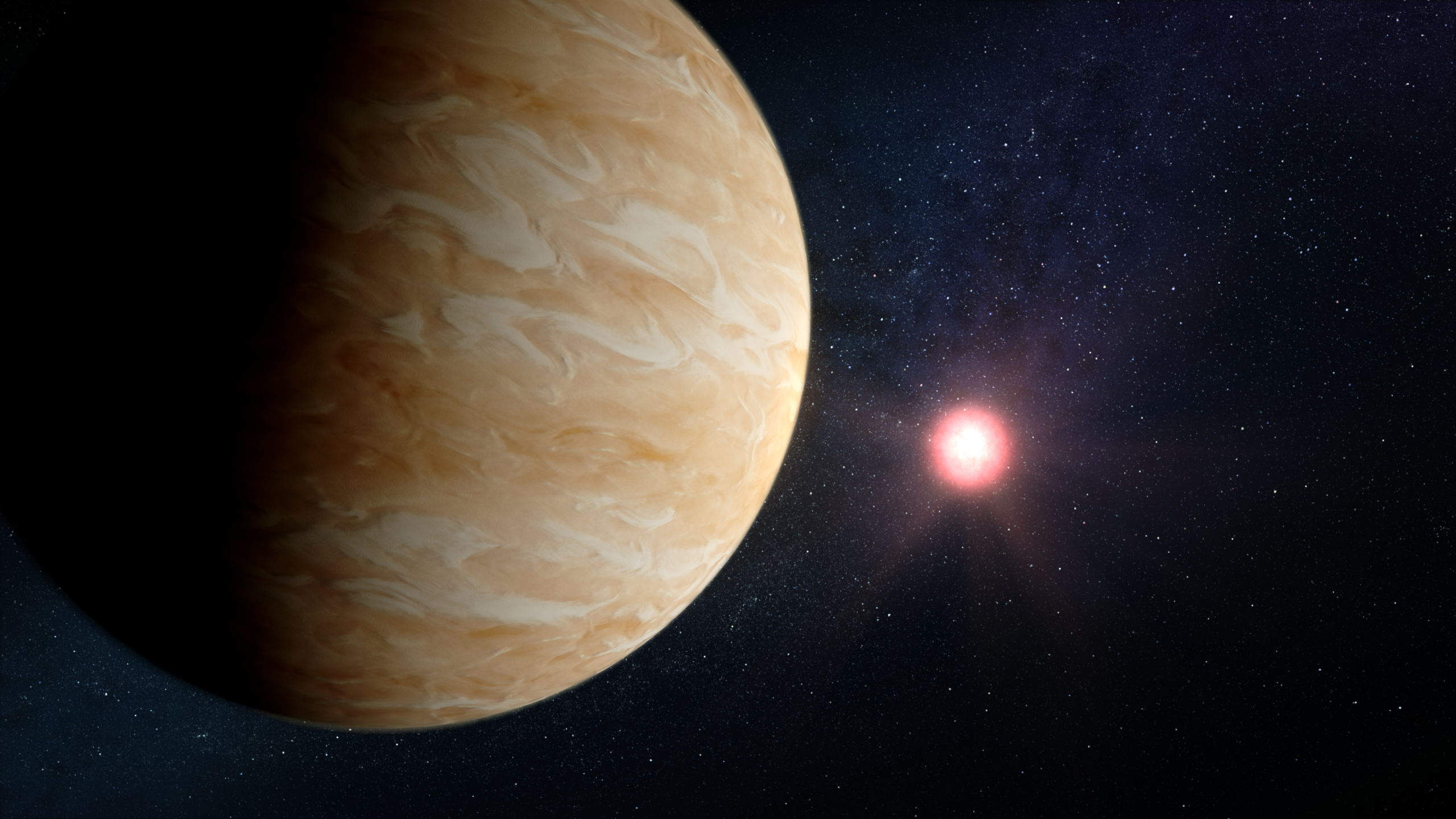
Astronomers are grappling with the prevalence of sub-Neptune exoplanets, a common planetary type in our galaxy that has no counterpart in our own solar system, posing a significant challenge to understanding planetary formation.
The vastness of the Milky Way galaxy harbors a dominant planetary type that remains enigmatic: the sub-Neptune. These exoplanets, larger than Earth but smaller than Neptune, appear to be the most frequently discovered worlds beyond our solar system, yet they are conspicuously absent from our own celestial neighborhood. This "missing middle" in our solar system's planetary catalog presents a fundamental puzzle for astronomers.
While missions like Kepler have consistently identified these intermediate-sized planets, their true nature remains elusive. Scientists can measure their radii and, for some, their masses, but this data alone is insufficient to determine their composition. A sub-Neptune could be a rocky core with a thin gaseous envelope, a water-dominated world under immense pressure, or a mini-Neptune with a substantial atmosphere. The challenge lies in the fact that planets with vastly different internal structures can exhibit similar overall densities, obscuring their true makeup.
Recent research highlights that planets between Earth and Neptune in size are not smoothly distributed. A notable gap exists between approximately 1.5 and 2 Earth radii. Planets smaller than this gap tend to resemble rocky super-Earths, while those larger are often inferred to possess significant amounts of low-density gas or volatile materials that inflate their observed size. This suggests a dynamic process of planetary evolution, where stellar radiation and internal heat can strip atmospheres, potentially transforming a gas-rich sub-Neptune into a bare rocky world over time.
Studying the atmospheres of these common exoplanets offers the most promising avenue for unraveling their mysteries. By analyzing the starlight that filters through an exoplanet's atmosphere during a transit, astronomers can detect specific molecular signatures. However, even advanced instruments like the James Webb Space Telescope have encountered difficulties. Observations of GJ 1214 b, a well-studied sub-Neptune, revealed a nearly featureless spectrum, likely due to obscuring clouds or haze. While recent JWST analysis suggests a high-metallicity atmosphere with thick, reflective clouds, the precise composition and atmospheric dynamics of sub-Neptunes continue to be a complex area of investigation.
The discovery that sub-Neptunes, planets lacking a solar system analogue, are the most common planetary type in the Milky Way underscores a critical frontier in our understanding of cosmic evolution. This prevalence suggests that the formation of planets in this size range is a robust outcome of stellar system development, implying our solar system may represent a less typical, rather than a standard, planetary arrangement. For humanity's destiny as a multi-planetary species, understanding these common worlds is paramount. It offers insights into the diverse conditions under which planetary atmospheres can form and persist, potentially revealing habitable environments or resources crucial for future off-world expansion. The ongoing efforts to characterize their atmospheres, despite technical hurdles, are vital steps in mapping the galactic landscape for potential future human settlements, pushing the boundaries of life and intelligence across the cosmos.
Edited by the news editor with AI from the original report — please refer to the original source.