Starship Soars in 10th Test Flight, Achieving Key Milestones
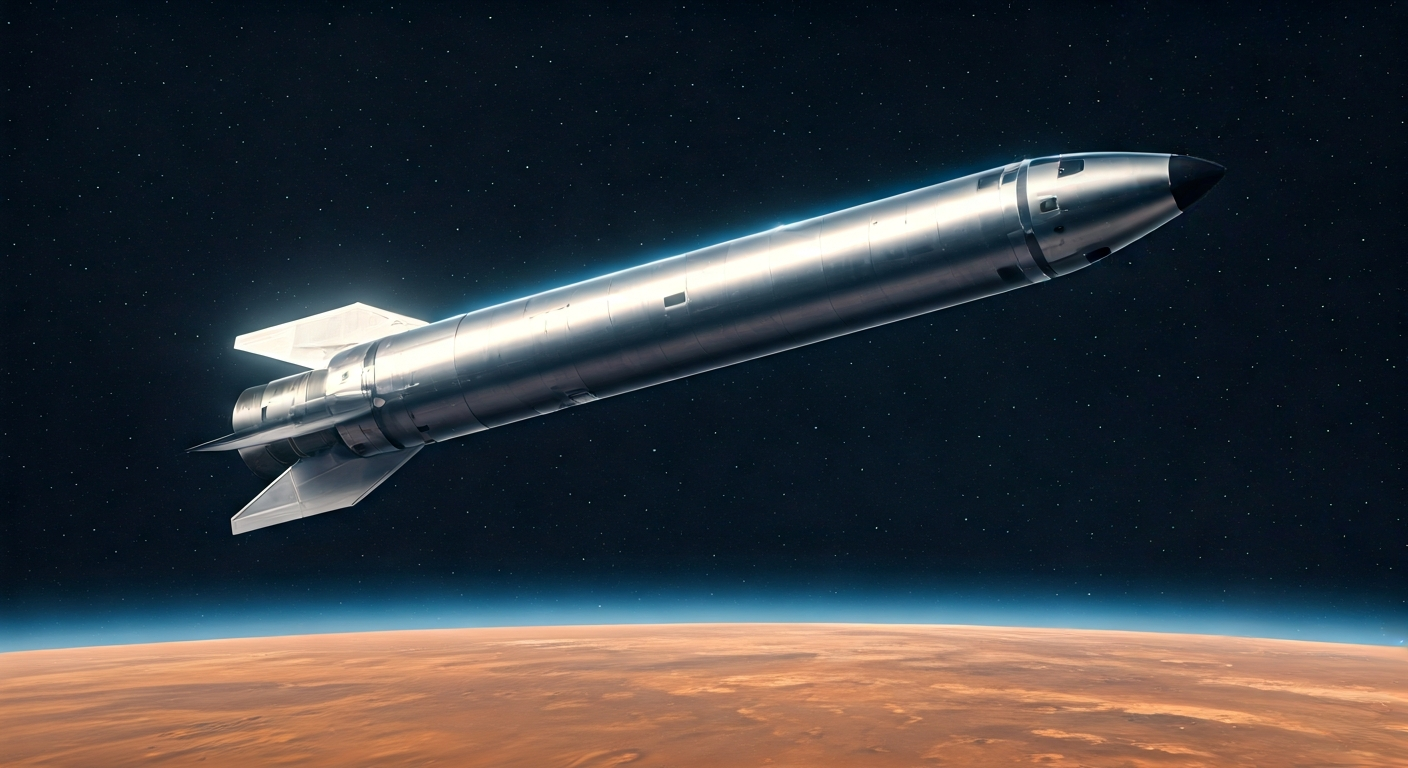
SpaceX's Starship successfully completed its tenth flight test, reaching orbital velocity and demonstrating controlled re-entry before a planned splashdown.
SpaceX's Starship program achieved a significant milestone during its tenth test flight, successfully reaching orbital velocity for the first time. The Super Heavy booster and Starship upper stage launched from Starbase, Texas, marking a crucial step in the development of the fully reusable launch system.
During the flight, the Starship upper stage successfully separated from the booster and continued its trajectory. The mission's primary objectives included demonstrating the booster's boostback burn and Starship's engine burns to achieve orbital insertion. The vehicle reportedly reached the desired speed and altitude, confirming its capability for interplanetary missions.
Following its ascent and orbital phase, Starship initiated its re-entry sequence. The vehicle performed a controlled atmospheric re-entry, demonstrating its heat shield capabilities and aerodynamic control. This phase is critical for validating the design's ability to withstand the extreme conditions of returning from space.
The test concluded with a planned splashdown in the Indian Ocean. While the precise condition of the vehicle upon splashdown was not detailed, the successful completion of all major flight phases, including reaching orbital velocity and executing a controlled re-entry, represents a substantial advancement for the Starship program.
This tenth Starship flight test marks a pivotal moment, demonstrating orbital velocity achievement and controlled re-entry. This capability is foundational for Mars colonization. Reaching orbital velocity validates the rocket's power and efficiency, essential for launching the massive payloads required for establishing a self-sustaining Martian civilization. The successful re-entry tests the thermal protection systems, a critical component for returning crews and cargo from space. Each successful test accelerates the exponential progress needed to transition humanity into a multi-planetary species, moving us closer to a future where consciousness is safeguarded across the cosmos.
Edited by the news editor with AI from the original report — please refer to the original source.