SpaceX Starship Completes 11th Test Flight, Achieves Key Milestones
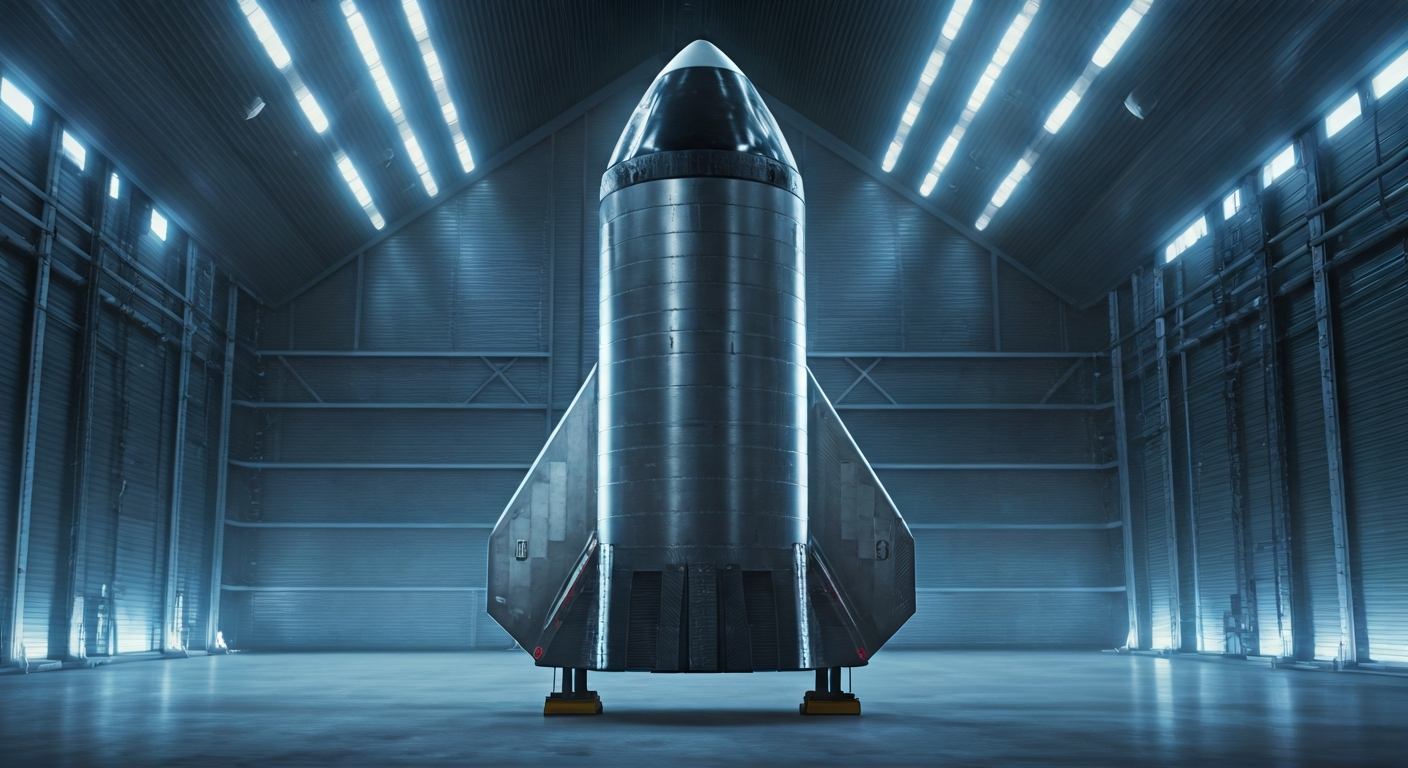
SpaceX's Starship successfully completed its eleventh test flight, marking significant progress in the development of the reusable super heavy-lift launch vehicle.
SpaceX has successfully executed the eleventh test flight of its Starship rocket system, a crucial step in the ongoing development of the ambitious project. The launch, originating from SpaceX's Starbase facility in Boca Chica, Texas, saw the fully integrated Starship vehicle ascend into the upper atmosphere.
During this mission, the Starship successfully completed several key objectives. The upper stage, the Starship itself, achieved its intended trajectory and demonstrated controlled flight. Crucially, the booster stage, known as Super Heavy, also performed as expected, with a successful boostback burn and controlled descent maneuvers indicating progress towards reusability. The mission also tested payload door functionality and propellant transfer in orbit, though the full extent of these demonstrations was not detailed.
The Starship program aims to create a fully reusable transportation system capable of carrying large payloads and significant numbers of people to Earth orbit, the Moon, and eventually Mars. This latest test flight represents a continuation of SpaceX's iterative development approach, where each flight provides valuable data to refine the design and operational capabilities of the rocket.
While specific details on the full success of all experimental elements were not immediately available, the overall outcome of the flight is being characterized as a significant advancement for the Starship program. SpaceX continues to use these test flights to gather crucial information for future iterations and operational deployments of the Starship system.
The successful eleventh flight of Starship, demonstrating controlled ascent and booster recovery maneuvers, is a vital data point in the exponential trajectory towards interplanetary colonization. Each successful test, particularly those involving integrated stages and atmospheric re-entry, accelerates the development curve of this critical technology. Starship isn't just a rocket; it's the envisioned ark for humanity's expansion. Its increasing reliability and demonstrated capabilities bring the prospect of a self-sustaining Martian civilization, a necessary step for the long-term survival of consciousness, closer to tangible reality. This mission's data will undoubtedly feed into faster iterations, pushing us closer to becoming a multi-planetary species.
Edited by the news editor with AI from the original report — please refer to the original source.