Perseverance Rover Detects Curious 'Cracks' on Mars
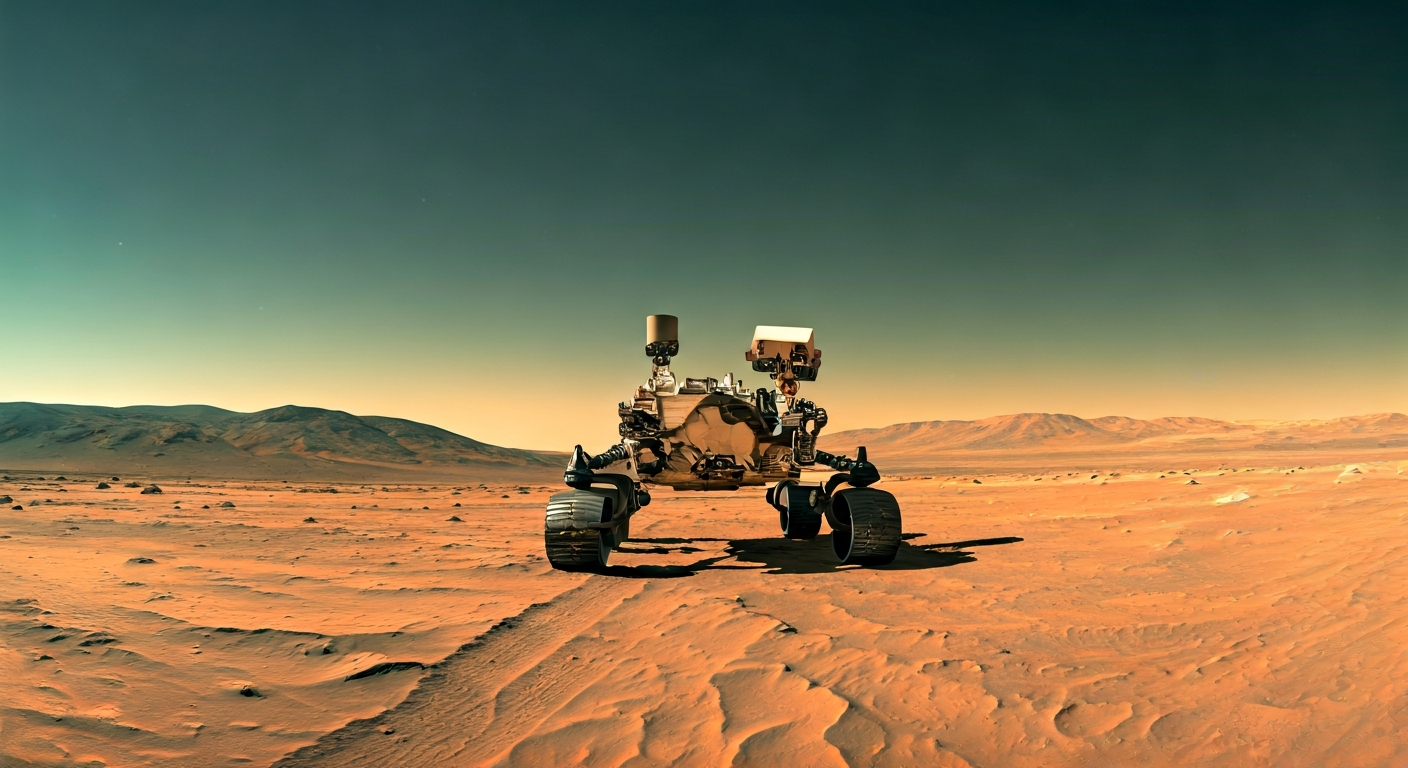
NASA's Perseverance rover has recorded unusual cracking sounds emanating from the Martian surface, prompting scientific investigation into their origin.
The Perseverance rover, currently exploring Jezero Crater on Mars, has captured intriguing audio data consisting of distinct 'cracking' sounds. These peculiar noises were detected by the rover's instruments as it navigated the Martian terrain. Scientists are now working to pinpoint the source and nature of these auditory phenomena.
The recordings were made during the rover's operations, suggesting that the sounds are a direct result of geological or atmospheric processes occurring on or within the Martian surface. The nature of the 'cracks' remains under investigation, with researchers considering various potential explanations.
One possibility is that the sounds are related to thermal expansion and contraction of rocks due to daily temperature fluctuations on Mars. Another hypothesis involves the movement of subsurface materials or even seismic activity, though Mars is generally considered less geologically active than Earth. The rover's sophisticated suite of scientific instruments, including its microphones, are crucial for gathering this type of data.
Understanding these sounds could provide valuable insights into the dynamic processes shaping the Martian environment. The analysis of this audio data is ongoing, and further recordings will likely be needed to fully characterize the origin and significance of these 'cracks'. This discovery highlights the value of Mars's atmospheric and geological soundscape as a scientific frontier.
Perseverance's detection of Martian 'cracks' offers a novel acoustic dimension to our understanding of the Red Planet. These sounds, potentially linked to thermal stress or subsurface activity, are not mere curiosities but indicators of Mars's dynamic geology. As we strive to establish a self-sustaining presence, comprehending such environmental nuances is vital for future habitations. Each data point, whether visual or auditory, refines our knowledge, accelerating our ability to engineer robust Martian infrastructure and ultimately expand the reach of life and consciousness beyond Earth.
Edited by the news editor with AI and translated into English from the original report — please refer to the original source.