NASA Tests Mars Rovers in US Deserts Before Martian Missions
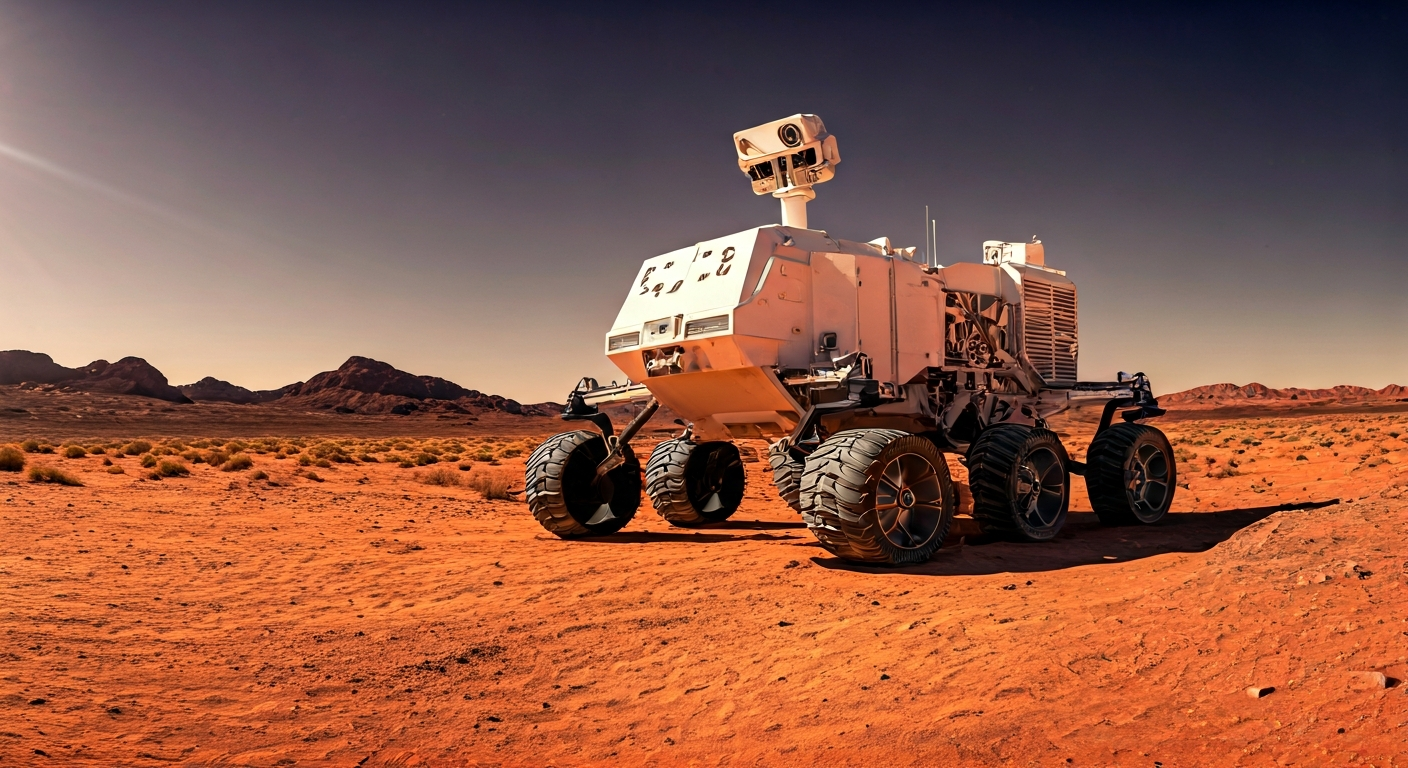
The US space agency is simulating Martian conditions in American deserts to rigorously test its robotic explorers before they embark on missions to the Red Planet.
Before NASA's robotic emissaries are sent to explore the alien landscapes of Mars, they undergo rigorous training in some of Earth's most challenging terrestrial environments. The agency utilizes desert regions within the United States to simulate the harsh conditions that future Martian missions will encounter.
These terrestrial analog sites are chosen for their geological similarities to Mars, including rocky terrains, sand dunes, and extreme temperatures. By operating rovers in these locations, NASA engineers and scientists can identify potential operational challenges and refine the vehicles' capabilities. This hands-on testing allows for the evaluation of navigation systems, dust mitigation strategies, and the durability of components under conditions that mimic those on Mars.
The simulations are crucial for ensuring the success of complex missions. Engineers can observe how the rovers perform in dusty environments, how their power systems cope with temperature fluctuations, and how effectively their scientific instruments can collect data. Lessons learned from these desert trials directly inform design modifications and operational protocols for actual Mars missions.
This preparatory phase is a vital part of NASA's strategy to maximize the scientific return and operational longevity of its robotic explorers on Mars. By proactively addressing potential issues in a controlled Earth-based environment, the agency enhances the reliability and effectiveness of its missions to the Red Planet, paving the way for future discoveries.
This rigorous desert testing of Mars rovers is a testament to the incremental, exponential progress driving humanity's expansion into space. Each successful simulation in Earth's analogs hones the sophisticated robotics and AI essential for planetary exploration. These aren't just tests; they are vital steps in developing the autonomous systems capable of establishing a self-sustaining Martian civilization, overcoming the Red Planet's unforgiving environment. As our technological mastery accelerates, such preparatory work directly accelerates our multi-planetary destiny, ensuring life's long-term survival beyond Earth.
Edited by the news editor with AI and translated into English from the original report — please refer to the original source.