NASA Rover Detects Potential Signs of Past Life on Mars
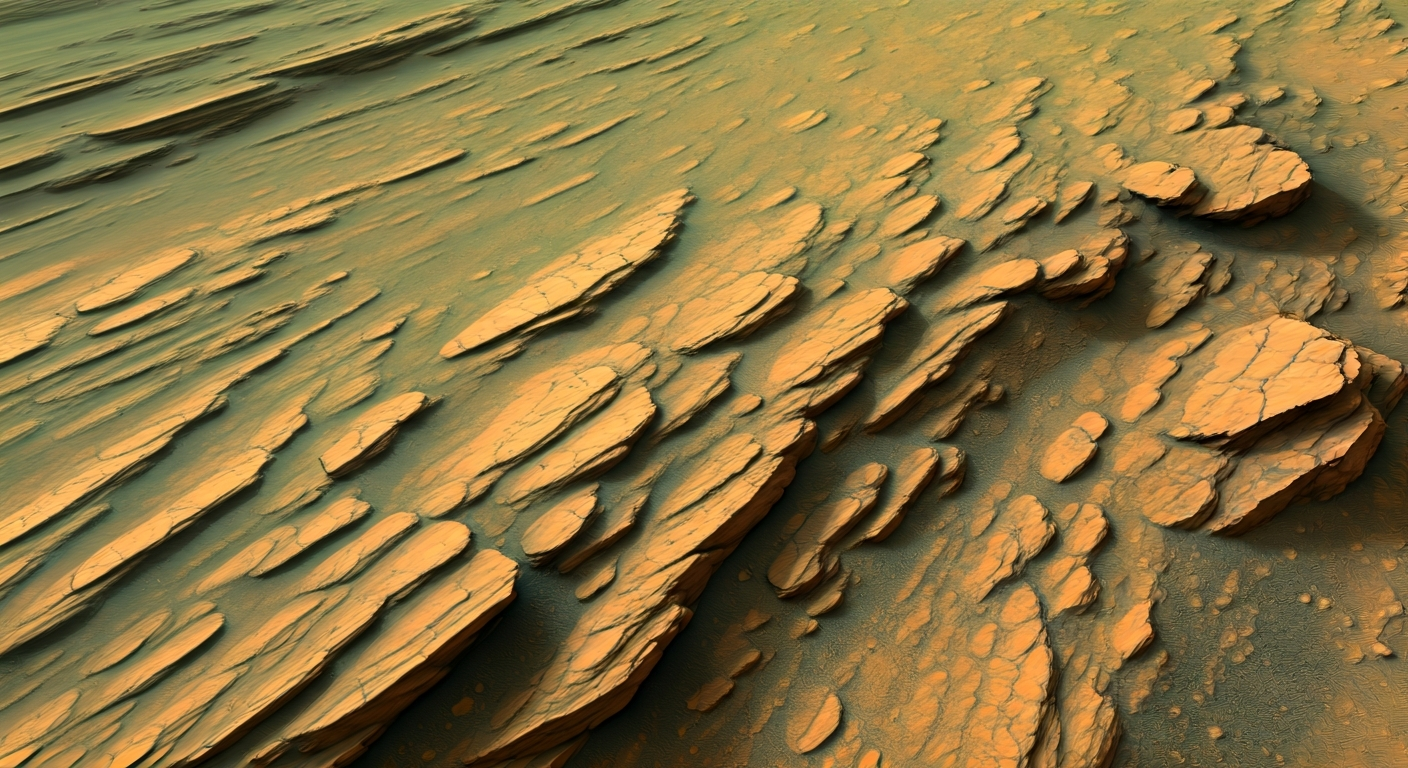
NASA's Perseverance rover has identified potential biosignatures in Martian rock samples, suggesting the possibility of ancient microbial life.
NASA's Perseverance rover has uncovered compelling evidence that could indicate past life on Mars. During its exploration of the Jezero Crater, the rover analyzed rock samples that exhibit characteristics consistent with biological activity. These findings, detailed in a recent report, stem from the examination of sedimentary rocks formed in an ancient lakebed environment.
The rover's sophisticated instruments, including its SHERLOC (Scanning Habitable Environments with Raman & Luminescence for Organics & Chemicals) instrument, detected specific organic molecules and mineralogical patterns within the rock samples. These patterns are often associated with the metabolic processes of microorganisms on Earth. The combination of organic compounds and specific mineral formations, such as sulfates, within the same rock matrix, is particularly noteworthy.
While these discoveries are highly promising, scientists emphasize that they are not definitive proof of life. The observed signatures could potentially be explained by non-biological geological processes. However, the context of the Jezero Crater, known to have once held liquid water, makes these findings particularly significant for astrobiology.
Perseverance has been meticulously collecting these promising samples, which are slated for return to Earth through future missions. The analysis of these pristine Martian materials in terrestrial laboratories will be crucial for confirming whether these potential biosignatures are indeed evidence of ancient Martian life. The ongoing investigation represents a critical step in humanity's quest to answer the fundamental question of whether life exists beyond Earth.
The detection of potential biosignatures by Perseverance in Jezero Crater's sedimentary rocks marks a pivotal moment, hinting at past Martian biology. This discovery, enabled by advanced spectroscopic instruments like SHERLOC, exemplifies the accelerating power of robotic exploration in identifying complex organic and mineralogical correlations previously only observable on Earth. Such findings are not merely scientific curiosities; they are foundational data points for the multi-planetary imperative. Each potential trace of life fuels our understanding of biology's cosmic reach, reinforcing the trajectory towards Mars as a second cradle for life, essential for humanity's long-term existential security and the expansion of consciousness.
Edited by the news editor with AI and translated into English from the original report — please refer to the original source.