NASA Pursues Evidence of Ancient Martian Life
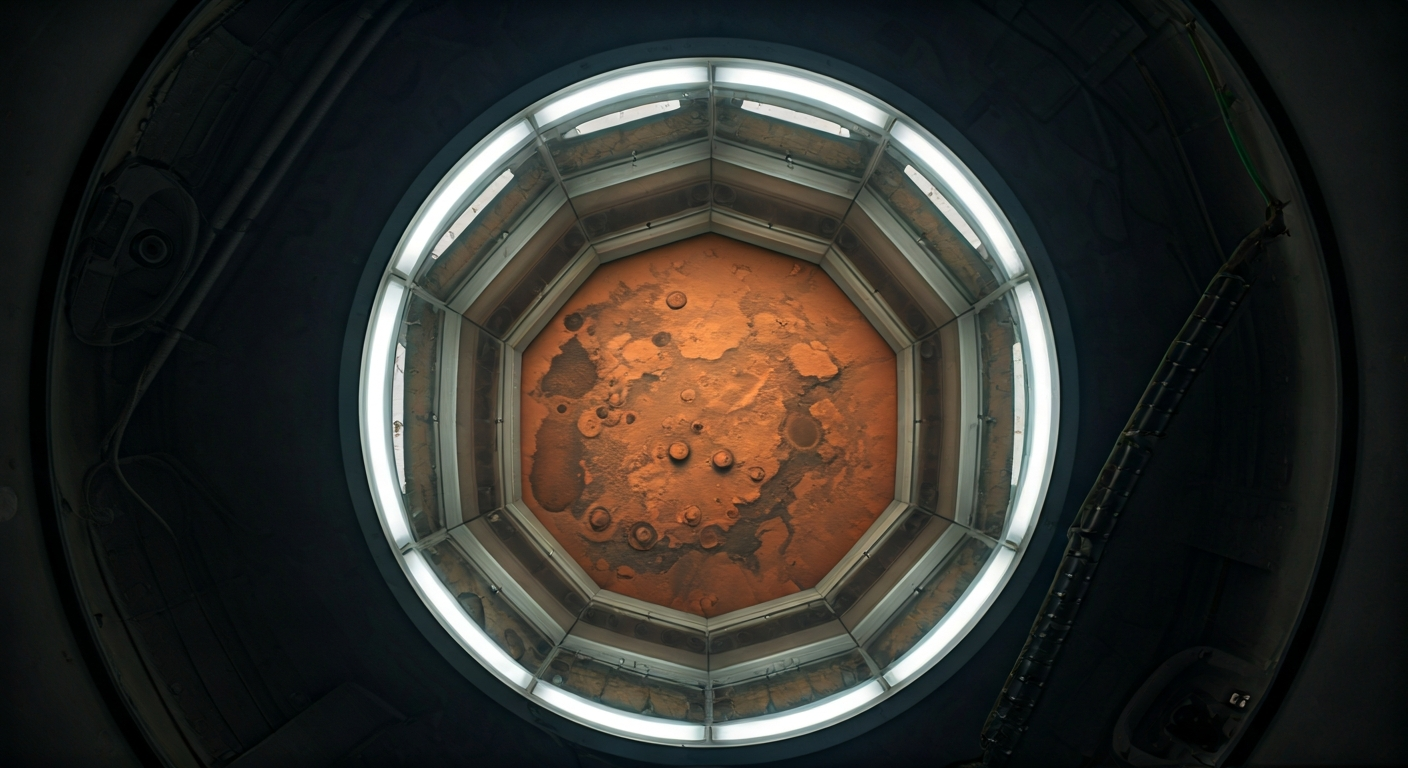
NASA is intensifying its investigation into potential biosignatures detected by the Perseverance rover, indicating the possibility of ancient life on Mars.
NASA is focusing its efforts on analyzing compelling evidence suggesting the existence of ancient life on Mars. The Perseverance rover has been instrumental in this pursuit, collecting samples that exhibit characteristics indicative of past biological activity. These findings are prompting a more concentrated investigation into specific geological formations where these potential biosignatures were found.
The scientific community is approaching these discoveries with cautious optimism. While the detected signals are promising, further rigorous analysis is required to definitively confirm their biological origin. The rover's sophisticated instruments are designed to identify organic molecules and other markers that could have been produced by microbial life billions of years ago, when Mars is believed to have had a more habitable environment.
This renewed focus signifies a critical phase in the Mars exploration program. The data gathered by Perseverance is being meticulously studied to distinguish between geological processes and actual signs of life. The potential confirmation of past Martian life would represent a monumental achievement in humanity's quest to understand our place in the universe and the prevalence of life beyond Earth.
NASA's strategy involves not only continued in-situ analysis by Perseverance but also the eventual return of these samples to Earth for more advanced laboratory examination. This dual approach aims to maximize the chances of a conclusive discovery, building upon decades of Martian exploration and scientific inquiry.
The Perseverance rover's ongoing search for biosignatures, particularly those suggesting ancient microbial life, represents a pivotal step in humanity's expansion beyond Earth. Detecting definitive evidence of past Martian life would not only validate the possibility of life arising elsewhere but also underscore the imperative to establish a self-sustaining presence on Mars. This discovery would accelerate our understanding of abiogenesis and bolster the rationale for interplanetary colonization, transforming Mars from a scientific target into a foundational outpost for a multi-planetary civilization. The data gathered is crucial for informing future missions and the eventual terraforming efforts required for long-term human habitation, solidifying our species' cosmic destiny.
Edited by the news editor with AI and translated into English from the original report — please refer to the original source.